Our latest sentiment survey was open from 10/22/10 to 10/29/10. We had nearly the same response rate as last survey, with 94 readers participating. Your input is for a good cause! If you believe, as we do, that markets are driven by supply and demand, client behavior is important. We’re not asking what you think of the market—since most of our blog readers are financial advisors, we’re asking instead about the behavior of your clients. Then we’re aggregating responses exclusively for our readership. Your privacy will not be compromised in any way.
After the first 30 or so responses, the established pattern was simply magnified, so we are comfortable about the statistical validity of our sample. Most of the responses were from the U.S., but we also had multiple advisors respond from at least two other countries. Let’s get down to an analysis of the data! Note: You can click on any of the charts to enlarge them.
Question 1. Based on their behavior, are your clients currently more afraid of: a) getting caught in a stock market downdraft, or b) missing a stock market upturn?
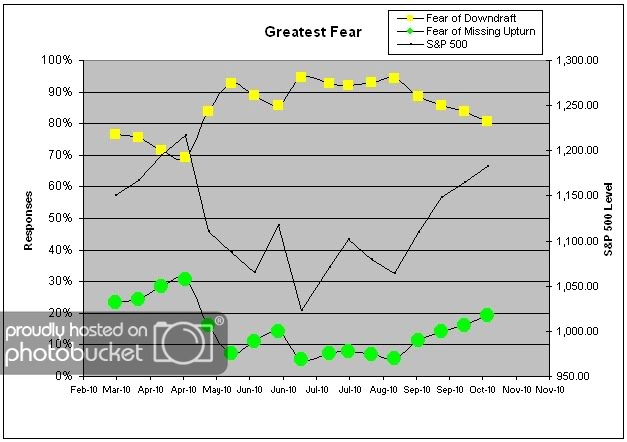
Chart 1: Greatest Fear. The broad stock market has managed to extend its rally from survey to survey. Once again, the S&P 500 rose around 1.5%, and client fear levels reflected this move. Around 81% of clients were more afraid of losing money, versus last survey’s reading of 84%. On the flip side, we saw the missed opportunity camp notch higher from 16% to 19%. It’s encouraging to see clients dipping their toes back into the broad market. We can also see evidence of this shift in mindset in last week’s Fund Flows data from Andy.
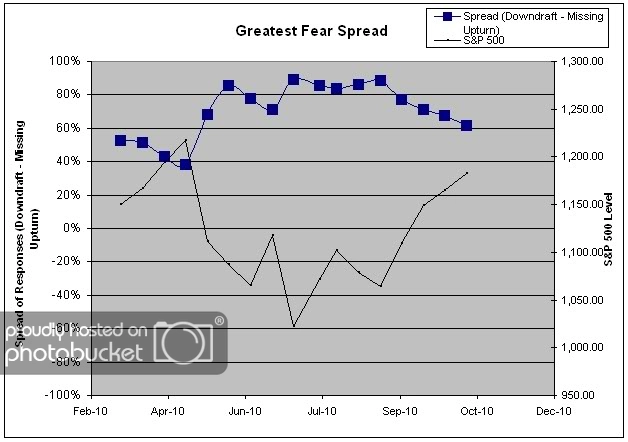
Chart 2. Greatest Fear Spread. Another way to look at this data is to examine the spread between the two groups. The spread remains skewed towards fear of losing money this round. Right now the spread is around 62%. This chart is a nice graphical representation of the gradual shift towards more risk as the market continues to rally.
Question 2. Based on their behavior, how would you rate your clients’ current appetite for risk?
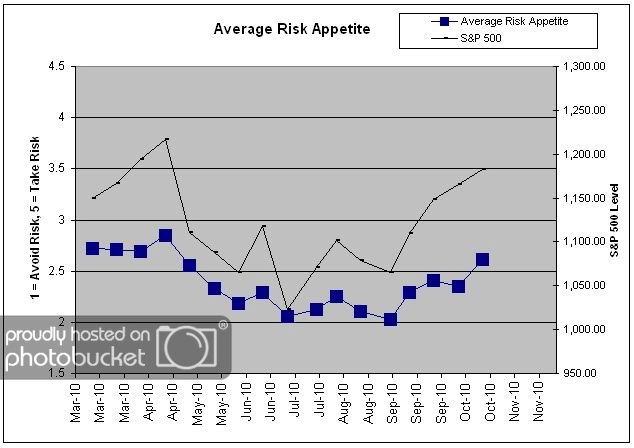
Chart 3: Average Risk Appetite. Average risk shot out of its range this week in a big way. This week’s average risk reading came in at 2.62, up big from last week’s reading of 2.35. Right now average risk is sitting at its highest point since April, which is in-line with our other indicators. The rally that started from the August lows seems to be having a big effect on client risk appetites and fear levels. Could the “capitulation event” which sends risk appetites soaring be around the corner? It’s anyone’s guess as to where the market is heading.
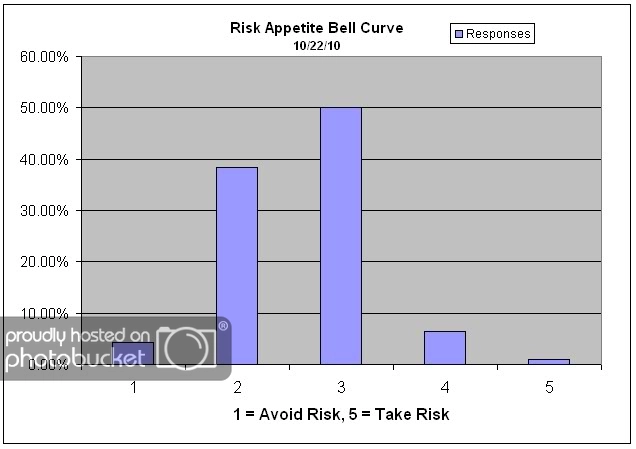
Chart 4: Risk Appetite Bell Curve. This chart uses a bell curve to break out the percentage of respondents at each risk appetite level. This week we saw a sizable move towards more risk. The past few surveys have been heavily skewed towards 2′s and 3′s. This week we saw a lot more respondents choose 3, which is also reflected in the Average Risk chart.
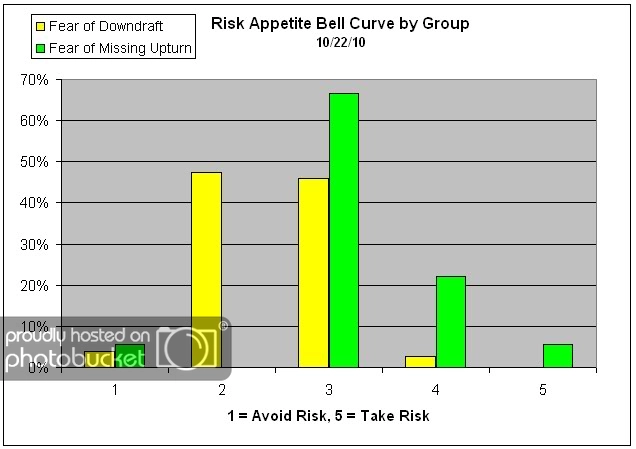
Chart 5: Risk Appetite Bell Curve by Group. The next three charts use cross-sectional data. This chart plots the reported client risk appetite separately for the fear of downdraft and for the fear of missing upturn groups. We would expect that the fear of downdraft group would have a lower risk appetite than the fear of missing upturn group and that is what we see here.
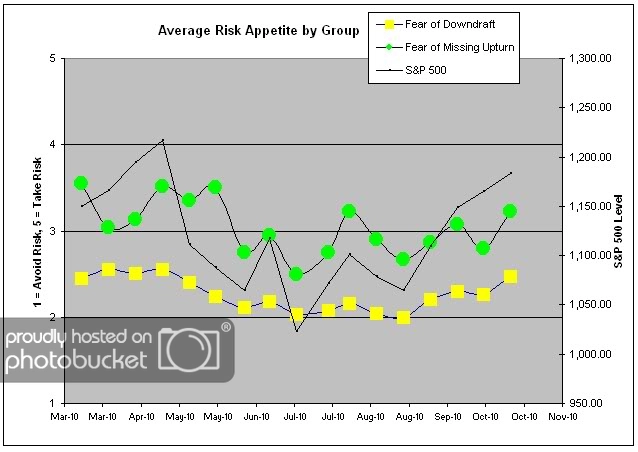
Chart 6: Average Risk Appetite by Group. A plot of the average risk appetite score by group is shown in this chart. Here we see that the average risk appetite for the fear of losing money group is significantly lower than the risk appetite for the fear of missing the rally group — perfect. The upturn group is at the highest point it’s been since late July, and before that, May. If the market can manage to sustain this momentum, this group’s average has the potential to go much higher. On the other side, the downdraft group is sitting at the highest levels since April. That’s a huge breakout, and one of the main reasons that overall risk appetite has risen so much. The “Fear” group, even though they are afraid of losing money, has made an emotional breakthrough towards adding risk. This week, the Downturn group’s average risk was 2.5 (up from 2.3) and the Upturn group’s average risk was 3.2 (up from 2.8).
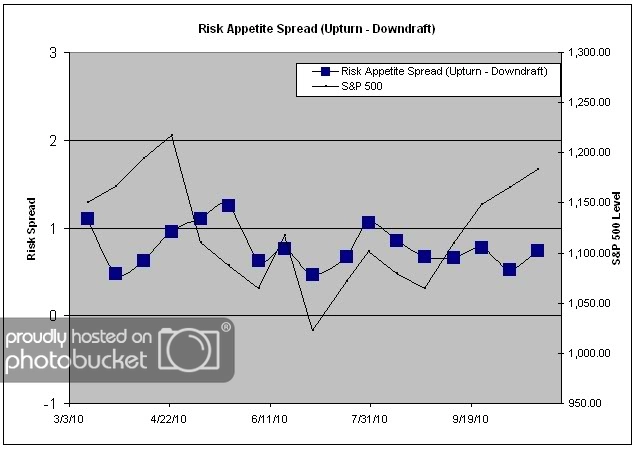
Chart 7: Risk Appetite Spread. This is a spread chart constructed from the data in Chart 6, where the average risk appetite of the downdraft group is subtracted from the average risk appetite of the missing upturn group. The spread jumped up this week by around .20 points, due mostly to the large jump in the downturn’s group average risk. We’ve noted before that the volatility of the spread is linked directly with the upturn group’s volatile risk tolerance, but this week’s shift is due more to the downturn’s average risk technical breakout.
This week, we saw a big breakout in the downturn group’s risk appetite. The downturn group represents the majority of Joe Investors in the market today — scared about losing money and still in pain from 2008. If I were to describe the group’s investment outlook in a phrase, it would be, “As long as it doesn’t hurt.” So when we see a big breakout in their risk appetite, as we did this round, we take that as a real sign that market conditions are improving, and that maybe this rally does have some “Oomph” behind it. Other than that, all the other indicators performed just as expected with relation to the broad market. Hopefully this rally can hold on, and we’ll see a continued shift towards more risk, and less fear of a downturn.
No one can predict the future, as we all know, so instead of prognosticating, we will sit back and enjoy the ride. A rigorously tested, systematic investment process provides a great deal of comfort for clients during these types of fearful, highly uncertain market environments. Until next time, good trading and thank you for participating!


