When you think of emerging markets, which of the following countries first comes to mind-China or Malaysia? I suspect most people would say China. Furthermore, when you think of an emerging market ETF, which of the following first comes to mind — EEM (iShares MSCI Emerging Markets Index) or PIE (PowerShares DWA Emg Mkts Technical Leaders Index)? Again, I suspect most people would say EEM. That just might change over time.
The mandate of the PowerShares DWA Emerging Markets Technical Leaders Index (PIE) is to maintain an index of 100 high relative strength securities from the broad universe of emerging markets securities. In other words, it is a relative strength-weighted index. Compare this to EEM, which is a capitalization-weighted index. Chinese securities currently have a 17% weighting in EEM, while the weighting of Chinese securities in PIE has fallen to about 6%. Additionally, Malaysian securities currently only have about a 3% weight in EEM while they now have over a 20% weighting in PIE. Again, why the difference in weighting? One index is cap-weighted and the other is relative strength-weighted.
The chart below shows how the weightings of Chinese and Malaysian securities has changed over the last couple of years in the PowerShares DWA Emerging Markets Technical Leaders Index. China has been losing exposure while Malaysia has been gaining exposure.
(Click to Enlarge)
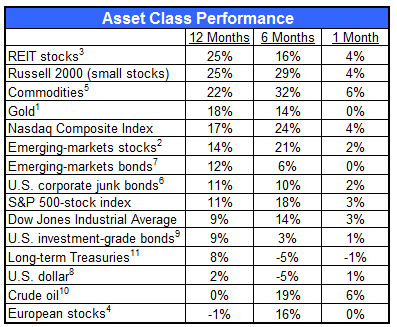
While both Malaysia (as measured by EWM) and China (as measured by FXI) were up about 45% in 2009, the two took a different path in 2010. Malaysia was up over 35% in 2010, while China was up only about 2%. Furthermore, relative strength was well-rewarded in 2010 as PIE was up 24.68%, while EEM was up only 14.80%.
Click here to access the fact sheet for the PowerShares DWA Emerging Markets Technical Leaders Index (PIE). Past performance is no guarantee of future results.