Our latest sentiment survey was open from 5/20/11 to 5/27/11. The Dorsey, Wright Polo Shirt raffle was a huge success! The winning advisor will receive an email today. Thanks to everyone who participated. This round, we had 117 advisors participate in the survey. If you believe, as we do, that markets are driven by supply and demand, client behavior is important. We’re not asking what you think of the market—since most of our blog readers are financial advisors, we’re asking instead about the behavior of your clients. Then we’re aggregating responses exclusively for our readership. Your privacy will not be compromised in any way.
After the first 30 or so responses, the established pattern was simply magnified, so we are comfortable about the statistical validity of our sample. Most of the responses were from the U.S., but we also had multiple advisors respond from at least five other countries. Let’s get down to an analysis of the data! Note: You can click on any of the charts to enlarge them.
Question 1. Based on their behavior, are your clients currently more afraid of: a) getting caught in a stock market downdraft, or b) missing a stock market upturn?
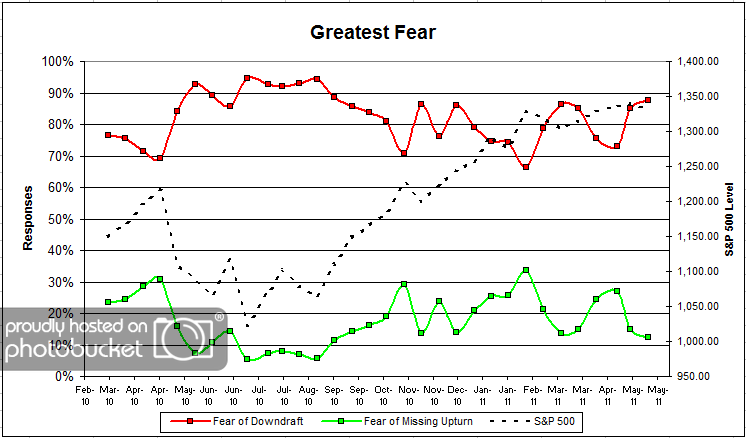
Chart 1: Greatest Fear. From survey to survey, the S&P was down fractionally (-0.5%). Client fear levels nudged higher from 85% to 88%, which is what we would expect to see. On the other side, the missing opportunity group fell from 15% to 12%.
Considering how big the fear move was the round before, we expected to see these type of numbers. Despite the S&P’s 2-year performance track record (hint: it’s up nearly +30% since June of 2010), client fear levels hover near 90% on a measly -2% pullback from survey to survey. Andy’s weekly “Fund Flows” posts also back this up, with client assets still flooding into taxable bond funds (fear).
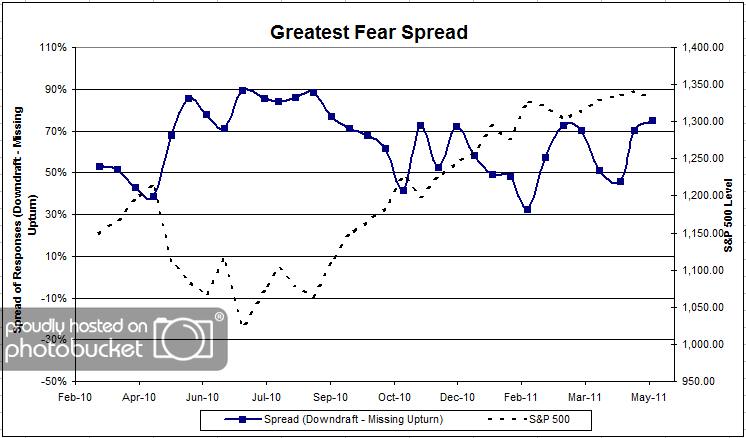
Chart 2. Greatest Fear Spread. Another way to look at this data is to examine the spread between the two groups. The spread edged higher this round from 70% to 75%.
Question 2. Based on their behavior, how would you rate your clients’ current appetite for risk?
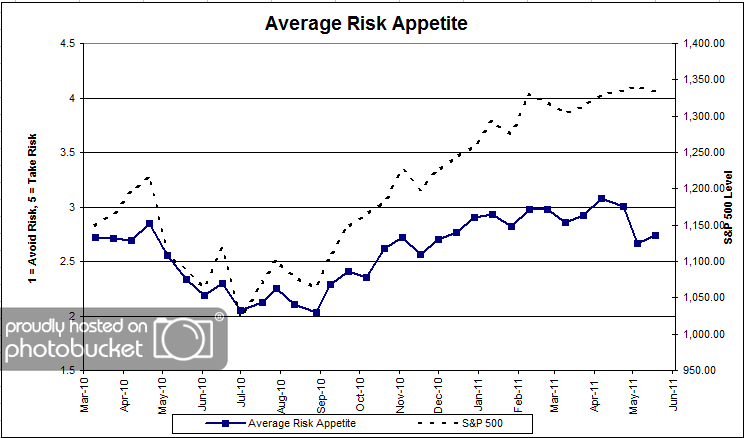
Chart 3: Average Risk Appetite. Average risk appetite bounced slightly this round, from 2.66 to 2.73. We saw a significant decline in client risk appetite last round, despite the market moving higher. This could be a case of minor mean reversion, as clients settle into a new risk profile in light of the big, bad scary pullback. We’re still well off the recent all-time risk appetite highs.
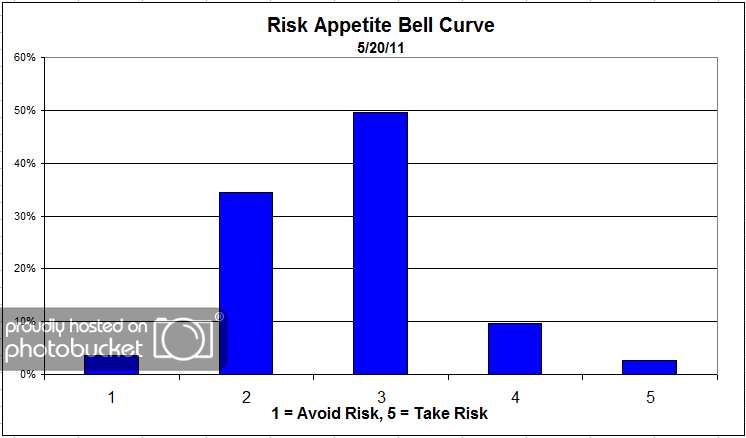
Chart 4: Risk Appetite Bell Curve. This chart uses a bell curve to break out the percentage of respondents at each risk appetite level. Here we see the majority of clients are looking for moderate to less risk, as evidenced by the large percentage of 2′s and 3′s.
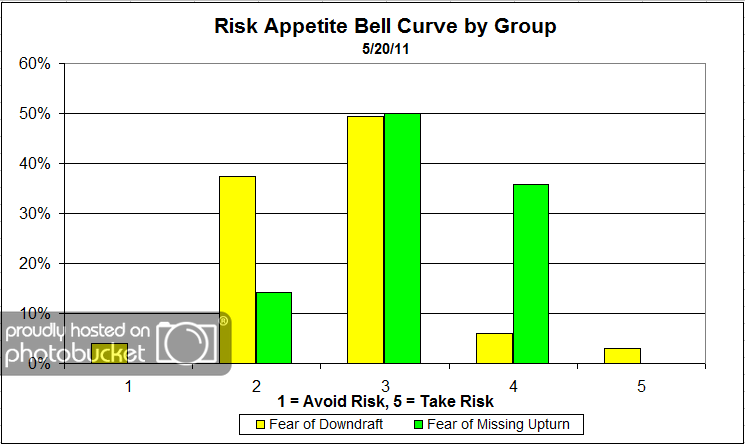
Chart 5: Risk Appetite Bell Curve by Group. The next three charts use cross-sectional data. This chart plots the reported client risk appetite separately for the fear of downdraft and for the fear of missing upturn groups. We had a few outliers in the fear camp who were looking for a risk appetite of 5. Are those mis-clicks or trolling on the part of survey takers? Because there was more than just 1 respondent doing that, I’m going to guess that there are people who are afraid of losing money, but also want a risk appetite of 5. Other than those few participants, the rest of the bell curve sorts out normally, with the fear group wanting less risk and the opportunity group wanting more risk.
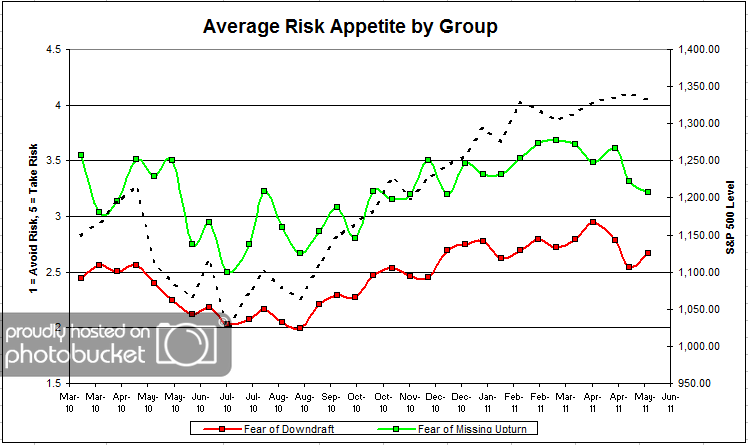
Chart 6: Average Risk Appetite by Group. Here we can see that the overall risk appetite number’s bounce probably came from the fear group, which jumped from 2.54 to 2.66. The opportunity group’s risk fell, which is what we expect to see when the market falls. This particular chart has a history of being more volatile than the others, and also bucking the usual trend.
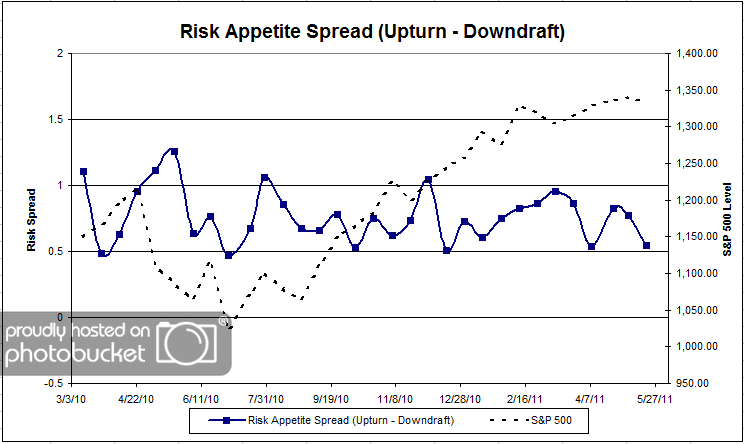
Chart 7: Risk Appetite Spread. This is a spread chart constructed from the data in Chart 6, where the average risk appetite of the downdraft group is subtracted from the average risk appetite of the missing upturn group. The spread fell moderately this round but seems to be sticking within a fairly stable range.
This round, the market fell fractionally from survey to survey, and fear levels continued to rise. The S&P 500 is up around 30% in less than a year, but still almost 90% of clients are more afraid of losing money than missing a rally. As we see in the weekly Fund Flows post by Andy, clients are still in total fear and safety mode, adding assets to taxable bond funds at a rate of 3:1 over others. Once the market has rallied +XYZ%, we will inevitably see a huge swing towards opportunity and risk, but we aren’t there yet.
No one can predict the future, as we all know, so instead of prognosticating, we will sit back and enjoy the ride. A rigorously tested, systematic investment process provides a great deal of comfort for clients during these types of fearful, highly uncertain market environments. Until next time, good trading and thank you for participating.









[...] numerous sentiment surveys confirm, including our own, investors remains overwhelmingly risk-averse. So, it is no wonder that flows into taxable bond [...]