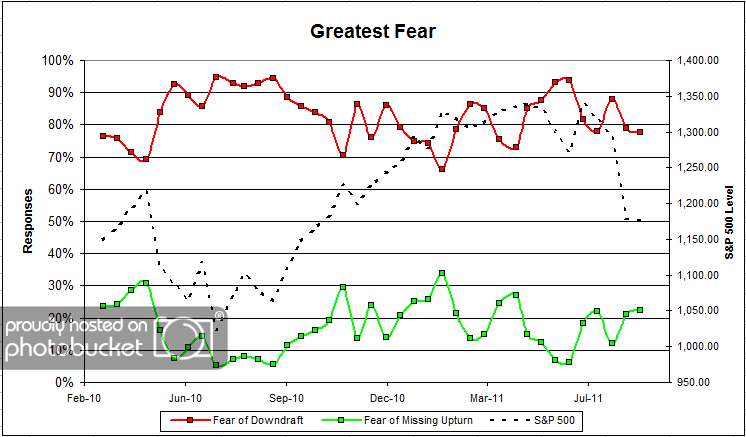
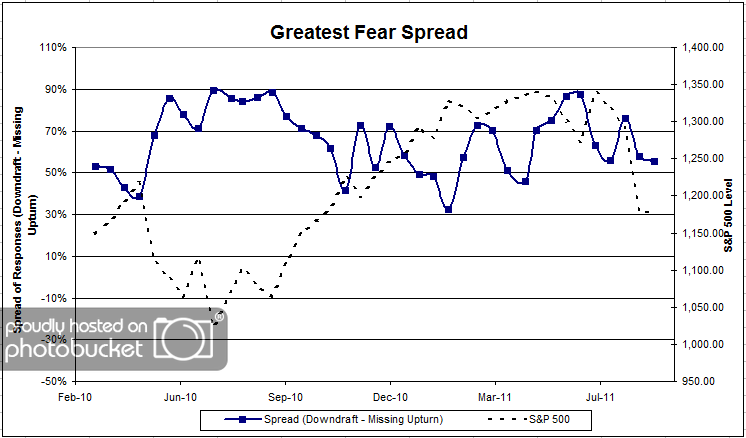
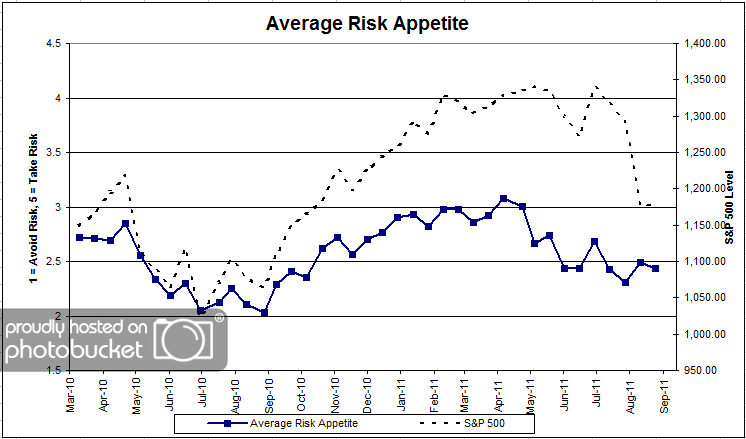
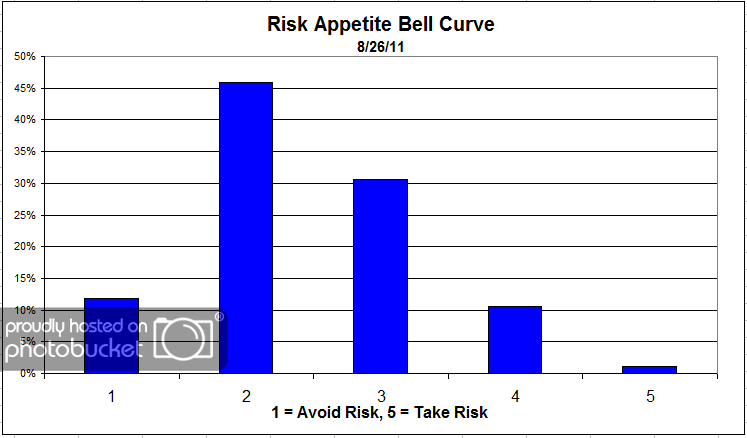
It’s tough to struggle with the fears of clients, one of the toughest things any advisor has to do. On the other hand, it may be the most valuable thing an advisor can do for clients. Investors without advisors to guide them, it seems, are likely to be far worse off. Investment News has an article discussing the findings of investment advisor Mark Matson:
Mr. Matson conducts “MRIs” of the portfolios of prospective clients for a small fee and found that large numbers of them had shifted their money into cash and fixed-income assets. “I suspected they would be heavy in cash, but not to this degree,” he said.
In a recent study of the portfolios of over 10,000 of these prospective clients, Mr. Matson found that the average investor had about 70% of his or her assets in cash and fixed-income securities. That compares to about a 20% allocation to fixed income four years ago.
“Investors right now are doing the complete opposite of what they are supposed to do,” Mr. Matson said. “To be a successful investor, you have to have the foresight to do the opposite of the herd. This mentality of safety in numbers doesn’t work in investing.”
Even given the scary market for the last few years, I find his numbers shocking! These prospective, free-range clients had 70% of their assets in cash and bonds! Most clients of reasonable advisors are still probably pretty close to whatever their policy portfolio allocation is. True, an occasional client may panic and go off the reservation, but advisors are able to keep most of them in a more level frame of mind.
DALBAR numbers keep me up at night, and Mr. Matson found just the same thing.
“Investors overweighted equities when they were hot, panicked when they crashed and are still sitting on the sideline,” Mr. Matson said. “They bought high, sold low and most won’t get back in until the market returns to all-time highs, repeating the same disastrous pattern.”
I’m sure these free-range clients think they are doing the right thing, but good investing is not emotionally reactive. You’ve got to settle on a proven, profitable long term strategy—we happen to like systematic relative strength investing—and then lean against the emotional currents. When you are feeling particularly fearful, perhaps you should increase your bet. When you are feeling quite self-satisfied, it might be time to consider a little diversification. Or you could just hire a competent advisor.
Source: waexclusivemeats.com.au