Our latest sentiment survey was open from 9/14/12 to 9/21/12. The Dorsey, Wright Polo Shirt Raffle continues to drive advisor participation, and we greatly appreciate your support! This round, we had 49 advisors participate in the survey. If you believe, as we do, that markets are driven by supply and demand, client behavior is important. We’re not asking what you think of the market—since most of our blog readers are financial advisors, we’re asking instead about the behavior of your clients. Then we’re aggregating responses exclusively for our readership. Your privacy will not be compromised in any way.
After the first 30 or so responses, the established pattern was simply magnified, so we are fairly comfortable about the statistical validity of our sample. Some statistical uncertainty this round comes from the fact that we only had four investors say that thier clients are more afraid of missing a stock upturn than being caught in a downdraft. Most of the responses were from the U.S., but we also had multiple advisors respond from at least two other countries. Let’s get down to an analysis of the data! Note: You can click on any of the charts to enlarge them.
Question 1. Based on their behavior, are your clients currently more afraid of: a) getting caught in a stock market downdraft, or b) missing a stock market upturn?
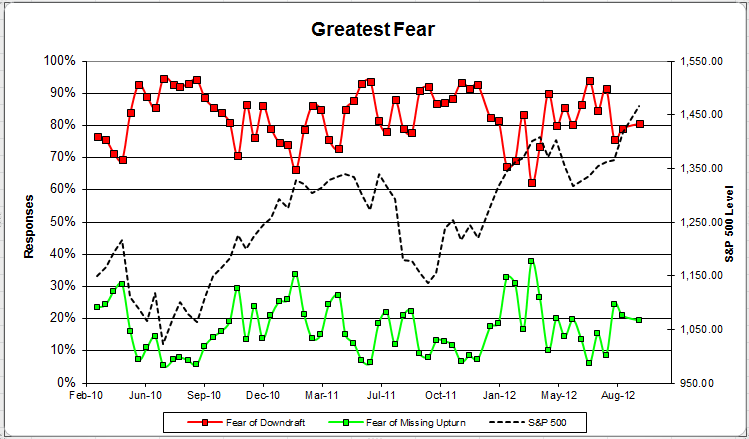
Chart 1: Greatest Fear. From survey to survey, the S&P 500 rose by just over 3%, and none of our indicators responded as expected! Despite a rising market, the greatest fear numbers rose from 79% to 81%. On the flip side, the opportunity group fell from 21% to 19%.
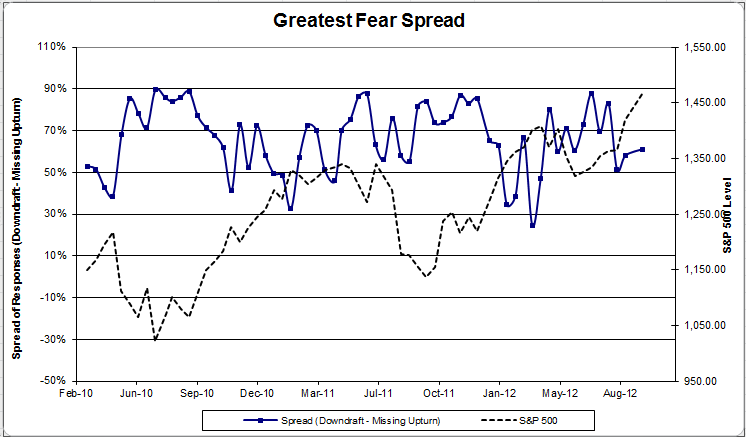
Chart 2: Greatest Fear Spread. Another way to look at this data is to examine the spread between the two groups. The spread rose slightly from 58% to 61%.
Question 2. Based on their behavior, how would you rate your clients’ current appetite for risk?
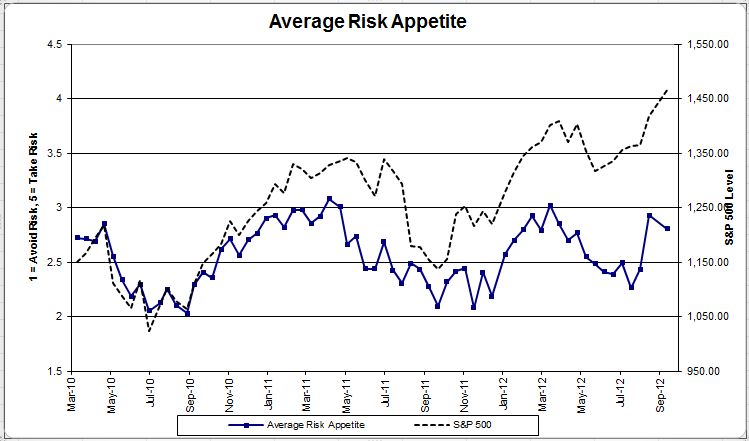
Chart 3: Average Risk Appetite. Average risk appetite fell slightly as the market rose. Last survey round we saw a big spike in client risk appetite; we might look at this reading as a sort of “breather” after last round’s big move. Client risk appetite went from 2.93 to 2.81.
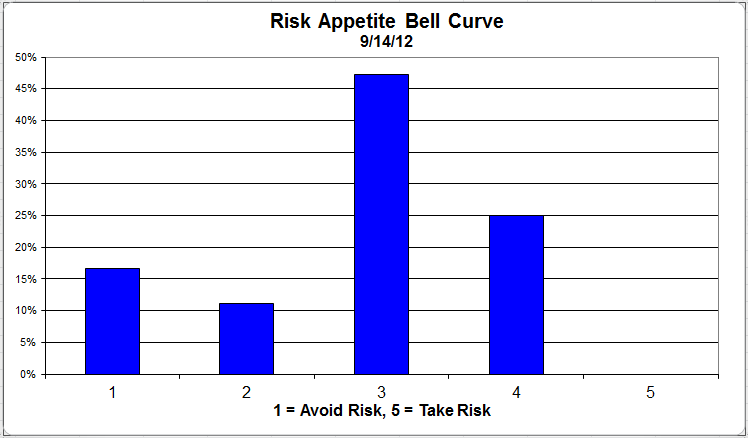
Chart 4: Risk Appetite Bell Curve. This chart uses a bell curve to break out the percentage of respondents at each risk appetite level. This round, we had a bit of a mixed bag. Nearly half of all respondents wanted a risk appetite of 3, and no one wanted a risk appetite of 5.
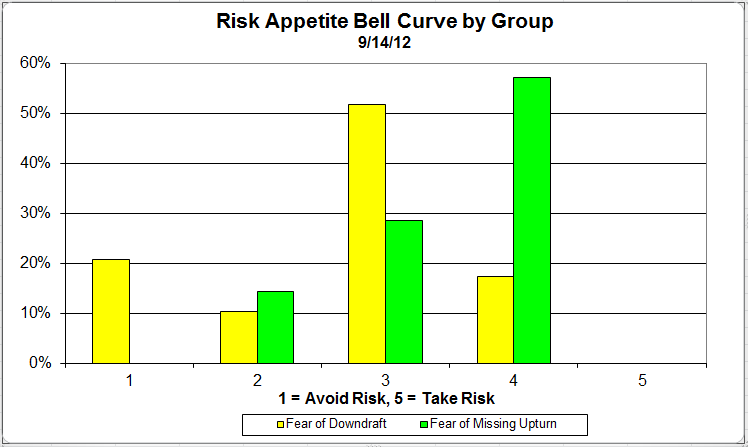
Chart 5: Risk appetite Bell Curve by Group. The next three charts use cross-sectional data. The chat plots the reported client risk appetite separately for the fear of downdraft and for the fear of missing upturn groups. This chart sorts out as expected, with the downturn group wanting less risk and the upturn group looking to add risk.
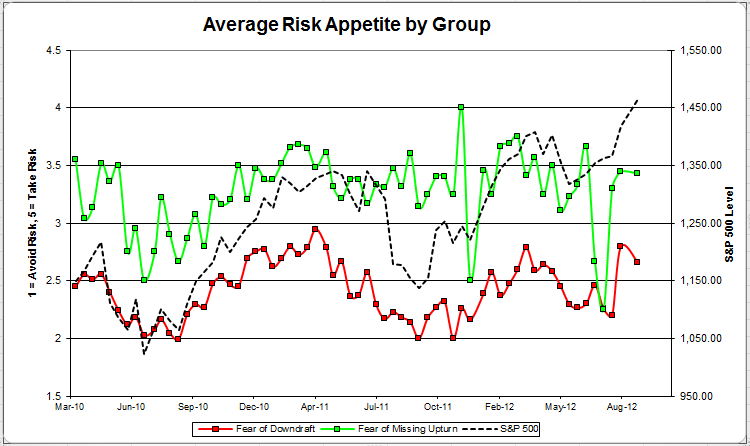
Chart 6: Average Risk Appetite by Group. The average risk appetite of both groups decreased this week, even as the market did well. Both groups want to add less risk relative to the last survey.
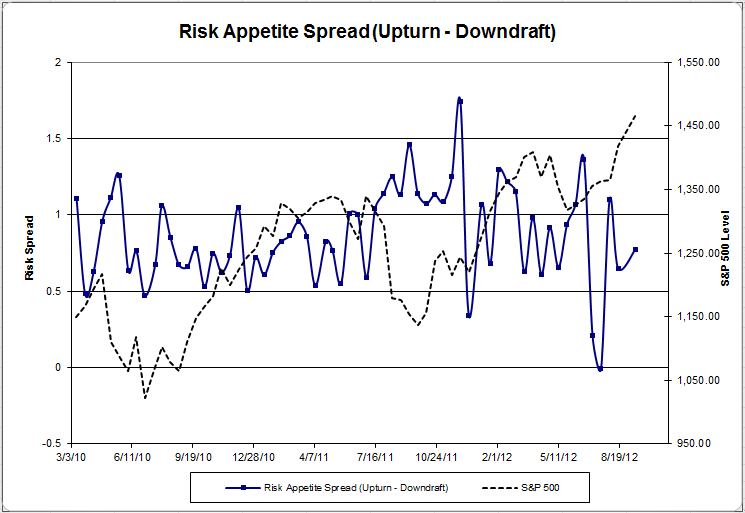
Chart 7: Risk Appetite Spread. This is a chart constructed from the data in Chart 6, where the average risk appetite of the downdraft group is subtracted from the average risk appetite of the missing upturn group. The spread is now back in its normal range.
The S&P 500 rallied over 3% from survey to survey, and none of our indicators performed as expected. The overall fear numbers moved in the opposite direction, and the overall risk appetite number as fell in the face of a rising market. We have seen this before though; unfortunately there is no crystal ball.
No one can predict the future, as we all know, so instead of prognosticating, we will sit back and enjoy the ride. A rigorously tested, systematic investment process provides a great deal of comfort for clients during these types of fearful, highly uncertain market environments. Until next time, good trading and thank you for participating.