Dorsey, Wright Client Sentiment Survey - 2/25/11

February 25, 2011

Here we have the next round of the Dorsey, Wright Sentiment Survey, the first third-party sentiment poll. We’re also featuring a Dorsey, Wright Polo Shirt Giveaway for the next few months. Participate to learn more.

As you know, when individuals self-report, they are always taller and more beautiful than when outside observers report their perceptions! Instead of asking individual investors to self-report whether they are bullish or bearish, we’d like financial advisors to weigh in and report on the actual behavior of clients. It’s two simple questions and will take no more than 20 seconds of your time. We’ll construct indicators from the data and report the results regularly on our blog–but we need your help to get a large statistical sample!

Click here to take Dorsey, Wright’s Client Sentiment Survey.

Contribute to the greater good! It’s painless, we promise.

Posted by:


Dorsey, Wright Client Sentiment Survey Results - 2/11/11

February 22, 2011

Our latest sentiment survey was open from 2/11/11 to 2/18/11. We had a drop off in responses, down to 74 participants. Unacceptable! If you believe, as we do, that markets are driven by supply and demand, client behavior is important. We’re not asking what you think of the market—since most of our blog readers are financial advisors, we’re asking instead about the behavior of your clients. Then we’re aggregating responses exclusively for our readership. Your privacy will not be compromised in any way.

After the first 30 or so responses, the established pattern was simply magnified, so we are comfortable about the statistical validity of our sample. Most of the responses were from the U.S., but we also had multiple advisors respond from at least two other countries. Let’s get down to an analysis of the data! Note: You can click on any of the charts to enlarge them.

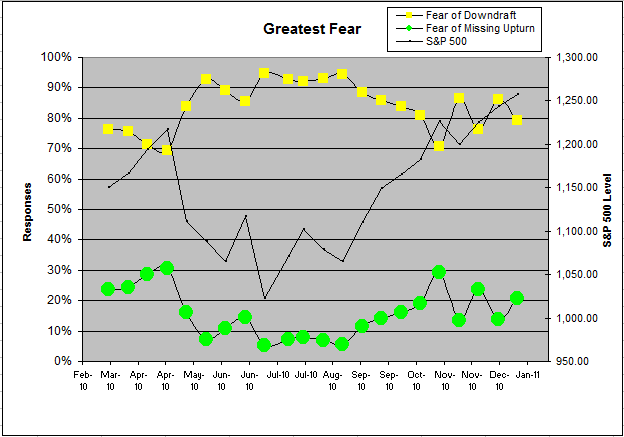
Question 1. Based on their behavior, are your clients currently more afraid of: a) getting caught in a stock market downdraft, or b) missing a stock market upturn?
 Dorsey, Wright Client Sentiment Survey Results   2/11/11

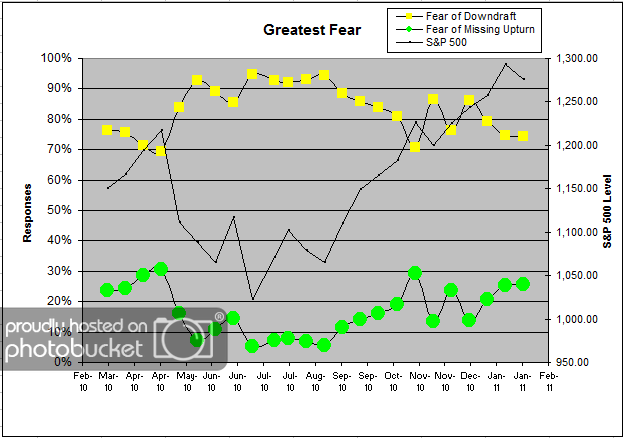
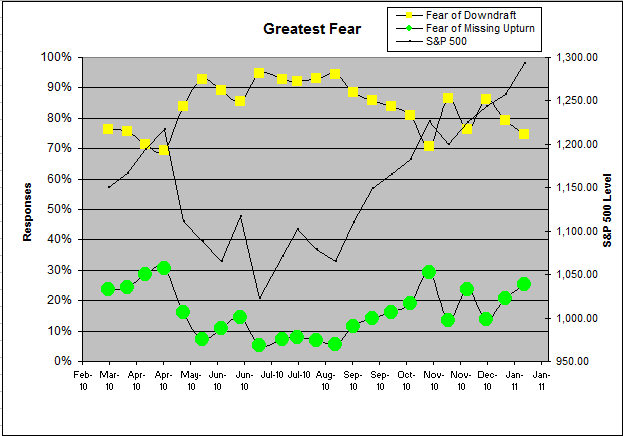
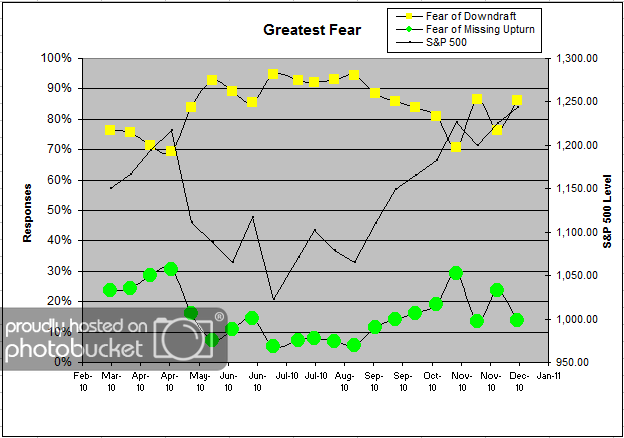
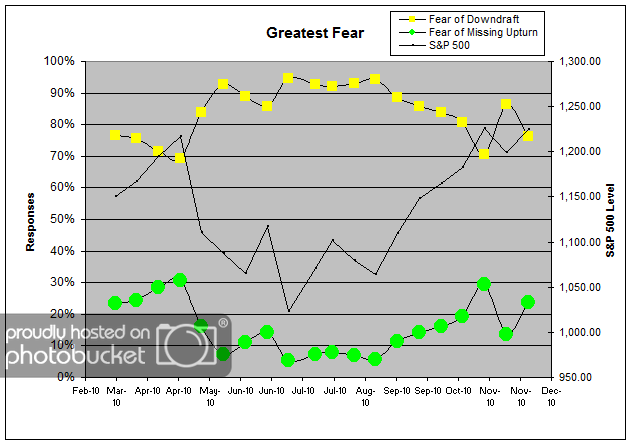
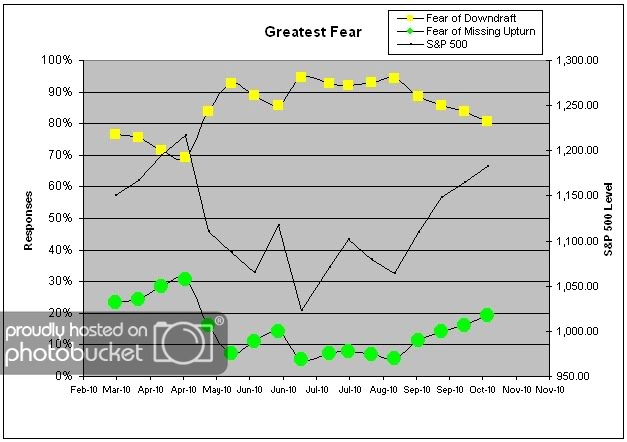
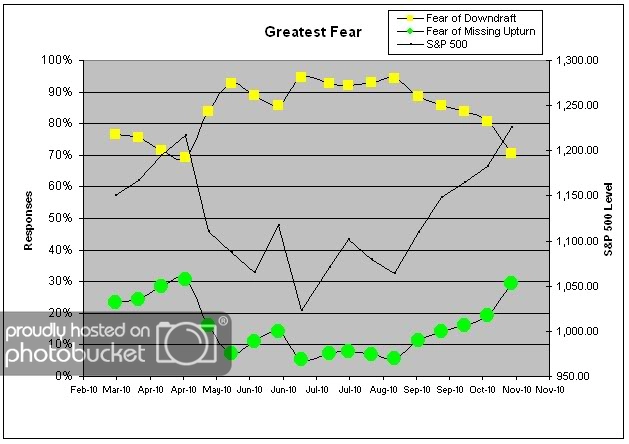
Chart 1: Greatest Fear. From survey to survey, the S&P 500 rose by just over 4%, and the greatest fear numbers reacted in kind. This round, 66% of clients were afraid of losing money, down from last survey’s reading of 74%. The greatest fear numbers are currently at all time lows (or highs, depending on your perspective). On the flip side, 34% of clients were afraid of missing out on the rally, also the highest levels we have seen thus far since the survey began nearly a year ago. Client fear levels are now sitting at around 1-year lows, having broken through significant technical resistance.

 Dorsey, Wright Client Sentiment Survey Results   2/11/11

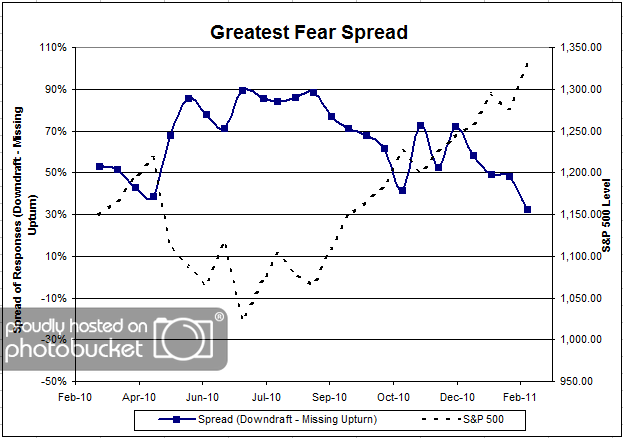
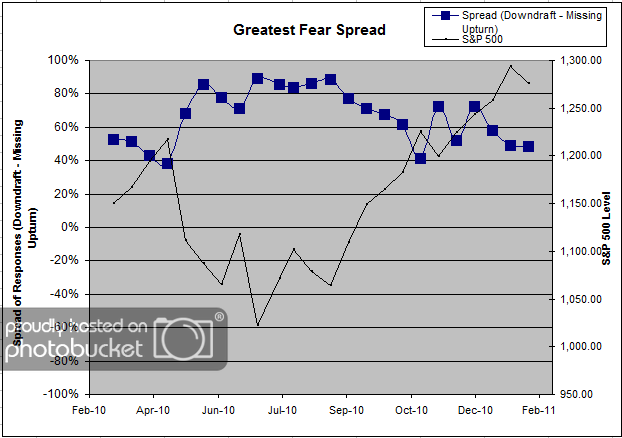
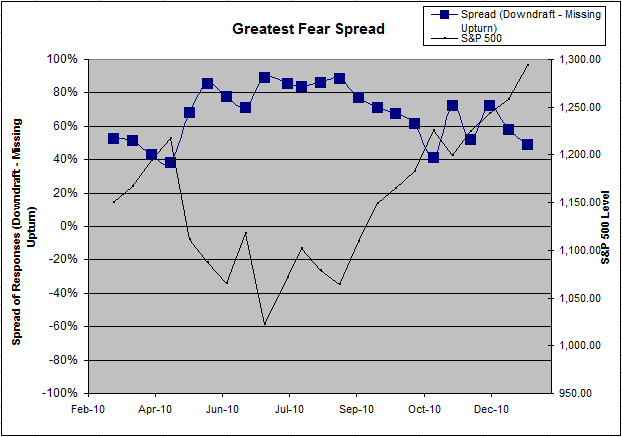
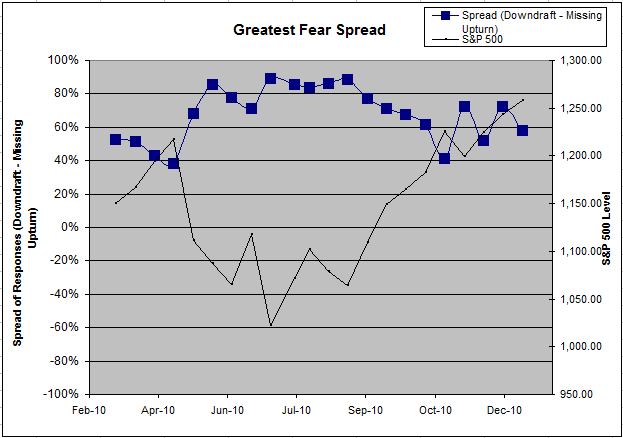
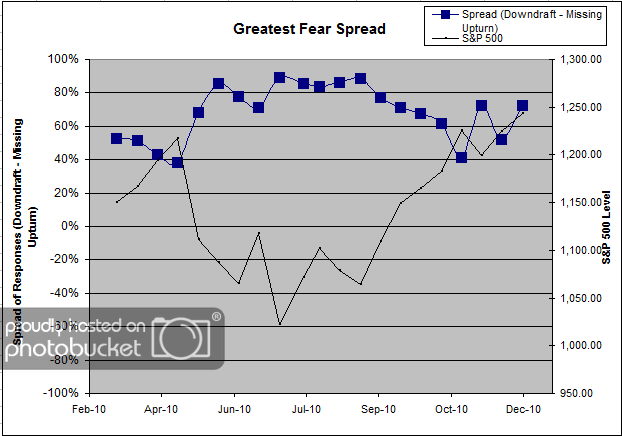
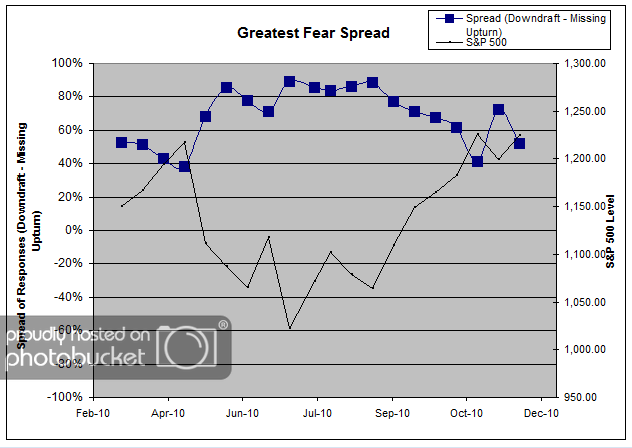
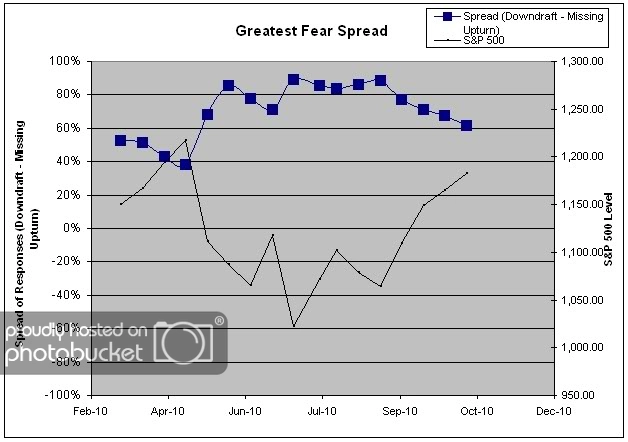
Chart 2. Greatest Fear Spread. Another way to look at this data is to examine the spread between the two groups. The spread remains skewed towards the fear of losing money crowd, at 34%; however, let’s not forget that this is the closest to parity we’ve seen thus far.

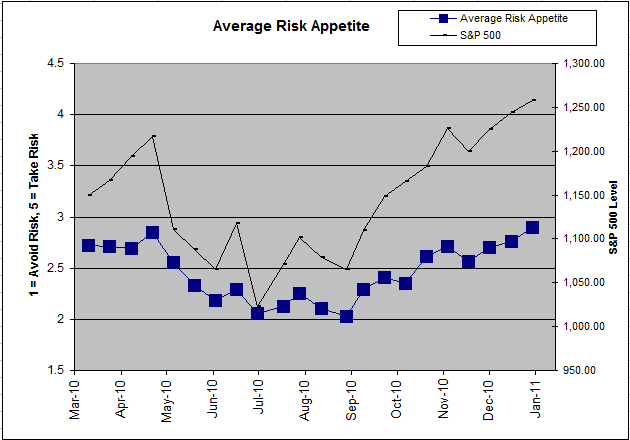
Question 2. Based on their behavior, how would you rate your clients’ current appetite for risk?

 Dorsey, Wright Client Sentiment Survey Results   2/11/11

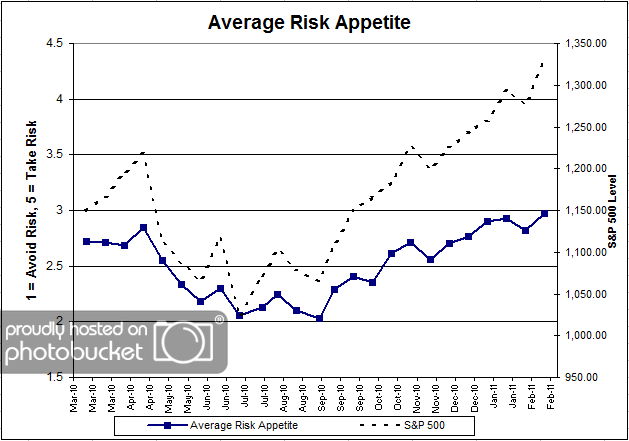
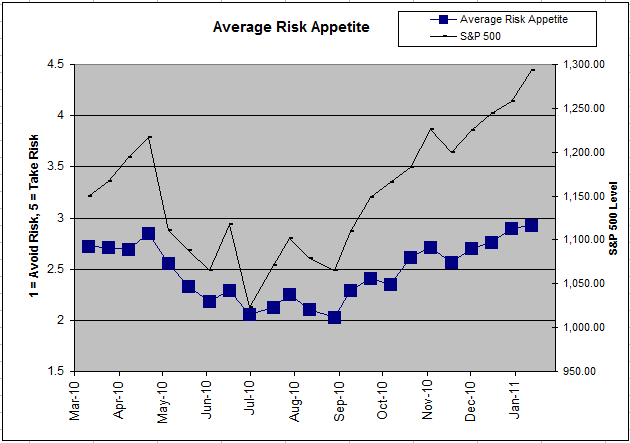
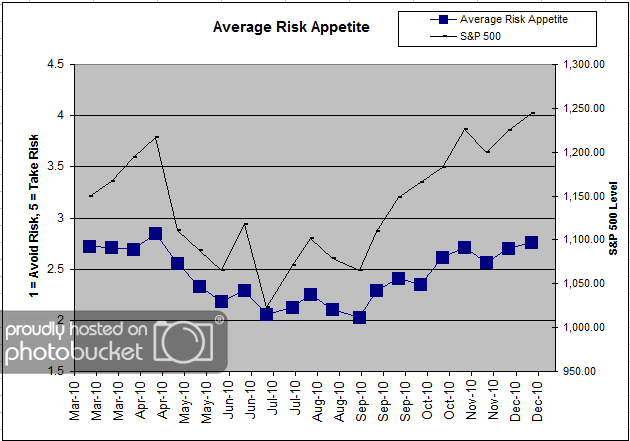
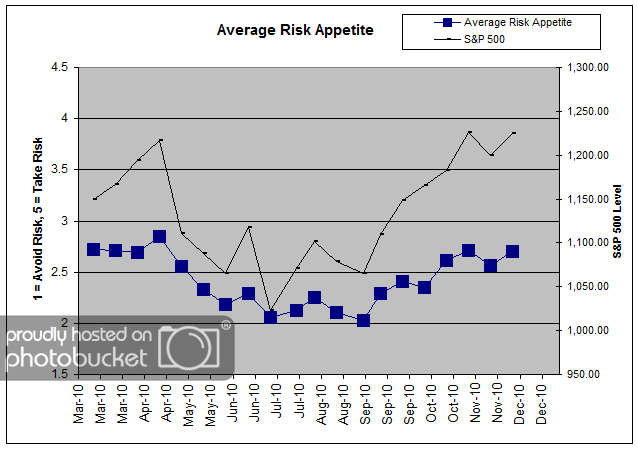
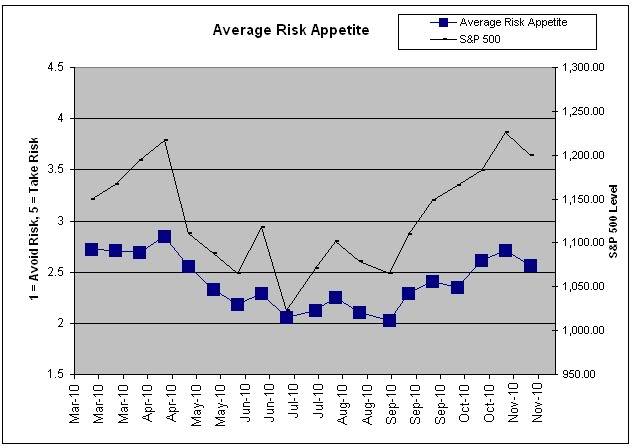
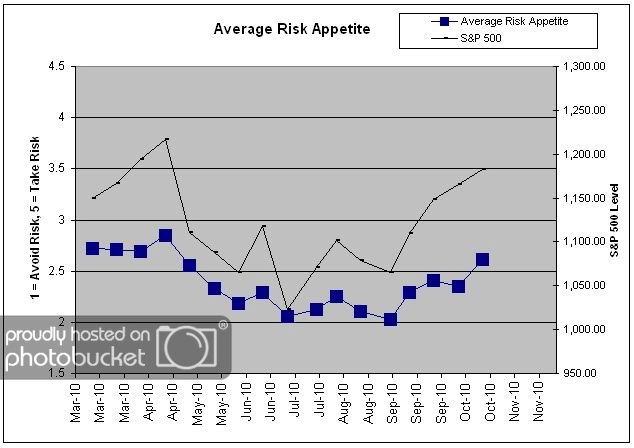
Chart 3: Average Risk Appetite. Average risk appetite also managed to eke out new all-time survey highs this round, rising from 2.82 to 2.97. The average risk appetite chart is a great visual representation between short term market moves and client risk appetite. They basically move in lock-step through time. And now that the stock market is hitting all-time survey highs, we can clearly see client risk appetite moving right along.

 Dorsey, Wright Client Sentiment Survey Results   2/11/11

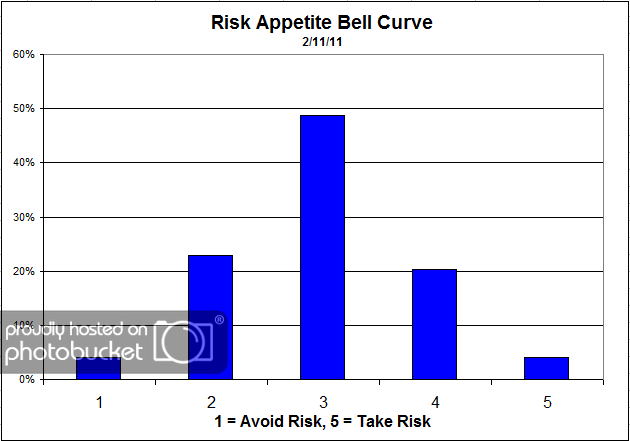
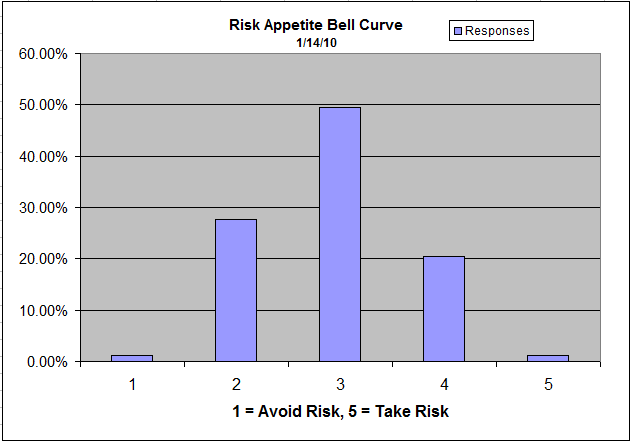
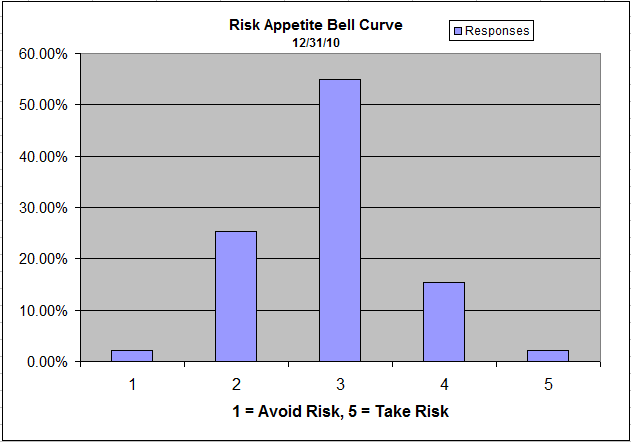
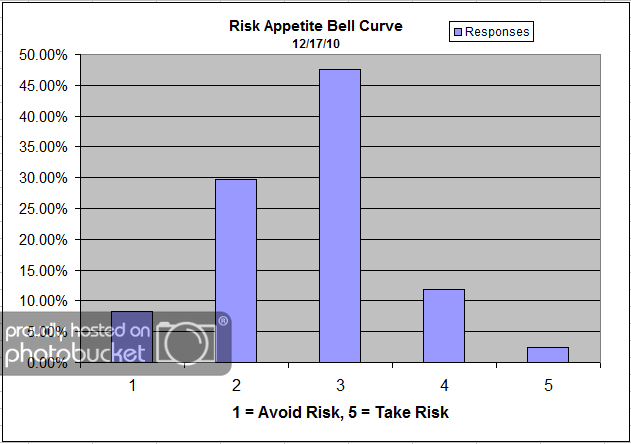
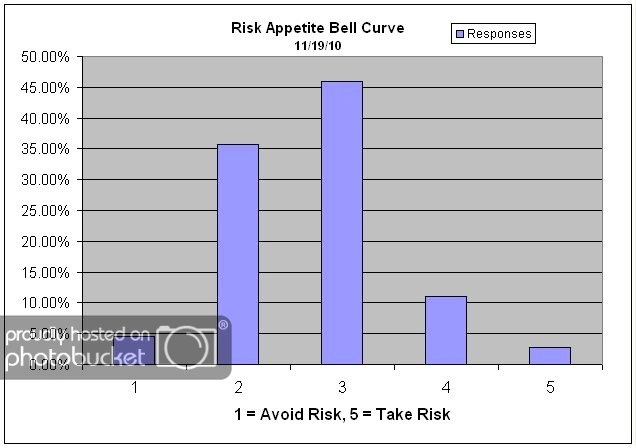
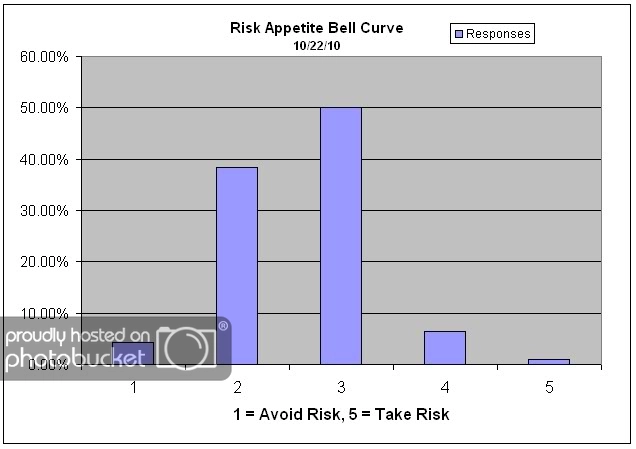
Chart 4: Risk Appetite Bell Curve. This chart uses a bell curve to break out the percentage of respondents at each risk appetite level. The most common risk appetite was 3 this round, with just under half of all respondents. Compared to previous bell curves, we are beginning to see a much higher percentage of 4′s and 5′s, while the level of 1′s and 2′s noticeably declines.

 Dorsey, Wright Client Sentiment Survey Results   2/11/11

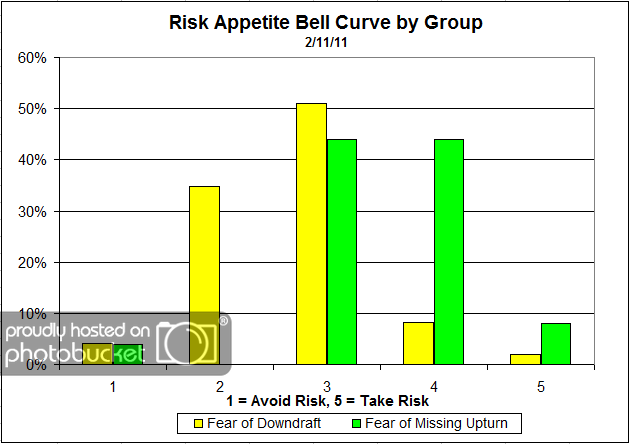
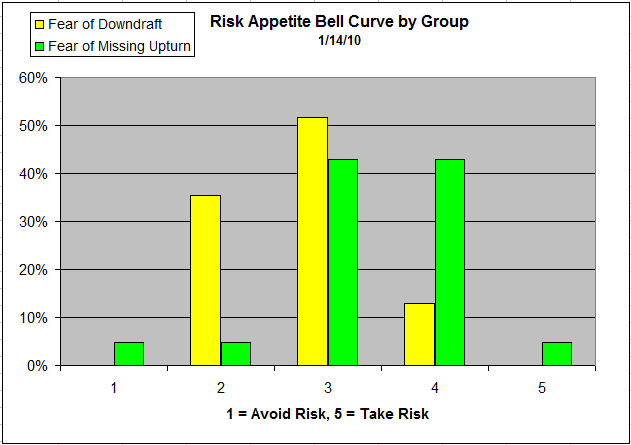
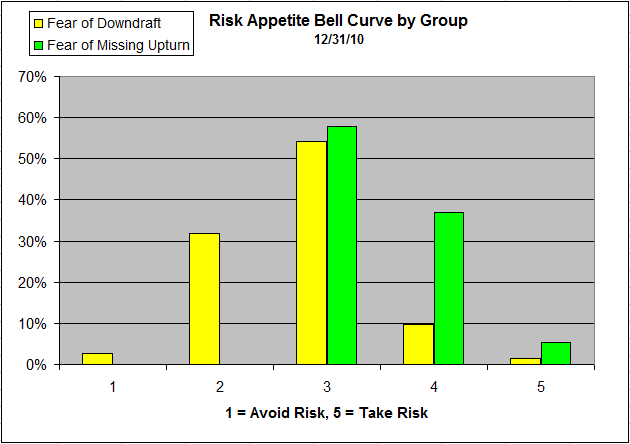
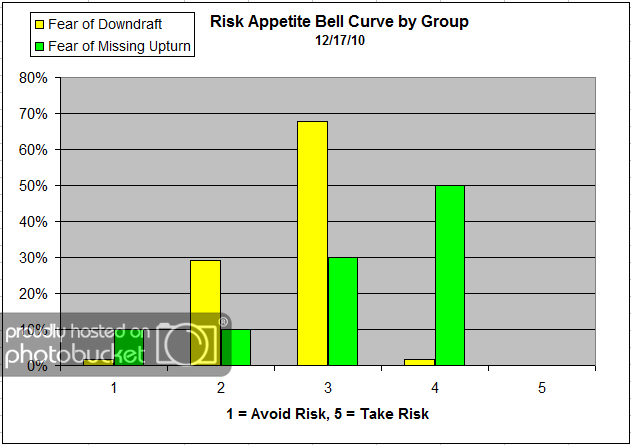
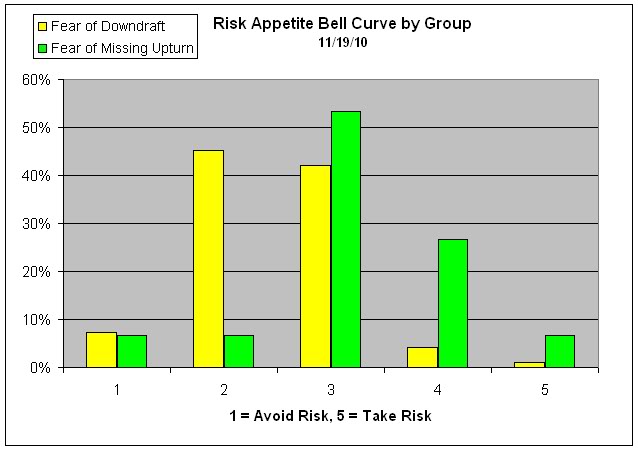
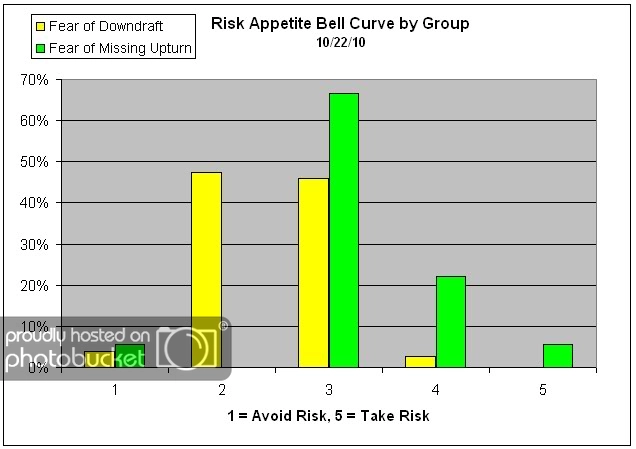
Chart 5: Risk Appetite Bell Curve by Group. The next three charts use cross-sectional data. This chart plots the reported client risk appetite separately for the fear of downdraft and for the fear of missing upturn groups. We would expect that the fear of downdraft group would have a lower risk appetite than the fear of missing upturn group and that is what we see here. What’s interesting about this particular graph is the wide dispersion in the fear of downdraft group, versus the concentrated risk of the updraft group. The downdraft group has respondents in each risk category, from 1 to 5. On the other hand, you can see the upturn group is tightly concentrated in the 3-5′s, which just one respondent answering 1.

 Dorsey, Wright Client Sentiment Survey Results   2/11/11

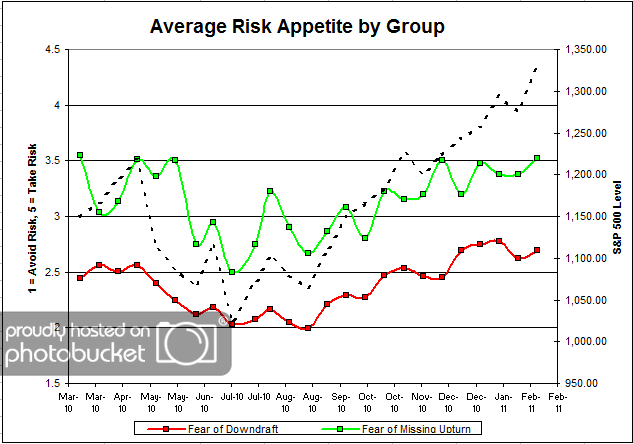
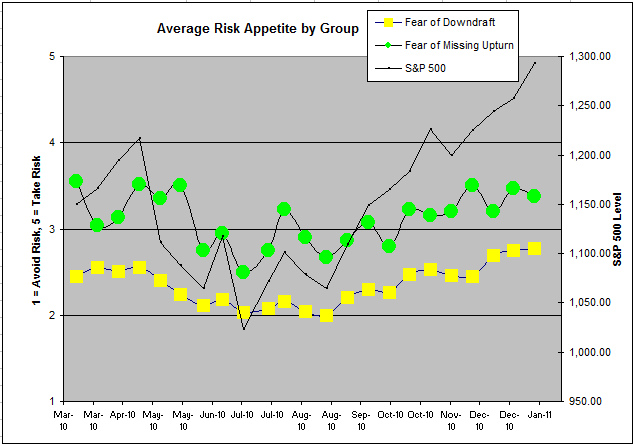
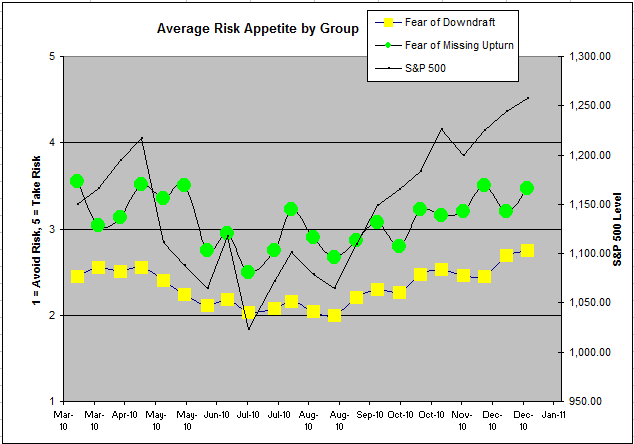
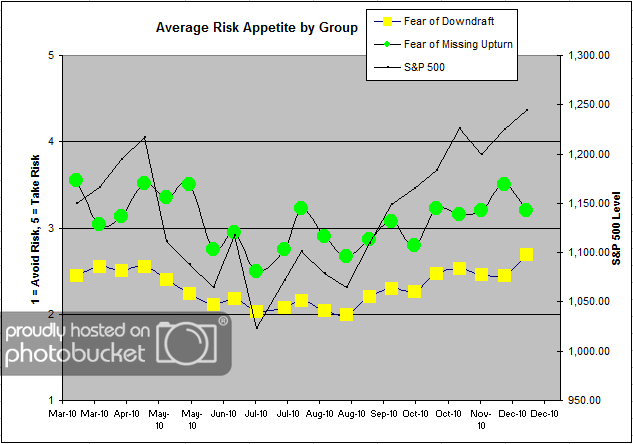
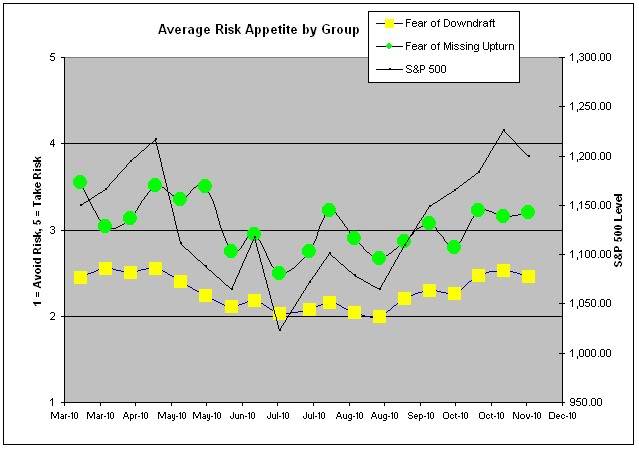
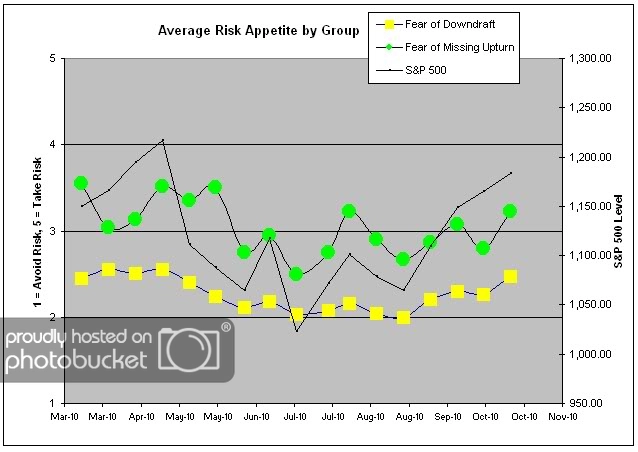
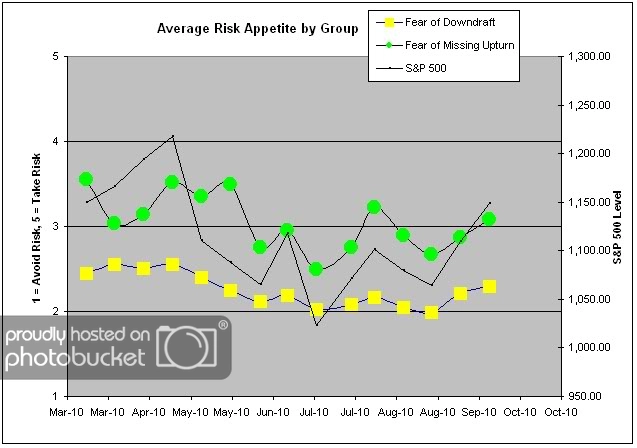
Chart 6: Average Risk Appetite by Group. For once, the average risk appetite by group indicator performed in-line with our expectations, with both groups rising along with the market. Both groups experienced a noticeable uptick in risk appetite, due to a rising market and a fear of missing out on a rally. This is what we expect to see.

 Dorsey, Wright Client Sentiment Survey Results   2/11/11

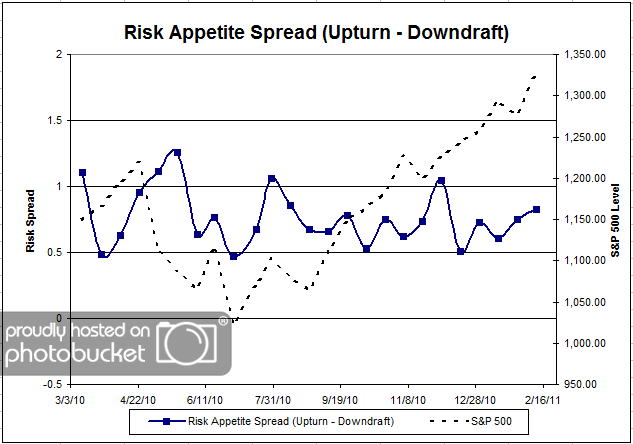
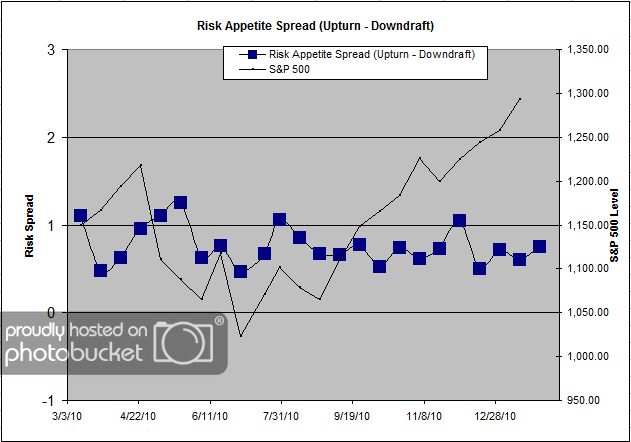
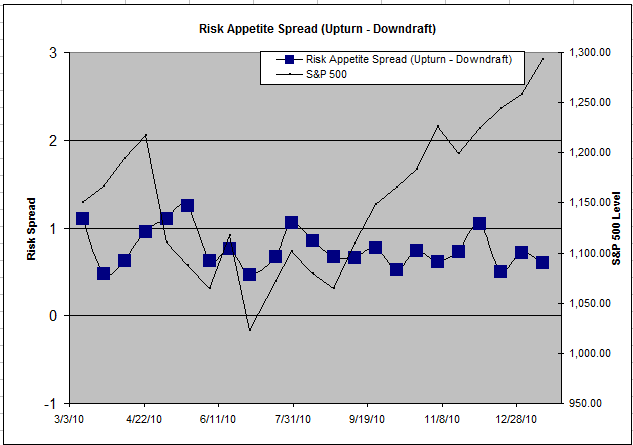
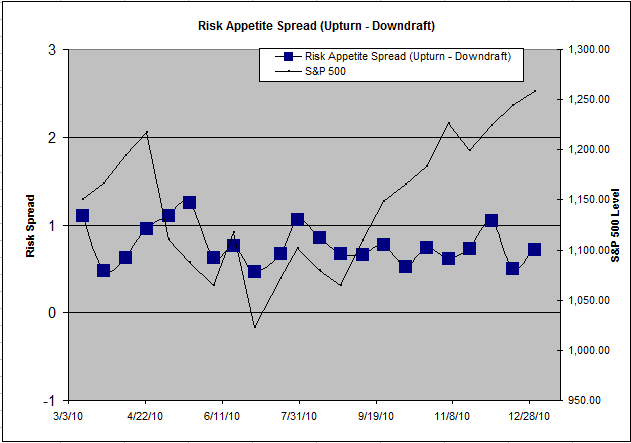
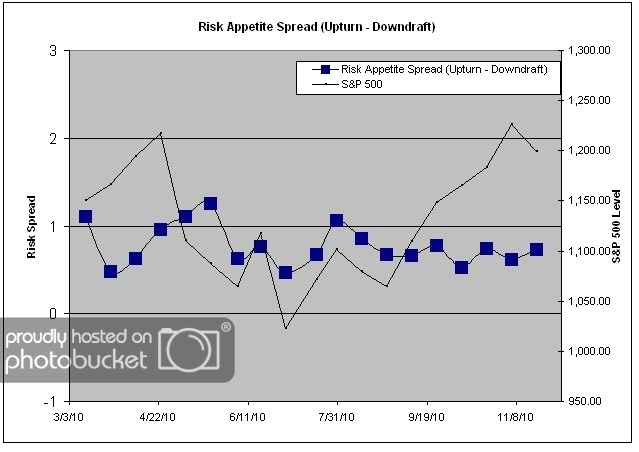
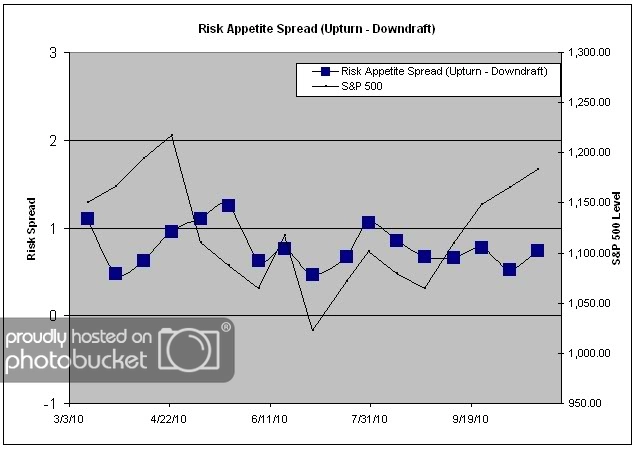
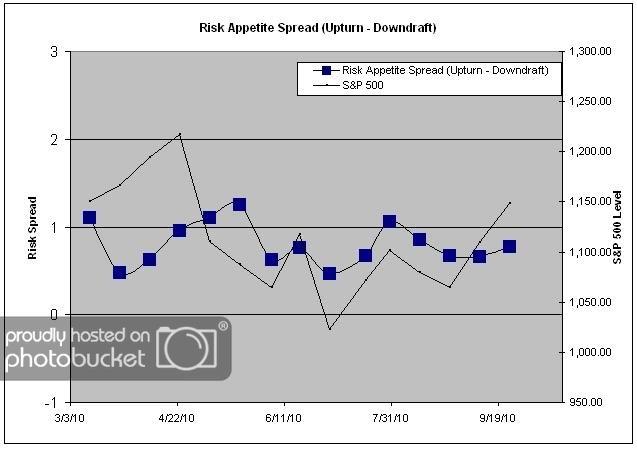
Chart 7: Risk Appetite Spread. This is a spread chart constructed from the data in Chart 6, where the average risk appetite of the downdraft group is subtracted from the average risk appetite of the missing upturn group. The spread is one of the less volatile indicators found in the survey, and continues to trade within a fairly stable range.

This round we saw a big rally in the S&P 500, and all of our client sentiment indicators follow suit. The greatest fear levels have hit all-time highs (or lows), driven by a surging market. If this market continues to rally, we will no doubt see more people become more concerned about missing out on the rally. Ultimately, that’s what this survey is trying to measure — how high can the market rally before people cannot afford to remain on the sideline? And conversely, how long can the market fall before people jump ship?

The average client risk appetite chart has shown itself to be a great measure of client sentiment; it’s great to see an indicator perform exactly as expected!

2011 is only beginning, and our indicators are performing mostly as expected. Any type of short-term anomalies are usually sorted out over the following weeks. No one can predict the future, as we all know, so instead of prognosticating, we will sit back and enjoy the ride. A rigorously tested, systematic investment process provides a great deal of comfort for clients during these types of fearful, highly uncertain market environments. Until next time, good trading and thank you for participating!

Posted by:


Dorsey, Wright Client Sentiment Survey - 2/11/11

February 11, 2011

Here we have the next round of the Dorsey, Wright Sentiment Survey, the first third-party sentiment poll.

As you know, when individuals self-report, they are always taller and more beautiful than when outside observers report their perceptions! Instead of asking individual investors to self-report whether they are bullish or bearish, we’d like financial advisors to weigh in and report on the actual behavior of clients. It’s two simple questions and will take no more than 20 seconds of your time. We’ll construct indicators from the data and report the results regularly on our blog–but we need your help to get a large statistical sample!

Click here to take Dorsey, Wright’s Client Sentiment Survey.

Contribute to the greater good! It’s painless, we promise.

Posted by:


Dorsey, Wright Client Sentiment Survey - 1/28/11

February 7, 2011

Our latest sentiment survey was open from 1/28/11 to 2/4/11. We had a nice boost in responses, with 93 participants. Your input is for a good cause! If you believe, as we do, that markets are driven by supply and demand, client behavior is important. We’re not asking what you think of the market—since most of our blog readers are financial advisors, we’re asking instead about the behavior of your clients. Then we’re aggregating responses exclusively for our readership. Your privacy will not be compromised in any way.

After the first 30 or so responses, the established pattern was simply magnified, so we are comfortable about the statistical validity of our sample. Most of the responses were from the U.S., but we also had multiple advisors respond from at least two other countries. Let’s get down to an analysis of the data! Note: You can click on any of the charts to enlarge them.

Question 1. Based on their behavior, are your clients currently more afraid of: a) getting caught in a stock market downdraft, or b) missing a stock market upturn?

 Dorsey, Wright Client Sentiment Survey   1/28/11

Chart 1: Greatest Fear. From survey to survey, the S&P 500 fell by around -1.3%, but the greatest fear numbers mostly stayed put. This round, 74% of clients were afraid of losing money, down fractionally from 75% (actually, the raw numbers went from 74.70% to 74.19%, so the move was worth about half a percentage point). So while the market experienced a small correction, client fear levels remained mostly the same. On the flip side, 26% of clients were afraid of missing a rally, up slightly from last round’s reading of 25%. As we’ve noted, client fear levels have been stuck in the same 90-75% range for months now, and this muted move is more of the same.

 Dorsey, Wright Client Sentiment Survey   1/28/11

Chart 2. Greatest Fear Spread. Another way to look at this data is to examine the spread between the two groups. The spread remains skewed towards fear of losing money this round. The spread this round dropped from 49% to 48%.

Question 2. Based on their behavior, how would you rate your clients’ current appetite for risk?

 Dorsey, Wright Client Sentiment Survey   1/28/11

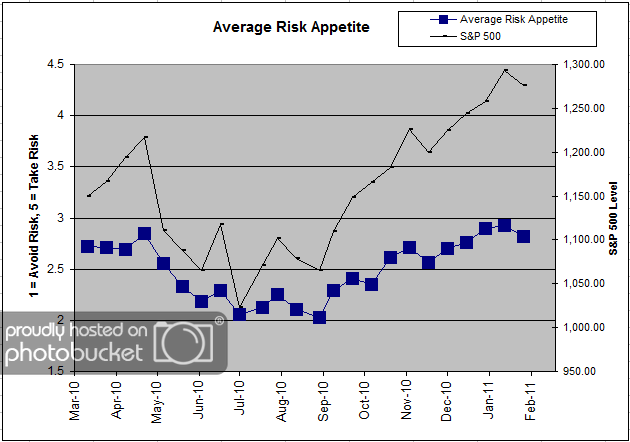
Chart 3: Average Risk Appetite. The average risk appetite of clients moved lower with the market this round, from 2.92 to 2.82. Unlike client fear levels, which have been vaguely unpredictable over the last few months, we’ve noticed that the overall average risk appetite numbers usually perform as expected. When the market rises, so does average risk appetite, and when the market falls, so does average risk appetite.

 Dorsey, Wright Client Sentiment Survey   1/28/11

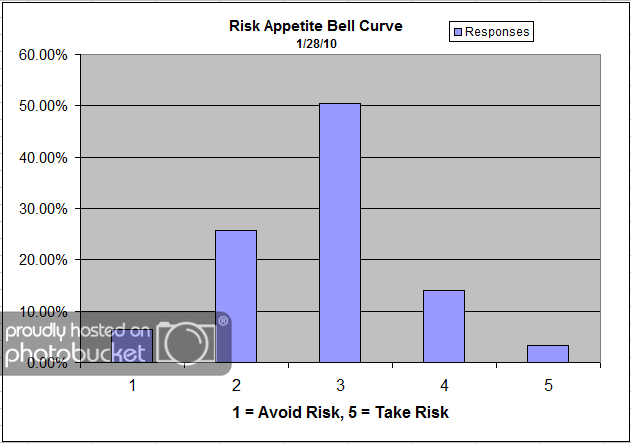
Chart 4: Risk Appetite Bell Curve. This chart uses a bell curve to break out the percentage of respondents at each risk appetite level. The most common risk appetite was 3 this round, with just over half of all respondents. The number of respondents answering “5″ also jumped this round, perhaps an indication of an underlying willingness to add risk on the heels of a prolonged S&P rally.

 Dorsey, Wright Client Sentiment Survey   1/28/11

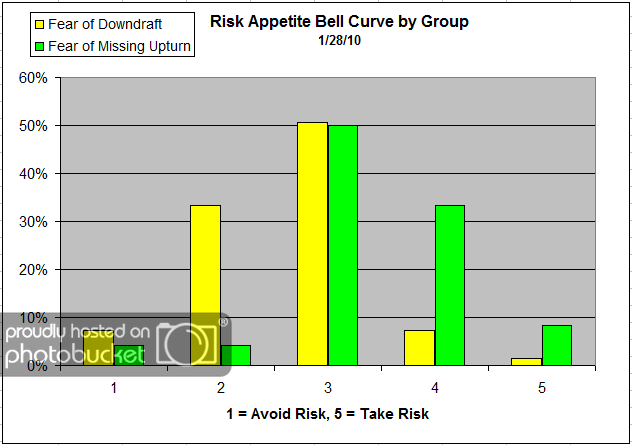
Chart 5: Risk Appetite Bell Curve by Group. The next three charts use cross-sectional data. This chart plots the reported client risk appetite separately for the fear of downdraft and for the fear of missing upturn groups. We would expect that the fear of downdraft group would have a lower risk appetite than the fear of missing upturn group and that is what we see here. For the fear of downdraft group, we see mostly 1′s, 2′s and 3′s. For the fear of missing upturn group, we see mostly 3′s, 4′s and 5′s. One respondent from the fear of downdraft group was looking to add risk, perhaps another example of clients trying to sort out how they feel about missing out on the big rally.

 Dorsey, Wright Client Sentiment Survey   1/28/11

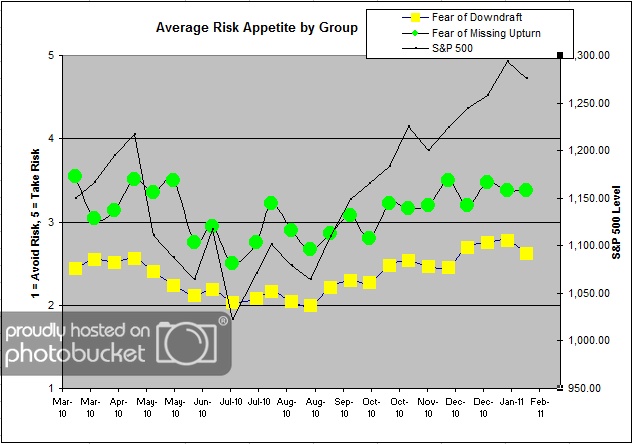
Chart 6: Average Risk Appetite by Group. Once again, the average risk appetite by group indicator acts up (though not in a big way)! We see the average risk appetite of the missing upturn group stay nearly the same, while the fear of downdraft group fell moderately. Usually, it’s the upturn group that makes the big moves, but not so this time. Here’s a theory: The missing upturn group surges big on up-moves, because that group is pre-disposed to want to participate in the rallies. On the other hand, the fear of downturn group falls big on down-moves, because that group is pre-disposed to seek safety. In both instances, when the market moves in a certain direction, those who are most concerned move their risk appetites further towards their respective goals.

 Dorsey, Wright Client Sentiment Survey   1/28/11

Chart 7: Risk Appetite Spread. This is a spread chart constructed from the data in Chart 6, where the average risk appetite of the downdraft group is subtracted from the average risk appetite of the missing upturn group. The spread is one of the less volatile indicators found in the survey, and continues to trade within a fairly stable range.

This round we saw a fairly muted market correction, along with mostly stable survey indicators. The greatest fear level, in particular, barely nudged at the sight of a -1.3% drawdown. Perhaps the two camps have figured out where they stand in the market right now, and it’s going to take a much bigger, more protracted market move to see those fear levels move as well. Also, the average risk appetite by group indicator continues to shed light on how the two camps feel about adding risk. In this round, we saw a moderate drop in risk appetite in the fear of downdraft group, while the upturn camp remained the same. What might be happening is this — the fear of downdraft group’s risk falls more dramatically on a market fall, and the fear of upturn group’s risk rises more dramatically on a market rise. The theory would point towards the the two groups acting out their greatest fears if the market moves towards their respective greatest fear.

2011 is only beginning, and our indicators are performing mostly as expected. Any type of short-term anomalies are usually sorted out over the following weeks. No one can predict the future, as we all know, so instead of prognosticating, we will sit back and enjoy the ride. A rigorously tested, systematic investment process provides a great deal of comfort for clients during these types of fearful, highly uncertain market environments. Until next time, good trading and thank you for participating!

Posted by:


Dorsey, Wright Client Sentiment Survey - 1/28/11

January 28, 2011

Here we have the next round of the Dorsey, Wright Sentiment Survey, the first third-party sentiment poll.

As you know, when individuals self-report, they are always taller and more beautiful than when outside observers report their perceptions! Instead of asking individual investors to self-report whether they are bullish or bearish, we’d like financial advisors to weigh in and report on the actual behavior of clients. It’s two simple questions and will take no more than 20 seconds of your time. We’ll construct indicators from the data and report the results regularly on our blog–but we need your help to get a large statistical sample!

Click here to take Dorsey, Wright’s Client Sentiment Survey.

Contribute to the greater good! It’s painless, we promise.

Posted by:


Dorsey, Wright Client Sentiment Survey Results - 1/14/11

January 24, 2011

Our latest sentiment survey (and first of the year) was open from 1/14/11 to 1/21/11. We had a slight drop off in advisor respones, with 83 participants. Your input is for a good cause! If you believe, as we do, that markets are driven by supply and demand, client behavior is important. We’re not asking what you think of the market—since most of our blog readers are financial advisors, we’re asking instead about the behavior of your clients. Then we’re aggregating responses exclusively for our readership. Your privacy will not be compromised in any way.

After the first 30 or so responses, the established pattern was simply magnified, so we are comfortable about the statistical validity of our sample. Most of the responses were from the U.S., but we also had multiple advisors respond from at least two other countries. Let’s get down to an analysis of the data! Note: You can click on any of the charts to enlarge them.

Question 1. Based on their behavior, are your clients currently more afraid of: a) getting caught in a stock market downdraft, or b) missing a stock market upturn?

 Dorsey, Wright Client Sentiment Survey Results   1/14/11

Chart 1: Greatest Fear. From survey to survey, the S&P 500 gained around +2.8%, a great start to the year. Most of the responses of this survey round came BEFORE the mid-week market correction, so keep in mind that we are analyzing data points based on when the survey was published. So, we had a great start to the year, and client fear levels dropped as expected. This survey, 75% of clients were afraid of losing money, versus 79% from last round. On the flip side, 25% of clients were afraid of missing a market rally, up moderately from the last reading of 21%. Client fear levels have been basically stuck in the 90-75% range since late October, and those support/resistance levels seem to be fairly entrenched in client behavior.

 Dorsey, Wright Client Sentiment Survey Results   1/14/11

Chart 2. Greatest Fear Spread. Another way to look at this data is to examine the spread between the two groups. The spread remains skewed towards fear of losing money this round. The spread dropped slightly to 49% from the previous survey’s reading of 58%.

Question 2. Based on their behavior, how would you rate your clients’ current appetite for risk?

 Dorsey, Wright Client Sentiment Survey Results   1/14/11

Chart 3: Average Risk Appetite. The average risk appetite number nudged its way to new highs this round, at 2.92 over last round’s 2.90. It’s great to see an indicator working exactly as we would expect it to — average risk appetite falls in a down market and rises in an up market. Some of the other indicators have been a little spotty in the recent surveys (click here), but not so for average risk appetite. As we now know, the market has taken a bit of a hit since most respondents chimed in, so we would expect to see a drop in this reading if the market continues to move lower.

 Dorsey, Wright Client Sentiment Survey Results   1/14/11

Chart 4: Risk Appetite Bell Curve. This chart uses a bell curve to break out the percentage of respondents at each risk appetite level. The most common risk appetite was 3 this round, with nearly half of all survey respondents. If you consider that the overall average was 2.92, this isn’t a surprising breakdown.

 Dorsey, Wright Client Sentiment Survey Results   1/14/11

Chart 5: Risk Appetite Bell Curve by Group. The next three charts use cross-sectional data. This chart plots the reported client risk appetite separately for the fear of downdraft and for the fear of missing upturn groups. We would expect that the fear of downdraft group would have a lower risk appetite than the fear of missing upturn group and that is what we see here. The fear of downdraft group sticks close together, with only 2′s, 3′s and 4′s. On the flip side, the missing upturn group has a wide variety of responses, with a single 1 and a single 5. Again we see the fear of missing upturn group representing a wide variety of risk appetites (more volatility) while the downturn group is a more tight-knit group across the board (less volatility).

 Dorsey, Wright Client Sentiment Survey Results   1/14/11

Chart 6: Average Risk Appetite by Group. We’ve noticed that this particular indicator is usually the one which performs differently than we would expect. For instance, with the market up from survey to survey, we expect both groups to have a higher risk appetite than before. It turns out that the upturn group’s risk appetite actually fell during this period, while the downturn’s group inched higher. The upturn group has historically been the more volatile of the two groups, and we see that again here. Is that extra volatility a function of the smaller sample size? Or, is that group by definition a more volatile bunch, in that the first question determines their broad risk profile (fear of losing money vs. fear of missing the rally)?

 Dorsey, Wright Client Sentiment Survey Results   1/14/11

Chart 7: Risk Appetite Spread. This is a spread chart constructed from the data in Chart 6, where the average risk appetite of the downdraft group is subtracted from the average risk appetite of the missing upturn group. The spread is one of the less volatile indicators found in the survey, and seems to be trading within a fairly stable range.

This round we saw more of the same, with most of the indicators performing as expected. The market went higher, and fear levels receded a bit. Along with falling fear levels, we saw rising average risk appetite as people on the sidelines feel the need to participate in the rally. Because of the mid-week pullback, it’s important to remember that these analyses are from survey to survey, and publishing dates might not perfectly sync up with market moves. At any rate, we are still seeing short-term market performance affect long-term risk appetites, which should not be the case.

2011 is only beginning, and our indicators are performing mostly as expected. Any type of short-term anomalies are usually sorted out over the next few weeks, as we saw a month ago with rising fear in a falling market (this round was back to normal). No one can predict the future, as we all know, so instead of prognosticating, we will sit back and enjoy the ride. A rigorously tested, systematic investment process provides a great deal of comfort for clients during these types of fearful, highly uncertain market environments. Until next time, good trading and thank you for participating!

Posted by:


Dorsey, Wright Client Sentiment Survey - 1/14/11

January 14, 2011

Here we have the next round (and first of 2011!) of the Dorsey, Wright Sentiment Survey, the first third-party sentiment poll.

As you know, when individuals self-report, they are always taller and more beautiful than when outside observers report their perceptions! Instead of asking individual investors to self-report whether they are bullish or bearish, we’d like financial advisors to weigh in and report on the actual behavior of clients. It’s two simple questions and will take no more than 20 seconds of your time. We’ll construct indicators from the data and report the results regularly on our blog–but we need your help to get a large statistical sample!

Click here to take Dorsey, Wright’s Client Sentiment Survey.

Contribute to the greater good! It’s painless, we promise.

Posted by:


Dorsey, Wright Client Sentiment Survey - 12/31/10

January 10, 2011

Our latest sentiment survey was open from 12/31/10 to 1/7/11. We had a decent holiday bounce for participants, with 91 responses. Things will surely pick up once the new year gets rolling. Your input is for a good cause! If you believe, as we do, that markets are driven by supply and demand, client behavior is important. We’re not asking what you think of the market—since most of our blog readers are financial advisors, we’re asking instead about the behavior of your clients. Then we’re aggregating responses exclusively for our readership. Your privacy will not be compromised in any way.

After the first 30 or so responses, the established pattern was simply magnified, so we are comfortable about the statistical validity of our sample. Most of the responses were from the U.S., but we also had multiple advisors respond from at least two other countries. Let’s get down to an analysis of the data! Note: You can click on any of the charts to enlarge them.

Question 1. Based on their behavior, are your clients currently more afraid of: a) getting caught in a stock market downdraft, or b) missing a stock market upturn?

 Dorsey, Wright Client Sentiment Survey   12/31/10

Chart 1: Greatest Fear. Same as last round, the S&P 500 gained just over 1% from survey to survey. This time, we saw a predictable drop in client fear levels, as the fear of downdraft numbers went from 86% to 79%. Since the lows of March in 2009, the S&P 500 has risen around +65%. Yet, client fear levels remain close to 80%. On the flip side, only 21% of clients are worried about missing out on a rally. What’s interesting about the fear chart patterns since November, is that the market has steadily risen, but the fear levels have been mostly choppy. What’s it going to take to get retail investors back into the market?

 Dorsey, Wright Client Sentiment Survey   12/31/10

Chart 2. Greatest Fear Spread. Another way to look at this data is to examine the spread between the two groups. The spread remains skewed towards fear of losing money this round. This round, the spread fell from 72% to 58%.

Question 2. Based on their behavior, how would you rate your clients’ current appetite for risk?

 Dorsey, Wright Client Sentiment Survey   12/31/10

Chart 3: Average Risk Appetite. For two weeks in a row, the average risk appetite has performed exactly as expected, moving in-line with a rising market. Unlike the general fear levels, which have been choppy in a rising market, the average risk appetite is hitting all-time survey highs, just as the S&P is. This week, the overall average risk appetite was 2.90, up from last round’s reading of 2.76. There’s a couple of things to consider when taking this reading into account. First, the average risk reading is working as expected, but the general fear indicator isn’t. This could mean that clients are admitting to themselves that they are willing to take more risk in one question, but they can’t admit it in the other survey question. Again, how long can the market be up double digits year over year before clients jump in?

 Dorsey, Wright Client Sentiment Survey   12/31/10

Chart 4: Risk Appetite Bell Curve. This chart uses a bell curve to break out the percentage of respondents at each risk appetite level. The most common risk appetite was 3 this round, with over half of all survey respondents.

 Dorsey, Wright Client Sentiment Survey   12/31/10

Chart 5: Risk Appetite Bell Curve by Group. The next three charts use cross-sectional data. This chart plots the reported client risk appetite separately for the fear of downdraft and for the fear of missing upturn groups. We would expect that the fear of downdraft group would have a lower risk appetite than the fear of missing upturn group and that is what we see here. Another interesting tidbit which ties along nicely with this round’s narrative is the smattering of 4′s and 5′s that the fear of downdraft group have. These are the people who are both afraid of losing money in the market, and yet are willing to add risk. There may come a time when this sub-group goes “all in” in either direction — complete safety or complete risk. At the moment, it looks like there are those who are still trying to decide what they want.

 Dorsey, Wright Client Sentiment Survey   12/31/10

Chart 6: Average Risk Appetite by Group. Here we have a bit of a mish-mash, with the missed opportunity group piling on the risk, and the fear of losing money group barely inching higher. Keep in mind that the overall risk appetite is at all-time survey highs, so it seems like that move can be attributed to the upturn group. Last round, if you recall, we saw the upturn group risk actually fall in a rising market (not what we expect), while the downturn group moved to new highs. I was worried that the downdraft group’s risk would fall back after hitting new highs, but as you can see, it seems like the fear group is working to establish a new risk appetite base of operations.

 Dorsey, Wright Client Sentiment Survey   12/31/10

Chart 7: Risk Appetite Spread. This is a spread chart constructed from the data in Chart 6, where the average risk appetite of the downdraft group is subtracted from the average risk appetite of the missing upturn group. The spread bounced back after a nice fall last round, and seems to be working within a fairly well-defined range.

Unlike last survey, most indicators performed as expected this round. The market went up, fear levels went down, and risk appetite rose to all-time highs. Fear levels seem stuck around the 70-80% range, which seems a bit high considering the stock market’s performance over the last year and a half…it’s gone strongly higher, but clients remain scared. Fear levels are guaranteed to fall at some point if the market keeps rising; it’s just a matter of when. The overall risk appetite levels are hinting towards a broad sentiment swing, as the indicator is hitting all-time survey highs with the market. It seems like in one question, advisors see their clients acting one way (fear levels are high), and on the other, advisors see their clients acting another way (it may be time to start adding risk). Whatever happens, it’s clearly established that short-term market performance is affecting long-term outlook and sentiment, and that’s never a good thing. It’s the first survey of the year, and there’s literally no telling where we’ll be in twelve months. Hopefully our readership and participation rate will continue to grow; with more and more survey data points, we will hopefully be able to glean more information and insight from these two simple questions.

No one can predict the future, as we all know, so instead of prognosticating, we will sit back and enjoy the ride. A rigorously tested, systematic investment process provides a great deal of comfort for clients during these types of fearful, highly uncertain market environments. Until next time, good trading and thank you for participating!

Posted by:


Dorsey, Wright Client Sentiment Survey - 12/17/10

December 27, 2010

Our latest sentiment survey was open from 12/17/10 to 12/24/10. The survey continues to experience a “holiday malaise,” with only 72 particpants responding. Things will surely pick up once the new year gets rolling. Your input is for a good cause! If you believe, as we do, that markets are driven by supply and demand, client behavior is important. We’re not asking what you think of the market—since most of our blog readers are financial advisors, we’re asking instead about the behavior of your clients. Then we’re aggregating responses exclusively for our readership. Your privacy will not be compromised in any way.

After the first 30 or so responses, the established pattern was simply magnified, so we are comfortable about the statistical validity of our sample. Most of the responses were from the U.S., but we also had multiple advisors respond from at least two other countries. Let’s get down to an analysis of the data! Note: You can click on any of the charts to enlarge them.

Question 1. Based on their behavior, are your clients currently more afraid of: a) getting caught in a stock market downdraft, or b) missing a stock market upturn?

 Dorsey, Wright Client Sentiment Survey   12/17/10

Chart 1: Greatest Fear. From survey to survey, the S&P 500 gained just over 1%. Surprisingly, client fear levels actually moved higher, where we would expect a drop-off in fear levels due to a rising market. We’ll accept the data as is, and partially attribute the unexpected move to the holiday season and lower participation rate. Or, we could also view it as a technical divergence (we would expect falling fear levels with rising prices). This round, 86% of respondents were fearful of a downdraft, up slightly from last round’s reading of 76%. On the flip side, only 14% of respondents were worried about missing an upturn, versus last survey’s reading of 24%.

 Dorsey, Wright Client Sentiment Survey   12/17/10

Chart 2. Greatest Fear Spread. Another way to look at this data is to examine the spread between the two groups. The spread remains skewed towards fear of losing money this round. This round, the spread rose from 52% to 72%, on account of rising fear levels.

Question 2. Based on their behavior, how would you rate your clients’ current appetite for risk?

 Dorsey, Wright Client Sentiment Survey   12/17/10

Chart 3: Average Risk Appetite. Unlike the general client fear levels, the average risk appetite moved higher with market, as we would expect it to do. Average risk appetite moved to the highest levels since April, at 2.76. Keep in mind that three surveys ago (11/5), average risk appetite hit 2.71, so we would not consider this a massive breakout. Rather, we’re seeing that client risk appetite is finding the top-level of its current range and barely testing it. It’s good to see this indicator working as we hypothesize, unlike the overall client fear levels this round.

 Dorsey, Wright Client Sentiment Survey   12/17/10

Chart 4: Risk Appetite Bell Curve. This chart uses a bell curve to break out the percentage of respondents at each risk appetite level. The most common risk appetite was 3 this round, with nearly half of all survey respondents.

 Dorsey, Wright Client Sentiment Survey   12/17/10

Chart 5: Risk Appetite Bell Curve by Group. The next three charts use cross-sectional data. This chart plots the reported client risk appetite separately for the fear of downdraft and for the fear of missing upturn groups. We would expect that the fear of downdraft group would have a lower risk appetite than the fear of missing upturn group and that is what we see here.

 Dorsey, Wright Client Sentiment Survey   12/17/10

Chart 6: Average Risk Appetite by Group. We’re seeing more deviant behavior from our respondents in this chart. With a rising market, we would expect that both groups have a rising risk appetite (also consider that the overall average did move higher this round). However, the fear of missing upturn group, which has historically shown more volatility in this area, actually moved lower with a rising market. The fear of downdraft group’s average, on the other hand, moved to all-time survey highs. No matter how you slice it, the fear of downdraft’s group move higher is a statistically significant breakout. This round, the fear of downdraft group’s average risk appetite clocked in at 2.69, up from 2.45, while the missing upturn group’s appetite fell from 3.5 to 3.2. The real question is if these anomalies are due to the holiday season (tryptophan is a dangerous drug, we hear), or are they statistically valid occurences?

 Dorsey, Wright Client Sentiment Survey   12/17/10

Chart 7: Risk Appetite Spread. This is a spread chart constructed from the data in Chart 6, where the average risk appetite of the downdraft group is subtracted from the average risk appetite of the missing upturn group. The spread fell dramatically this round, from around 1.0 to .50. This is due to the sharp moves in risk appetites in both groups’ averages.

We had some interesting moves in some of the indicators this round, and the floor is open to interpretation. Firstly, we saw moderately rising fear levels in a rising market. This flies in the face of what we would expect to see, in addition to what we have consistently seen in the indicator since we started the survey nearly a year ago. Instead of falling fear levels in a rising market, we have rising fear levels in a rising market. Is this just an anomaly, due to anemic holiday response? Or, could this be a technical divergence with investor sentiment forecasting a market drop (Accurate predictions? Ha Ha!)? Either way, it’s nice to have something to think about with our indicators. Usually, they do exactly what they are supposed to, and it’s fun to watch these things play out in real time.

The other story this round would be the fear of downdraft group’s average risk appetite hitting all-time survey highs. What’s doubly interesting about that reading is the fear of missed opportunity group’s risk appetite actually moved lower this round, which we would not expect. All in all, this survey had a couple of interesting nuances, but we’re probably going to see things shake out one way or the other in the first month or two of the new year.

No one can predict the future, as we all know, so instead of prognosticating, we will sit back and enjoy the ride. A rigorously tested, systematic investment process provides a great deal of comfort for clients during these types of fearful, highly uncertain market environments. Until next time, good trading and thank you for participating!

Posted by:


Dorsey, Wright Client Sentiment Survey - 12/17/10

December 20, 2010

Here we have the next round of the Dorsey, Wright Sentiment Survey, the first third-party sentiment poll.

As you know, when individuals self-report, they are always taller and more beautiful than when outside observers report their perceptions! Instead of asking individual investors to self-report whether they are bullish or bearish, we’d like financial advisors to weigh in and report on the actual behavior of clients. It’s two simple questions and will take no more than 20 seconds of your time. We’ll construct indicators from the data and report the results regularly on our blog–but we need your help to get a large statistical sample!

Click here to take Dorsey, Wright’s Client Sentiment Survey.

Contribute to the greater good! It’s painless, we promise.


Posted by:


Dorsey, Wright Client Sentiment Survey - 12/3/10

December 13, 2010

Our latest sentiment survey was open from 12/3/10 to 12/10/10. We had a holiday drop-off in respondents this round, with 84 people participating. Your input is for a good cause! If you believe, as we do, that markets are driven by supply and demand, client behavior is important. We’re not asking what you think of the market—since most of our blog readers are financial advisors, we’re asking instead about the behavior of your clients. Then we’re aggregating responses exclusively for our readership. Your privacy will not be compromised in any way.

After the first 30 or so responses, the established pattern was simply magnified, so we are comfortable about the statistical validity of our sample. Most of the responses were from the U.S., but we also had multiple advisors respond from at least two other countries. Let’s get down to an analysis of the data! Note: You can click on any of the charts to enlarge them.

Question 1. Based on their behavior, are your clients currently more afraid of: a) getting caught in a stock market downdraft, or b) missing a stock market upturn?

 Dorsey, Wright Client Sentiment Survey   12/3/10

Chart 1: Greatest Fear. From survey to survey, the S&P 500 gained around 2% (which was the same it lost from last survey to survey), and client fear abated in-kind. This round, 76% of clients were afraid of losing money, down from last survey’s reading of 86%. On the flip side, 24% of clients were worried about missing out on a rally, up from the previous reading of 14%. This whip-saw in client sentiment highlights exactly the type of short-term thinking that we try to avoid. A 2% market move in EITHER direction in two weeks should not swing client sentiment as strongly as it does! This emotional over-reaction is precisely what we want to avoid, and, unfortunately, this behavior is widespread and systemic. Shame on you, wavering 10%.

 Dorsey, Wright Client Sentiment Survey   12/3/10

Chart 2. Greatest Fear Spread. Another way to look at this data is to examine the spread between the two groups. The spread remains skewed towards fear of losing money this round. This survey, we saw the spread slip to 52%, still quite a bit away from parity (0%).

Question 2. Based on their behavior, how would you rate your clients’ current appetite for risk?

 Dorsey, Wright Client Sentiment Survey   12/3/10

Chart 3: Average Risk Appetite. Risk appetite levels rose in-line with the market move. Right now the average risk appetite is 2.70, just off the recent highs of a month ago at 2.72. If the market continues to rally to close the year, risk appetite levels should be able to stage a significant breakout.

 Dorsey, Wright Client Sentiment Survey   12/3/10

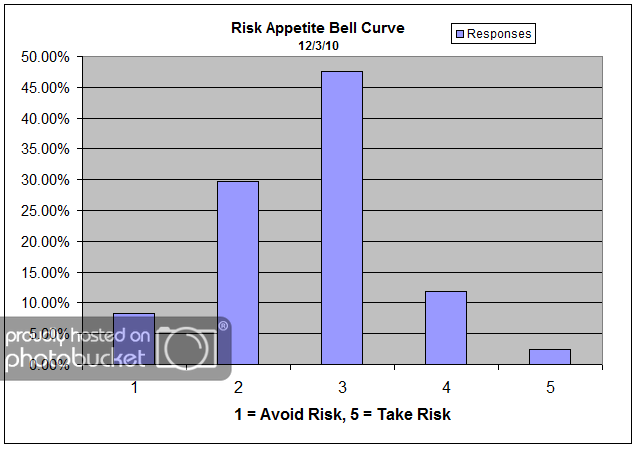
Chart 4: Risk Appetite Bell Curve. This chart uses a bell curve to break out the percentage of respondents at each risk appetite level. This week we saw a bit more dispersion than we have been seeing in prior weeks. Before, most respondents were clustered in at the 2 and 3 level. While 3′s continue to dominate, we saw the percentage of 4′s creep higher with the 2% market move.

 Dorsey, Wright Client Sentiment Survey   12/3/10

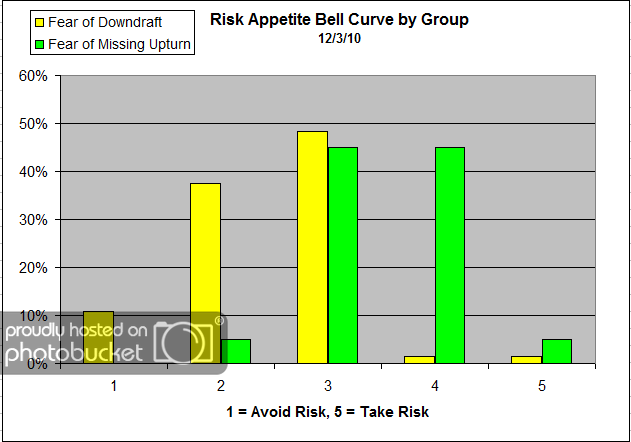
Chart 5: Risk Appetite Bell Curve by Group. The next three charts use cross-sectional data. This chart plots the reported client risk appetite separately for the fear of downdraft and for the fear of missing upturn groups. We would expect that the fear of downdraft group would have a lower risk appetite than the fear of missing upturn group and that is what we see here.

 Dorsey, Wright Client Sentiment Survey   12/3/10

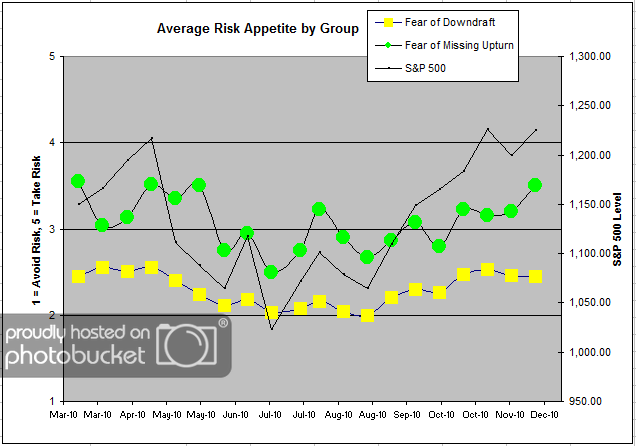
Chart 6: Average Risk Appetite by Group. A plot of the average risk appetite score by group is shown in this chart. Here we see that the fear of losing money group stayed almost exactly the same as the round before, at 2.45. On the other hand, we can see a sizeable rise in the risk appetite of the opportunity crowd. The missed opportunity crowd has shown itself to be more volatile in their risk appetites, and they do the same again here. The missed opportunity group’s average rose from 3.2 to 3.5, which would be considered a technical breakout to 7 month highs.

 Dorsey, Wright Client Sentiment Survey   12/3/10

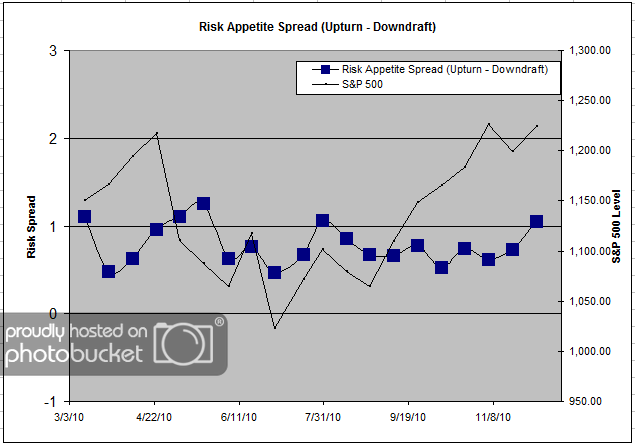
Chart 7: Risk Appetite Spread. This is a spread chart constructed from the data in Chart 6, where the average risk appetite of the downdraft group is subtracted from the average risk appetite of the missing upturn group. The spread jumped by about .30 points from last survey, all due to the upturn group’s risking risk appetite.

The big story this go-round would be the skittishness we’re observing in the overall client fear levels. Last survey we saw fear levels shoot up on a -2% market move. This survey, we saw fear levels fall significantly on a +2% market move. We wish there was some deeper meaning to extract, but there doesn’t seem to be. It’s the same old story! Based on the sentiment data, we could surmise that clients are making long-term investment decisions based on short-term market movement. A 2% move in either direction should not cause such huge emotional swings!

Once again, the average risk appetite of the missed opportunity group spiked higher on the market move, while the fear of losing money group’s average did not move. The upturn group’s risk appetite continues to be much more volatile than the counterpart, and this volatility is driving the overall average’s movement.

No one can predict the future, as we all know, so instead of prognosticating, we will sit back and enjoy the ride. A rigorously tested, systematic investment process provides a great deal of comfort for clients during these types of fearful, highly uncertain market environments. Until next time, good trading and thank you for participating!

Posted by:


Hitting the Nail on the Head

December 6, 2010

This gem is from an article by Peter Cohan over at Daily Finance. The complete piece is about how all of the pundits have been completely wrong about the market rally this year, a topic that is also the subject of a Bloomberg piece today. (Ignoring pundits is a practice that has been heavily reinforced here at Systematic Relative Strength!) Cohan has one of the most concise demolitions of the typical market story in the media:

The media has gotten into the habit of delivering reports on daily developments in the global economy, and suggesting that those events somehow cause changes in stock prices, and nobody challenges that flawed logic.

Exactly.

Bearish stories are particularly good at keeping investors out of rising markets. Reading either one of the linked stories should make it clear that it is quite possible to have lousy news and a good market.

 Hitting the Nail on the Head

Source: www.clipartguide.com

Posted by:


Dorsey, Wright Client Sentiment Survey - 12/3/10

December 3, 2010

Here we have the next round of the Dorsey, Wright Sentiment Survey, the first third-party sentiment poll.

As you know, when individuals self-report, they are always taller and more beautiful than when outside observers report their perceptions! Instead of asking individual investors to self-report whether they are bullish or bearish, we’d like financial advisors to weigh in and report on the actual behavior of clients. It’s two simple questions and will take no more than 20 seconds of your time. We’ll construct indicators from the data and report the results regularly on our blog–but we need your help to get a large statistical sample!

Click here to take Dorsey, Wright’s Client Sentiment Survey.

Contribute to the greater good! It’s painless, we promise.


Posted by:


Dorsey, Wright Client Sentiment Survey Results - 11/19/10

November 29, 2010

Our latest sentiment survey was open from 11/19/10 to 11/26/10. We had one more respondent than last survey, with 110 readers participating. Your input is for a good cause! If you believe, as we do, that markets are driven by supply and demand, client behavior is important. We’re not asking what you think of the market—since most of our blog readers are financial advisors, we’re asking instead about the behavior of your clients. Then we’re aggregating responses exclusively for our readership. Your privacy will not be compromised in any way.

After the first 30 or so responses, the established pattern was simply magnified, so we are comfortable about the statistical validity of our sample. Most of the responses were from the U.S., but we also had multiple advisors respond from at least two other countries. Let’s get down to an analysis of the data! Note: You can click on any of the charts to enlarge them.

Question 1. Based on their behavior, are your clients currently more afraid of: a) getting caught in a stock market downdraft, or b) missing a stock market upturn?

 Dorsey, Wright Client Sentiment Survey Results   11/19/10

Chart 1: Greatest Fear. From survey to survey, the S&P 500 fell around 2%, and client fear levels spiked by a large degree. 86% of clients were afraid of losing money in the market this round, up big from last survey’s reading of 71%. On the other side, we saw the missed opportunity levels fall from 29% to 14%. This is clear evidence that despite a major summer rally (+17% since June lows), market participants are still on edge, ready to jump at first notice. When we see client fear levels go from 71% to 86% on a 2% market drop, that points to overwhelmingly negative, fearful sentiment.

 Dorsey, Wright Client Sentiment Survey Results   11/19/10

Chart 2. Greatest Fear Spread. Another way to look at this data is to examine the spread between the two groups. The spread remains skewed towards fear of losing money this round. We can see the same move in the spread as we saw in the overall fear levels, as the spread jumped from 41% to 73%. The technical breakout we discussed last survey could not withstand the market pullback.

Question 2. Based on their behavior, how would you rate your clients’ current appetite for risk?

 Dorsey, Wright Client Sentiment Survey Results   11/19/10

Chart 3: Average Risk Appetite. Risk appetite levels pulled back *slightly* from their recent highs. Average risk appetite fell from 2.72 to 2.56, and the word “slightly” is important here because of the relative size of the move compared to the basic fear level indicator. Looking at the raw Client Fear levels, we would expect a much larger drop in client risk appetites to go along with the rise in fear levels. We could consider this a divergence pattern, as the risk appetite held up relatively well while the fear levels caved easily on a -2% move.

 Dorsey, Wright Client Sentiment Survey Results   11/19/10

Chart 4: Risk Appetite Bell Curve. This chart uses a bell curve to break out the percentage of respondents at each risk appetite level. This week we saw the same basic pattern as the previous survey, with the majority of respondents looking for risk levels of 2 to 3.

 Dorsey, Wright Client Sentiment Survey Results   11/19/10

Chart 5: Risk Appetite Bell Curve by Group. The next three charts use cross-sectional data. This chart plots the reported client risk appetite separately for the fear of downdraft and for the fear of missing upturn groups. We would expect that the fear of downdraft group would have a lower risk appetite than the fear of missing upturn group and that is what we see here.

 Dorsey, Wright Client Sentiment Survey Results   11/19/10

Chart 6: Average Risk Appetite by Group. A plot of the average risk appetite score by group is shown in this chart. Here again, we see more evidence of a muted move in the risk appetite of the respondents, compared to the overall fear levels. We would expect average risk appetite to move dramatically lower, in-line with the general fear levels. However, we see in this chart that client fear levels didn’t fall by that much, and in the case of the missing upturn group, average risk appetite actually moved higher.

 Dorsey, Wright Client Sentiment Survey Results   11/19/10

Chart 7: Risk Appetite Spread. This is a spread chart constructed from the data in Chart 6, where the average risk appetite of the downdraft group is subtracted from the average risk appetite of the missing upturn group. The spread this week rose by around .10 points this round.

The story of the survey this round would be the massive shift in client sentiment towards the fear of losing money. Right now the S&P 500 is up around 17% from the lows of the summer — that’s a big summer rally. Client fear levels have been inching lower as the rally managed to hold up, but after a -2% pullback, client fear levels have shot right back up. Clearly, market participants are NOT willing to jump into the rally with full faith. The second big story would be the muted move in average risk appetite. Client fear levels and average risk appetite have moved pretty much in-line with each other as expected, but not so on this round. Average risk appetite fell by a much smaller percentage compared with client fear levels — we’d expect to see a major shift towards lowering risk as fear levels grew. However, we saw only a minor shift towards less risk.

No one can predict the future, as we all know, so instead of prognosticating, we will sit back and enjoy the ride. A rigorously tested, systematic investment process provides a great deal of comfort for clients during these types of fearful, highly uncertain market environments. Until next time, good trading and thank you for participating!

Posted by:


Bill Miller on the Deep Mystery of the Retail Investor

November 24, 2010

Bill Miller of Legg Mason Capital Management, in his November 2010 issue of Perspectives, discusses the market situation. I think he correctly points out that economic conditions are pretty good, but what is really lacking is confidence and optimism. Pessimism has infected the masses-and people are always more comfortable doing what is being done by the crowd. The crowd is driven by emotions, and emotions are driven by price action.

One of the most remarkable things about the investing world is how (correctly) venerated Warren Buffett is and how completely people ignore his investing advice. Since Mr. Buffett has made more money than anyone in the history of the planet solely through investing, one would think that when he says quite clearly what to invest in, people would pay attention. I guess they do pay attention, they just do the opposite. In 1974, near the bottom of the market, he said stocks were so cheap he felt like an over-sexed guy in a harem. In 1999, near the top, he opined that stocks would see returns way below those experienced in the bull market up to that time. From the time of his comments in November 1999 to the end of October 2008, stocks fell over 2% per year. In October 2008, again near the bottom, Buffett published an op-ed in The New York Times entitled, “Buy American. I Am.” telling people to buy American stocks. They promptly accelerated their selling. On October 5th of this year, he said the following: “It is quite clear stocks are cheaper than bonds. I can’t imagine anybody having bonds in their portfolio when they can own equities.” The result: people pour their money into bond funds in record amounts, and sell their holdings in funds that invest in U.S. stocks. Why investors persist in doing the opposite of what the greatest investor of all time does, is a greater mystery than the problem of consciousness, or the origin of life, or free will and determinism. Those at least are hard problems.

What will bring the public back to stocks? The same thing that always does: higher prices. People like bonds not because they have carefully considered the risks and rewards of owning them, but because they have gone up so much over the past several decades. Stocks are the long duration asset, and their level reflects people’s optimism about the future and their attitude toward risk.

The bold is my emphasis, I suppose because I find his commentary accurate, funny, and sad, all at the same time. Investors have memories and the freshest memory right now is the beating the stock market took in 2008-2009. Investors want nothing to do with stocks right now, even though some return factors have performed pretty well this year. [As an aside, investors are generally stunned to learn that the PowerShares DWA Technical Leaders Index is up more than 20% year-to-date. It's just not in their mental framework that things could be going well.] Will they ever come back to equities? Of course-when they feel comfortable. Unfortunately, they will likely miss a great deal of the recovery by relying on their emotions.

Going against the crowd is difficult for people. Maybe we just need to figure out a way to form a new crowd that is more productive for investors. Perhaps snazzy banners saying “100% of successful investors go against the crowd. Join us!” would do the trick. Clearly, I will never be a slogan writer, but you get the idea.

Posted by:


Dorsey, Wright Client Sentiment Survey - 11/19/10

November 19, 2010

Here we have the next round of the Dorsey, Wright Sentiment Survey, the first third-party sentiment poll.

As you know, when individuals self-report, they are always taller and more beautiful than when outside observers report their perceptions! Instead of asking individual investors to self-report whether they are bullish or bearish, we’d like financial advisors to weigh in and report on the actual behavior of clients. It’s two simple questions and will take no more than 20 seconds of your time. We’ll construct indicators from the data and report the results regularly on our blog–but we need your help to get a large statistical sample!

Click here to take Dorsey, Wright’s Client Sentiment Survey.

Contribute to the greater good! It’s painless, we promise.


Posted by:


Dorsey, Wright Client Sentiment Survey Results - 11/5/10

November 15, 2010

Our latest sentiment survey was open from 11/5/10 to 11/12/10. We had a few more respondents than last survey, with 107 readers participating. Your input is for a good cause! If you believe, as we do, that markets are driven by supply and demand, client behavior is important. We’re not asking what you think of the market—since most of our blog readers are financial advisors, we’re asking instead about the behavior of your clients. Then we’re aggregating responses exclusively for our readership. Your privacy will not be compromised in any way.

After the first 30 or so responses, the established pattern was simply magnified, so we are comfortable about the statistical validity of our sample. Most of the responses were from the U.S., but we also had multiple advisors respond from at least two other countries. Let’s get down to an analysis of the data! Note: You can click on any of the charts to enlarge them.

Question 1. Based on their behavior, are your clients currently more afraid of: a) getting caught in a stock market downdraft, or b) missing a stock market upturn?

 Dorsey, Wright Client Sentiment Survey Results   11/5/10

Chart 1: Greatest Fear. From survey to survey, the market rallied over 3%, and client fear levels dropped in kind. Only 71% of clients were afraid of losing money in the market, versus last survey’s reading of 81%. On the flip side, 29% of clients are now afraid of actually missing out on the rally. In late August, 94% of clients were afraid of losing money in the market. It took a 15% market rally to move fear levels to their current reading at 71%.
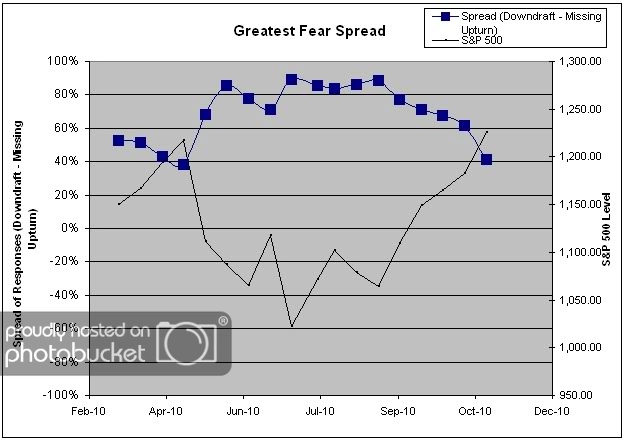
 Dorsey, Wright Client Sentiment Survey Results   11/5/10

Chart 2. Greatest Fear Spread. Another way to look at this data is to examine the spread between the two groups. The spread remains skewed towards fear of losing money this round, but significantly closer to par. Right now the spread is sitting at 42%, the furthest towards 0% we’ve seen since April of 2010. We would consider this recent move a significant technical breakout.

Question 2. Based on their behavior, how would you rate your clients’ current appetite for risk?
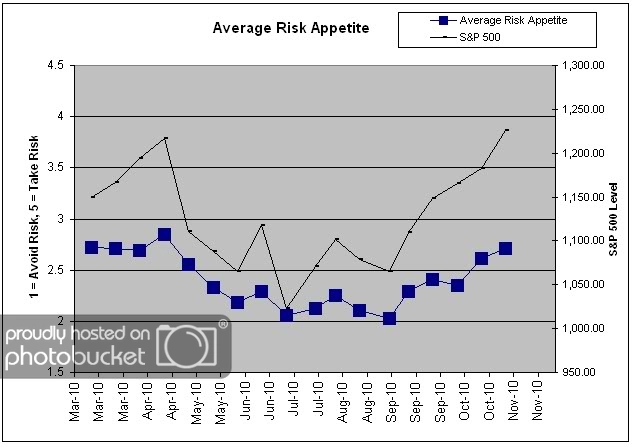
 Dorsey, Wright Client Sentiment Survey Results   11/5/10

Chart 3: Average Risk Appetite. Risk appetite levels continued higher in their breakout, but not to the same degree as client fear levels. This survey round, risk appetite came in 2.72, up just a little over last survey’s 2.62. Considering that client fear levels fell by such a large degree, it seems like this move is a bit more muted than we’d expect. Average risk appetite is still around its 6-month highs.
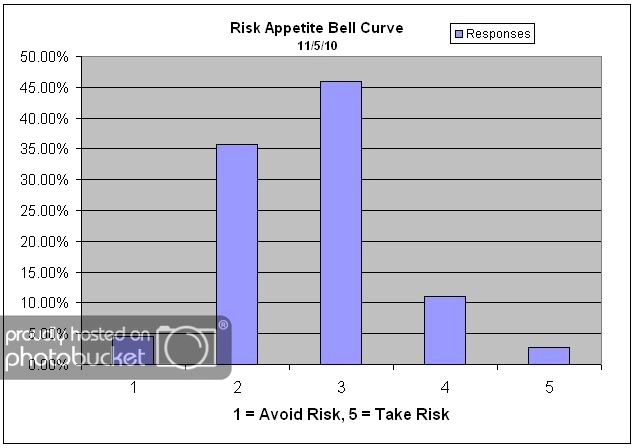
 Dorsey, Wright Client Sentiment Survey Results   11/5/10

Chart 4: Risk Appetite Bell Curve. This chart uses a bell curve to break out the percentage of respondents at each risk appetite level. This week we saw a continuation from last survey’s shift to more risk. We had a smattering of 5′s this round, whereas in the past few months we were lucky to see even one.
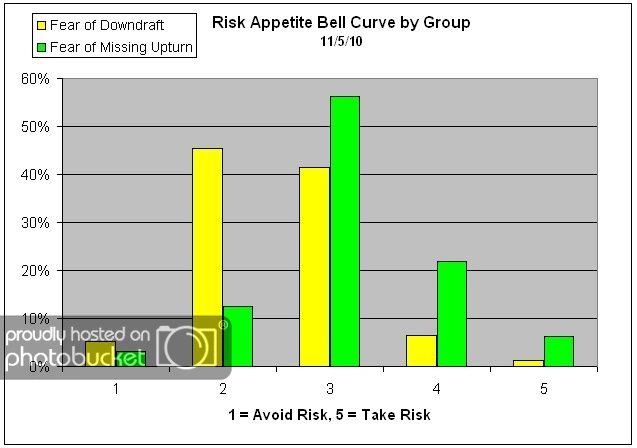
 Dorsey, Wright Client Sentiment Survey Results   11/5/10

Chart 5: Risk Appetite Bell Curve by Group. The next three charts use cross-sectional data. This chart plots the reported client risk appetite separately for the fear of downdraft and for the fear of missing upturn groups. We would expect that the fear of downdraft group would have a lower risk appetite than the fear of missing upturn group and that is what we see here.
 Dorsey, Wright Client Sentiment Survey Results   11/5/10

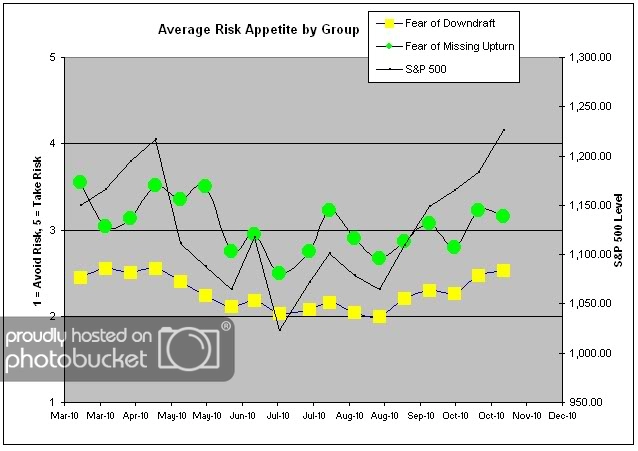
Chart 6: Average Risk Appetite by Group. A plot of the average risk appetite score by group is shown in this chart. This chart highlights one of the more nuanced stories of this round of surveys — that average risk appetite has not moved as strongly as client fear levels. In a rally market, we’d expect to see shifts in fear levels to move lower, and risk appetites to move higher. And while this did happen, the fear of missing an upturn group dropped the ball. The upturn group’s risk appetite actually fell this round, to 3.1 from 3.2, possibly suggesting concern that the rally is near the end. The downturn group performed as expected, as their average risk appetite was slightly higher.

We’ve noted before that the upturn group has a much more volatile risk appetite, and this is again what we are seeing here. Could this be a divergence pattern?
 Dorsey, Wright Client Sentiment Survey Results   11/5/10

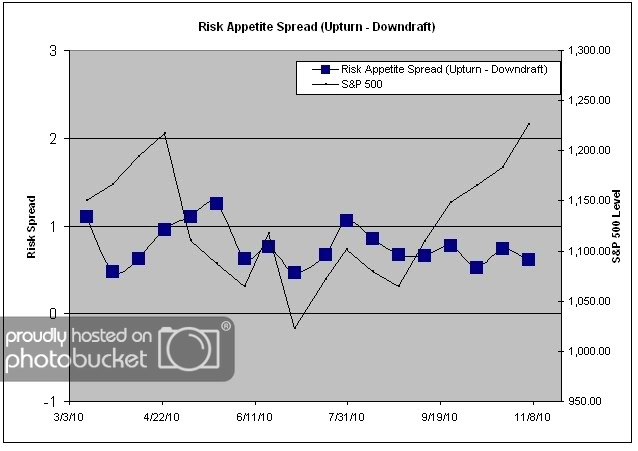
Chart 7: Risk Appetite Spread. This is a spread chart constructed from the data in Chart 6, where the average risk appetite of the downdraft group is subtracted from the average risk appetite of the missing upturn group. The spread this week fell by around .10 points, which can be attributed to the upturn group’s falling risk appetite.

There are two big stories in this client sentiment survey — the significant drop in client fear levels, and the muted move in risk appetite. Client fear levels dropped by around 10% from survey to survey, fueled by a market rally that started in August and is now up around 15%. If the rally can manage to sustain itself, it’s likely that client fear levels will continue to drop. Maybe one day, we’ll even see client fear levels at the exact opposite end of the range, below 10%. On the other hand, we would expect risk appetite to continue to rise in-line with the market. This week, we saw the upturn group’s average actually move lower, which may be a divergence pattern (we would expect the risk appetite to move higher with the market, versus diverging from the expected pattern-but that dataset is so young that we may just not yet know what to look for or how to interpret it).

No one can predict the future, as we all know, so instead of prognosticating, we will sit back and enjoy the ride. A rigorously tested, systematic investment process provides a great deal of comfort for clients during these types of fearful, highly uncertain market environments. Until next time, good trading and thank you for participating!

Posted by:


Dorsey, Wright Client Sentiment Survey — 11/5/10

November 5, 2010

Here we have the next round of the Dorsey, Wright Sentiment Survey, the first third-party sentiment poll.

As you know, when individuals self-report, they are always taller and more beautiful than when outside observers report their perceptions! Instead of asking individual investors to self-report whether they are bullish or bearish, we’d like financial advisors to weigh in and report on the actual behavior of clients. It’s two simple questions and will take no more than 20 seconds of your time. We’ll construct indicators from the data and report the results regularly on our blog–but we need your help to get a large statistical sample!

Click here to take Dorsey, Wright’s Client Sentiment Survey.

Contribute to the greater good! It’s painless, we promise.


Posted by:


Dorsey, Wright Client Sentiment Survey - 10/22/10

November 1, 2010

Our latest sentiment survey was open from 10/22/10 to 10/29/10. We had nearly the same response rate as last survey, with 94 readers participating. Your input is for a good cause! If you believe, as we do, that markets are driven by supply and demand, client behavior is important. We’re not asking what you think of the market—since most of our blog readers are financial advisors, we’re asking instead about the behavior of your clients. Then we’re aggregating responses exclusively for our readership. Your privacy will not be compromised in any way.

After the first 30 or so responses, the established pattern was simply magnified, so we are comfortable about the statistical validity of our sample. Most of the responses were from the U.S., but we also had multiple advisors respond from at least two other countries. Let’s get down to an analysis of the data! Note: You can click on any of the charts to enlarge them.

Question 1. Based on their behavior, are your clients currently more afraid of: a) getting caught in a stock market downdraft, or b) missing a stock market upturn?

 Dorsey, Wright Client Sentiment Survey   10/22/10

Chart 1: Greatest Fear. The broad stock market has managed to extend its rally from survey to survey. Once again, the S&P 500 rose around 1.5%, and client fear levels reflected this move. Around 81% of clients were more afraid of losing money, versus last survey’s reading of 84%. On the flip side, we saw the missed opportunity camp notch higher from 16% to 19%. It’s encouraging to see clients dipping their toes back into the broad market. We can also see evidence of this shift in mindset in last week’s Fund Flows data from Andy.

 Dorsey, Wright Client Sentiment Survey   10/22/10

Chart 2. Greatest Fear Spread. Another way to look at this data is to examine the spread between the two groups. The spread remains skewed towards fear of losing money this round. Right now the spread is around 62%. This chart is a nice graphical representation of the gradual shift towards more risk as the market continues to rally.

Question 2. Based on their behavior, how would you rate your clients’ current appetite for risk?

 Dorsey, Wright Client Sentiment Survey   10/22/10

Chart 3: Average Risk Appetite. Average risk shot out of its range this week in a big way. This week’s average risk reading came in at 2.62, up big from last week’s reading of 2.35. Right now average risk is sitting at its highest point since April, which is in-line with our other indicators. The rally that started from the August lows seems to be having a big effect on client risk appetites and fear levels. Could the “capitulation event” which sends risk appetites soaring be around the corner? It’s anyone’s guess as to where the market is heading.

 Dorsey, Wright Client Sentiment Survey   10/22/10

Chart 4: Risk Appetite Bell Curve. This chart uses a bell curve to break out the percentage of respondents at each risk appetite level. This week we saw a sizable move towards more risk. The past few surveys have been heavily skewed towards 2′s and 3′s. This week we saw a lot more respondents choose 3, which is also reflected in the Average Risk chart.

 Dorsey, Wright Client Sentiment Survey   10/22/10

Chart 5: Risk Appetite Bell Curve by Group. The next three charts use cross-sectional data. This chart plots the reported client risk appetite separately for the fear of downdraft and for the fear of missing upturn groups. We would expect that the fear of downdraft group would have a lower risk appetite than the fear of missing upturn group and that is what we see here.

 Dorsey, Wright Client Sentiment Survey   10/22/10

Chart 6: Average Risk Appetite by Group. A plot of the average risk appetite score by group is shown in this chart. Here we see that the average risk appetite for the fear of losing money group is significantly lower than the risk appetite for the fear of missing the rally group — perfect. The upturn group is at the highest point it’s been since late July, and before that, May. If the market can manage to sustain this momentum, this group’s average has the potential to go much higher. On the other side, the downdraft group is sitting at the highest levels since April. That’s a huge breakout, and one of the main reasons that overall risk appetite has risen so much. The “Fear” group, even though they are afraid of losing money, has made an emotional breakthrough towards adding risk. This week, the Downturn group’s average risk was 2.5 (up from 2.3) and the Upturn group’s average risk was 3.2 (up from 2.8).

 Dorsey, Wright Client Sentiment Survey   10/22/10

Chart 7: Risk Appetite Spread. This is a spread chart constructed from the data in Chart 6, where the average risk appetite of the downdraft group is subtracted from the average risk appetite of the missing upturn group. The spread jumped up this week by around .20 points, due mostly to the large jump in the downturn’s group average risk. We’ve noted before that the volatility of the spread is linked directly with the upturn group’s volatile risk tolerance, but this week’s shift is due more to the downturn’s average risk technical breakout.

This week, we saw a big breakout in the downturn group’s risk appetite. The downturn group represents the majority of Joe Investors in the market today — scared about losing money and still in pain from 2008. If I were to describe the group’s investment outlook in a phrase, it would be, “As long as it doesn’t hurt.” So when we see a big breakout in their risk appetite, as we did this round, we take that as a real sign that market conditions are improving, and that maybe this rally does have some “Oomph” behind it. Other than that, all the other indicators performed just as expected with relation to the broad market. Hopefully this rally can hold on, and we’ll see a continued shift towards more risk, and less fear of a downturn.

No one can predict the future, as we all know, so instead of prognosticating, we will sit back and enjoy the ride. A rigorously tested, systematic investment process provides a great deal of comfort for clients during these types of fearful, highly uncertain market environments. Until next time, good trading and thank you for participating!

Posted by:


Dorsey, Wright Client Sentiment Survey - 10/22/10

October 22, 2010

Here we have the next round of the Dorsey, Wright Sentiment Survey, the first third-party sentiment poll.

As you know, when individuals self-report, they are always taller and more beautiful than when outside observers report their perceptions! Instead of asking individual investors to self-report whether they are bullish or bearish, we’d like financial advisors to weigh in and report on the actual behavior of clients. It’s two simple questions and will take no more than 20 seconds of your time. We’ll construct indicators from the data and report the results regularly on our blog–but we need your help to get a large statistical sample!

Click here to take Dorsey, Wright’s Client Sentiment Survey.

Contribute to the greater good! It’s painless, we promise.


Posted by:


What if the U.S. Really Is Like Japan?

October 19, 2010

There are lots of reasons to assume that the U.S. will not turn out like Japan after their market peak in 1989. There are vast cultural differences and many significant differences in the economic systems. Most often, when the Japan-U.S. analogy is brought up by bearish commentators, it is quickly dismissed by those who are more bullish. However, one important way in which the U.S. might not be very different from Japan, or anywhere else, is human psychology. Even across cultures, people tend to have similar cognitive biases. What if it turns out that the U.S. really is on the cusp of a Japan-like experience? What might that be like for investors?

The view on the market side is not encouraging. As a recent article in the New York Times points out:

The decline has been painful for the Japanese, with companies and individuals like Masato having lost the equivalent of trillions of dollars in the stock market, which is now just a quarter of its value in 1989, and in real estate, where the average price of a home is the same as it was in 1983. And the future looks even bleaker, as Japan faces the world’s largest government debt — around 200 percent of gross domestic product — a shrinking population and rising rates of poverty and suicide.

Perhaps even more surprising-and concerning-has been the impact of the slow-motion financial crisis on the psychology of the public:

But perhaps the most noticeable impact here has been Japan’s crisis of confidence. Just two decades ago, this was a vibrant nation filled with energy and ambition, proud to the point of arrogance and eager to create a new economic order in Asia based on the yen. Today, those high-flying ambitions have been shelved, replaced by weariness and fear of the future, and an almost stifling air of resignation. Japan seems to have pulled into a shell, content to accept its slow fade from the global stage.

Animal spirits are important. The willingness to take a risk for the prospect of future gain is a requirement for the proper functioning of an entrepreneurial capitalist economy or a strong financial market. Struggling through a difficult economy is one thing, but losing all hope is another thing entirely. When hope disappears, so does the willingness to take risk.

When asked in dozens of interviews about their nation’s decline, Japanese, from policy makers and corporate chieftains to shoppers on the street, repeatedly mention this startling loss of vitality. While Japan suffers from many problems, most prominently the rapid graying of its society, it is this decline of a once wealthy and dynamic nation into a deep social and cultural rut that is perhaps Japan’s most ominous lesson for the world today.

The classic explanation of the evils of deflation is that it makes individuals and businesses less willing to use money, because the rational way to act when prices are falling is to hold onto cash, which gains in value. But in Japan, nearly a generation of deflation has had a much deeper effect, subconsciously coloring how the Japanese view the world. It has bred a deep pessimism about the future and a fear of taking risks that make people instinctively reluctant to spend or invest, driving down demand — and prices — even further.

I think this article is an important read, not so much for the debate about whether the U.S. is economically like Japan or not, but more for the sentiment aspect. Pessimism has economic and financial market consequences. Although I’m concerned about our current national mood, I don’t think Americans have succumbed to permanent pessimism at this point. Given the current low spirits, however, what makes sense from an investment point of view? I think there might be a few right answers.

1) Companies that innovate and grow. Although the broad indexes in Japan are down over the trailing 12 months, a cursory search on the Dorsey, Wright research website reveals many companies with 25%+ returns for that same time frame. Just because the market is dead doesn’t mean every company has thrown in the towel. In many cases, companies in good industries or with new, exciting products will continue to perform well. (In the U.S., Apple would be an apt current example.) Relative strength, incidentally, is a good way to identify strong companies.

2) Global tactical asset allocation. There is usually a bull market somewhere. Lots of countries and asset classes have had phenomenal growth over the last 20 years while Japan has been stagnating. A global approach allows an investor to commit to areas where animal spirits are still powerful, wherever they may be. Maybe Japan has suffered a loss of confidence, but perhaps Brazil is just starting on the way up. There could also be opportunities in alternative asset classes like commodities and currencies. Having a wide-angle view of global business and politics might be very helpful. Here, too, relative strength can be an excellent guide.

If the “PIMCO New Normal” turns out to be the case, then perhaps sovereigns of lightly-indebted nations and canned goods will be the way to go. In a New Normal scenario, a traditional value buyer may end up with a higher-than-normal percentage of value traps-assets that are persistently cheap for a good reason, one that becomes apparent only after you’ve saddled the dog. There’s no telling how events will unfold, but keeping a global perspective and an eye on the mood of the citizenry may prove important.

Posted by:


Dorsey, Wright Client Sentiment Survey Results - 10/8/10

October 19, 2010

Our latest sentiment survey was open from 10/8/10 to 10/15/10. We had nearly the same response rate as last survey, with 93 readers participating. Your input is for a good cause! If you believe, as we do, that markets are driven by supply and demand, client behavior is important. We’re not asking what you think of the market—since most of our blog readers are financial advisors, we’re asking instead about the behavior of your clients. Then we’re aggregating responses exclusively for our readership. Your privacy will not be compromised in any way.

After the first 30 or so responses, the established pattern was simply magnified, so we are comfortable about the statistical validity of our sample. Most of the responses were from the U.S., but we also had multiple advisors respond from at least two other countries. Let’s get down to an analysis of the data! Note: You can click on any of the charts to enlarge them.

Question 1. Based on their behavior, are your clients currently more afraid of: a) getting caught in a stock market downdraft, or b) missing a stock market upturn?

 Dorsey, Wright Client Sentiment Survey Results   10/8/10

Chart 1: Greatest Fear. After a few weeks of solid rallying, the market inched slightly higher for this round of survey, up about 1.5% using the survey data points. As expected, client fear levels ticked slightly lower, down to 84% from 86%. Again, we have a roughly 2% market move which correlates almost exactly with the lower client fear levels. The opposite is true of the fear of missing an upturn group, with 16% up from last survey’s reading of 14%. The question here is whether it will take a 40% move from here to get client fear levels at the 50/50 mark.

 Dorsey, Wright Client Sentiment Survey Results   10/8/10

Chart 2. Greatest Fear Spread. Another way to look at this data is to examine the spread between the two groups. The spread remains skewed towards fear of losing money this round. Again, we see the spread moving towards parity as the market rallies, and the extreme fear levels abate.

Question 2. Based on their behavior, how would you rate your clients’ current appetite for risk?

 Dorsey, Wright Client Sentiment Survey Results   10/8/10

Chart 3: Average Risk Appetite. After breaking out of the tight summer range, risk appetite crept backwards a few basis points to 2.35, down from 2.40. This reading is so close to last survey’s, we would consider it a flat reading. Keeping in mind that the market was up just over 1% from survey to survey, this round’s number fits nicely with our expectations.

 Dorsey, Wright Client Sentiment Survey Results   10/8/10

Chart 4: Risk Appetite Bell Curve. This chart uses a bell curve to break out the percentage of respondents at each risk appetite level. Even with the modest rally and the shift towards more risk, clients are definitely not taking many chances in this market. With this indicator, we would expect the bell curve to shift towards more risk if the market continues to rally into the fall. This round, we had a grand total of zero respondents with a risk tolerance of 5 (Take Risk).

 Dorsey, Wright Client Sentiment Survey Results   10/8/10

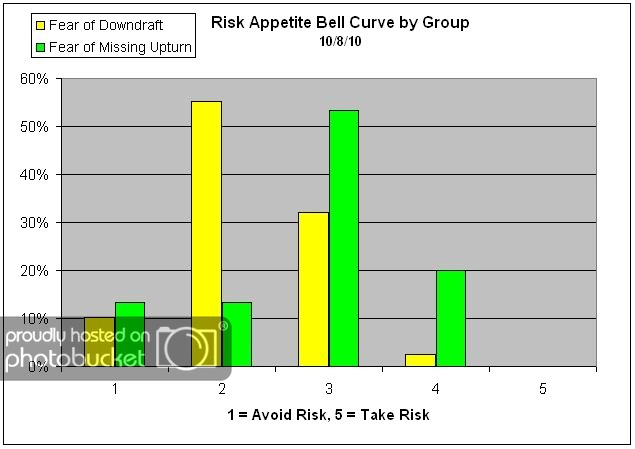
Chart 5: Risk Appetite Bell Curve by Group. The next three charts use cross-sectional data. This chart plots the reported client risk appetite separately for the fear of downdraft and for the fear of missing upturn groups. We would expect that the fear of downdraft group would have a lower risk appetite than the fear of missing upturn group and that is what we see here. Again, zero 5′s out of all our respondents.

 Dorsey, Wright Client Sentiment Survey Results   10/8/10

Chart 6: Average Risk Appetite by Group. A plot of the average risk appetite score by group is shown in this chart. Here we see that the average risk appetite for the fear of losing money group is significantly lower than the risk appetite for the fear of missing the rally group — perfect. Interestingly, this round the upturn group’s risk appetite actually dropped as the market rallied. Have we stumbled upon a new contrarian indicator? We’ve noticed before that the upturn’s group risk appetite is significantly more volatile than the downturn’s group, and this is what we see here again. This round, the upturn group’s risk appetite was 2.8 and the downturn group’s risk appetite was 2.3.

 Dorsey, Wright Client Sentiment Survey Results   10/8/10

Chart 7: Risk Appetite Spread. This is a spread chart constructed from the data in Chart 6, where the average risk appetite of the downdraft group is subtracted from the average risk appetite of the missing upturn group. The spread dropped by a fairly signifcant margin this round, moving from .78 to .53. This move can be entirely attributed to the upturn’s group lower risk appetite. We’ve noted before that the volatility of the spread is linked directly with the upturn group’s volatile risk tolerance.

This round, we saw a muted market move coupled with a muted client sentiment move. The market rallied modestly, and client fear levels fell by about as much. Again, we are seeing short-term market performance closely tied to long-term investor sentiment, which usually leads to emotional decisions based on relatively irrelevant market performance. The upturn group’s risk appetite actually fell this week, despite the small market rally. Contrarian indicator, anyone? Only time will tell!

No one can predict the future, as we all know, so instead of prognosticating, we will sit back and enjoy the ride. A rigorously tested, systematic investment process provides a great deal of comfort for clients during these types of fearful, highly uncertain market environments. Until next time, good trading and thank you for participating!

Posted by:


Dorsey, Wright Client Sentiment Survey - 10/8/10

October 8, 2010

Here we have the next round of the Dorsey, Wright Sentiment Survey, the first third-party sentiment poll.

As you know, when individuals self-report, they are always taller and more beautiful than when outside observers report their perceptions! Instead of asking individual investors to self-report whether they are bullish or bearish, we’d like financial advisors to weigh in and report on the actual behavior of clients. It’s two simple questions and will take no more than 20 seconds of your time. We’ll construct indicators from the data and report the results regularly on our blog–but we need your help to get a large statistical sample!

Click here to take Dorsey, Wright’s Client Sentiment Survey.

Contribute to the greater good! It’s painless, we promise.

Posted by:


Dorsey, Wright Client Sentiment Survey Results - 9/24/10

October 4, 2010

Our latest sentiment survey was open from 9/24/10 to 10/1/10. We saw a decrease in the response rate, with 91 readers participating. Your input is for a good cause! If you believe, as we do, that markets are driven by supply and demand, client behavior is important. We’re not asking what you think of the market—since most of our blog readers are financial advisors, we’re asking instead about the behavior of your clients. Then we’re aggregating responses exclusively for our readership. Your privacy will not be compromised in any way.

After the first 30 or so responses, the established pattern was simply magnified, so we are comfortable about the statistical validity of our sample. Most of the responses were from the U.S., but we also had multiple advisors respond from at least two other countries. Let’s get down to an analysis of the data! Note: You can click on any of the charts to enlarge them.

Question 1. Based on their behavior, are your clients currently more afraid of: a) getting caught in a stock market downdraft, or b) missing a stock market upturn?

 Dorsey, Wright Client Sentiment Survey Results   9/24/10

Chart 1: Greatest Fear. Now we got a rally going! And guess what…client fear levels are moving in-line, as predicted. Using only the survey data points, the market has rallied around 8% since August. 86% of clients were afraid of losing money this round, versus 14% of clients who were afraid of losing out on a rally. Contrast this with the most recent August lows, where 94% of clients were fearful of losing money. Let’s do some simple math: An 8% market rally corresponds to an 8% client fear level move! The two are moving lock-step with each other. The only question is whether it’s going to take a 40% market move to get client fear levels to a 50/50 split. Only time will tell.

 Dorsey, Wright Client Sentiment Survey Results   9/24/10

Chart 2. Greatest Fear Spread. Another way to look at this data is to examine the spread between the two groups. The spread remains skewed towards fear of losing money this round. Same as with the general fear numbers, the market move has corresponded exactly with a move in the spread between the two groups. Right now the spread is at 71%.

Question 2. Based on their behavior, how would you rate your clients’ current appetite for risk?

 Dorsey, Wright Client Sentiment Survey Results   9/24/10

Chart 3: Average Risk Appetite. The market move has led to the average risk appetite scoring the highest number since May! That’s a big breakout after holding a pretty tight range for the entire summer. Right now average risk appetite is 2.4, up from last week’s 2.3, and well off the most recent lows of 2.0. It’s great to see all of our indicators working exactly as we thought they would.

 Dorsey, Wright Client Sentiment Survey Results   9/24/10

Chart 4: Risk Appetite Bell Curve. This chart uses a bell curve to break out the percentage of respondents at each risk appetite level. Even with the modest rally and the shift towards more risk, clients are definitely not taking many chances in this market. With this indicator, we would expect the bell curve to shift towards more risk if the market continues to rally into the fall.

 Dorsey, Wright Client Sentiment Survey Results   9/24/10

Chart 5: Risk Appetite Bell Curve by Group. The next three charts use cross-sectional data. This chart plots the reported client risk appetite separately for the fear of downdraft and for the fear of missing upturn groups. We would expect that the fear of downdraft group would have a lower risk appetite than the fear of missing upturn group and that is what we see here.

 Dorsey, Wright Client Sentiment Survey Results   9/24/10

Chart 6: Average Risk Appetite by Group. A plot of the average risk appetite score by group is shown in this chart. Here we see that the average risk appetite for the fear of losing money group is significantly lower than the risk appetite for the fear of missing the rally group — perfect. Both averages have spiked in-line with the market, which is also reflected in the general average risk appetite chart. This time, we saw the upturn group have a little bit more volatility, but not as significantly as we’ve seen before. Currently the average risk appetite of the downturn group is 2.3 and the risk appetite of the upturn group is 3.1.

 Dorsey, Wright Client Sentiment Survey Results   9/24/10

Chart 7: Risk Appetite Spread. This is a spread chart constructed from the data in Chart 6, where the average risk appetite of the downdraft group is subtracted from the average risk appetite of the missing upturn group. The spread has become a little bit more stable during the rally, as both groups react to market performance at around the same pace. Right now the spread is .78, up about 10 basis points from last week’s .66. It’s not that large of a move considering that we’ve seen moves of close to 50 basis points in just two weeks before.

The current survey numbers show just how consistently client sentiment is linked to short-term market performance. We see an 8% market move, we get an 8% fear level move. Is it really that simple? One would hope not, but unfortunately, all signs point to “Yes” at the moment. Short term market performance should not be closely tied to long-term market outlook!! But it is. Advisors, it’s clearly a tough job to keep your clients’ emotions in check.

No one can predict the future, as we all know, so instead of prognosticating, we will sit back and enjoy the ride. A rigorously tested, systematic investment process provides a great deal of comfort for clients during these types of fearful, highly uncertain market environments. Until next time, good trading and thank you for participating!
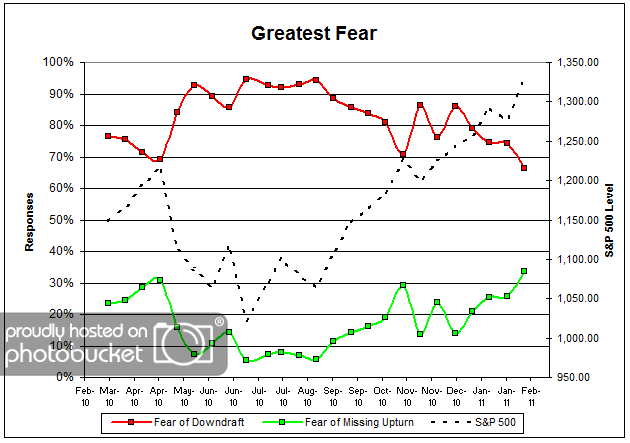
Posted by:


Dorsey, Wright Client Sentiment Survey — 9/24/10

September 24, 2010

Here we have the next round of the Dorsey, Wright Sentiment Survey, the first third-party sentiment poll.

As you know, when individuals self-report, they are always taller and more beautiful than when outside observers report their perceptions! Instead of asking individual investors to self-report whether they are bullish or bearish, we’d like financial advisors to weigh in and report on the actual behavior of clients. It’s two simple questions and will take no more than 20 seconds of your time. We’ll construct indicators from the data and report the results regularly on our blog–but we need your help to get a large statistical sample!
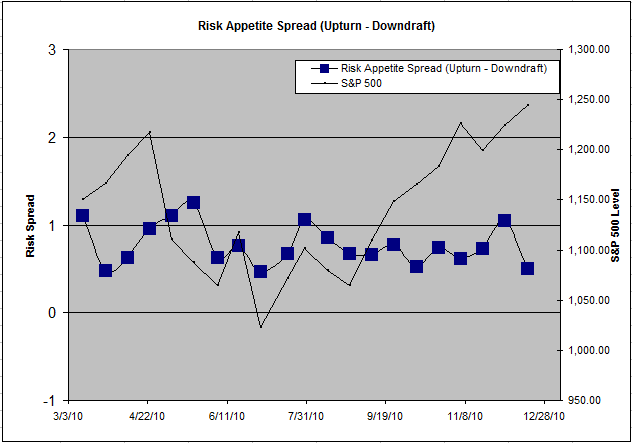
Click here to take Dorsey, Wright’s Client Sentiment Survey.

Contribute to the greater good! It’s painless, we promise.

Posted by: