The Economist details the Fed Model’s reversal of fortune:
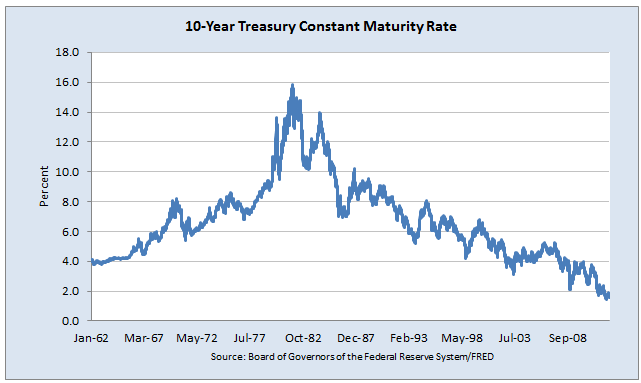
If you invested in equities in the 1990s, you were bound to hear, sooner or later, about the “Fed model”. This, I should hasten to add, was not the official position of the Federal Reserve but the name given to a relationship found by three economists between Treasury bond yields and stockmarket valuations. Lower bond yields lead to higher price-earnings ratios or, if you invert the latter, lower earnings yields. Those who thought that equities were ridiculously overvalued in the late 1990s were told that they “just didn’t get it”.
The idea was fairly simple. The present value of a stock was its future cashflows, discounted at some rate that was derived from the bond market. The lower the discount rate, the higher the present value. The brilliant thing about this measure, from the bulls’ point of view, was that it was based on the prospective earnings ratio. So you could forecast rapid earnings growth, thereby lowering the prospective p/e, and claim that the market was “cheap”. At the level of individual stocks, the trick was even simpler - investment banks needed to show that a stock was cheap in order to sell it. So they simply persuaded analysts to forecast future earnings growth that was sufficiently high to make the prospective p/e look cheap.
If you look at the chart, you can see that the Fed model did appear to work for about 15 years, and then it didn’t. The two ratios have gone their separate ways over the last decade; low bond yields have not meant higher stock valuations, but the reverse.

Ah, the beauty of trend following. Conceptually simple, but effective. Sure, it goes through periods of being out of sync with the market, but the risk of trend following fundamentally breaking (like the Fed Model apparently has) is remote.