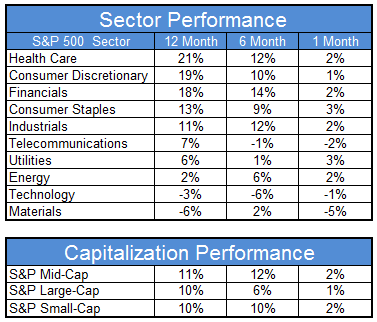
So far, 2013 has offered some pretty impressive returns for equity investors—especially in the small-cap space. Through 2/21/13, the Russell 2000 (small caps) is up 6.60%, outpacing the S&P 500 (large caps) by over 1.25%. Chances are good that many investors have not given a whole lot of thought to allocating to small caps. After all, the natural tendency for investors is to just focus on the more recognizable large-cap companies. However, I think there are some good reasons why investors can benefit from adding small-cap exposure to their portfolios. The Borneo Post recently wrote up some of the compelling reasons for considering small caps in a portfolio, including the following:
Stronger earnings growth
While earnings growth of the broader stock market is usually dependent on the pace of growth of the underlying economy, smaller or mid-sized companies may possess the ability to grow earnings at a much quicker pace.
Larger companies may find it more difficult to grow their revenues more quickly than the overall pace of economic growth, especially when they already hold a sizable market share in a particular industry. On the other hand, it is more plausible for a smaller company which has a negligible market share to grow its revenues by double digits each year, which could lead to a doubling or tripling of profits over a shorter period of time.
This trend is evident from a look at the historical earnings of global small caps versus the broader market, with small cap stocks delivering a 7.8 per cent annualised growth in earnings between 1999 to 2012, versus the more modest 5.2 per cent earnings growth for the broader market.
Last July, Dorsey Wright began providing a relative strength based index to PowerShares for the PowerShares DWA Small-Cap Technical Leaders Portfolio (DWAS). This ETF differs from many of the other small-cap ETFs in the marketplace in that it is not cap-weighted. Rather, it is an index of 200 small-cap stocks with strong relative strength. Through 2/21/13, DWAS is up an impressive 9.59% for the year.

Source: Yahoo! Finance
For more information about DWAS, please see www.powershares.com. Past performance is no guarantee of future returns.