Advisor Perspectives recently carried an article by Michael Nairne of Tacita Capital about factor investing. The article discussed a number of aspects of factor investing, including factor performance and periods of factor underperformance (factor failure). The remarkable thing about relative strength (termed momentum in his article) is the nice combination of strong performance and relatively short periods of underperformance that it affords the investor seeking alpha.
Mr. Nairne discusses a variety of factors that have been shown to generate excess returns over time. He includes a chart showing their performance versus the broad market.
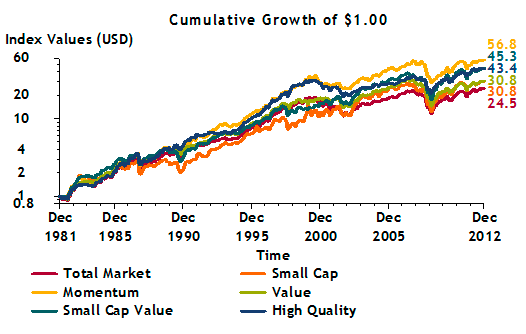
Source: Advisor Perspectives/Tacita Capital (click on image to enlarge)
Yep, the one at the top is momentum.
All factors, even very successful ones, underperform from time to time. In fact, the author points out that these periods of underperformance might even contribute to their factor returns.
No one can guarantee that the return premia originating from these dimensions of the market will persist in the future. But, the enduring nature of the underlying causes – cognitive biases hardwired into the human psyche, the impact of social influences and incremental risk – suggests that higher expected returns should be available from these factor-based strategies.
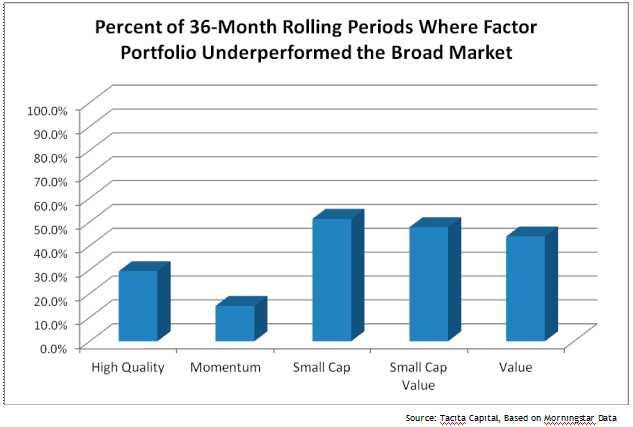
There is another reason to believe that these strategies offer the prospect of future return premia for patient, long-term investors. These premia are very volatile and can disappear or go negative for many years. The chart on the following page highlights the percentage of 36-month rolling periods where the factor-based portfolios – high quality, momentum, small cap, small cap value and value – underperformed the broad market.
To many investors, three years of under-performance is almost an eternity. Yet, these factor portfolios underperformed the broad market anywhere from almost 15% to over 50% of the 36-month periods from 1982 to 2012. If one were to include the higher transaction costs of the factor-based portfolios due to their higher turnover, the incidence of underperformance would be more frequent. One of the reasons that these premia will likely persist is that many investors are simply not patient enough to stay invested to earn them.
The bold is mine, but I think Mr. Nairne has a good point. Many investors seem to believe in magic and want their portfolio to significantly outperform—all the time.
That’s just not going to happen with any factor. Not surprisingly, though, momentum has tended to have shorter stretches of underperformance than many other factors, a consideration that might have been partially responsible for its good performance over time. Mr. Nairne’s excellent graphic on periods of factor failure is reproduced below.
Source: Advisor Perspectives/Tacita Capital (click on image to enlarge)
Once again, whether you choose to try to harvest returns from relative strength or from one of the other factors, patience is an underrated component of actually receiving those returns. The market can be a discouraging place, but in order to reap good factor performance you have to stay with it during the inevitable periods of factor failure.