Taxes are Rising

December 9, 2012

Taxes are rising all over. Swaziland may not have a fiscal cliff, but they are still scratching for more tax revenues. Business Insider explains their proposed tax policy:

Swaziland, the last absolute monarchy in Africa, is considering an increasing the size of a tax that doesn’t exist in much of the Western world.

Reuters reports that Mahajodvwa Khumalo, a Member of Parliament, advocates that the government raise the tax on witch doctors (known as ‘sangomas’). He claims these healers have quadrupled their prices, and wants to raise their licensing fee to help fix the budget deficit, which currently runs at about 15 percent of GDP.

Witch doctoring is apparently a wide-moat business if they have been able to quadruple their prices, although to my knowledge there are no publicly traded witch doctor stocks. I am also curious about what their licensing process is. Is there a witch doctor certification program?

Posted by:


Behavioral Finance: Volatility Edition

December 9, 2012

Volatility can cause investors to make terrible decisions. Blackrock recently featured an ugly chart comparing the returns of every major asset class since 1992 to the returns of the average investor. Amazingly enough, over that 20-year period investors underperformed every single major asset class including inflation!

Source: Blackrock (click to enlarge)

Here is Blackrock’s take on the chart:

Volatility is often the catalyst for poor decisions at inopportune times. Amidst difficult financial times, emotional instincts often drive investors to take actions that make no rational sense but make perfect emotional sense. Psychological factors such as fear often translate into poor timing of buys and sells. Though portfolio managers expend enormous efforts making investment decisions, investors often give up these extra percentage points in poorly timed decisions.

As Blackrock points out, good investing decisions are often ruined by one poorly timed emotional decision, typically brought about by a response to volatility. Volatility often engenders fear, and fear can overwhelm the client’s rational thought process.

One of the chief benefits of a good financial advisor is preventing clients from undermining themselves when the markets are rocky. From an objective point of view, if you are fearful, it’s going to be difficult to calm the client down. I don’t have any magic ideas about how to keep calm, but you could do worse than the British WWII propaganda poster: Keep calm and carry on.

Source: SkinIt (click to enlarge)

Posted by:


From the Archives: Zut Alors!

December 9, 2012

If you need another reason to hate the French, besides envy of their excellent cuisine, it turns out that a bevy of winemakers were fined and given suspended sentences for foisting cheap, lousy wine on American consumers and charging them premium prices for it.

On the other hand, it shows that cognitive biases are everywhere. Neither the American company the wine was shipped to nor consumers drinking it ever complained! Because the wine was labeled as premium pinot noir, wine enthusiasts apparently thought it tasted great. In fact, it turns out that wine drinkers think expensive wine tastes better, even when you trick them and give them two glasses of wine from the same bottle.

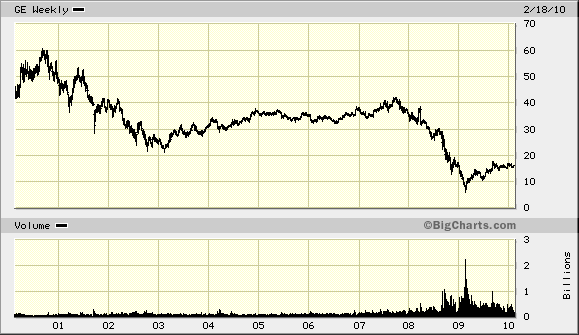
This behavior is not unknown in the stock market, where cognitive biases run unbridled down Wall Street. Ten years ago, everyone was in love with General Electic. It, too, was high-priced and tasted great. Ten years later, GE is considered cheap swill that leaves a bitter taste in the mouths of investors.

 From the Archives: Zut Alors!

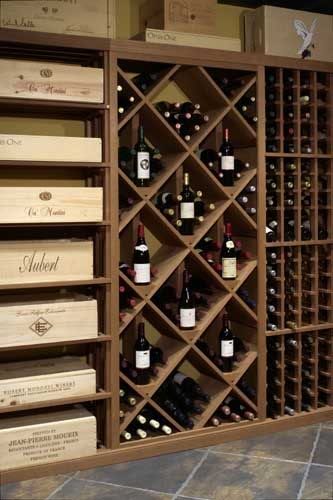
The moral of the story is that you can’t fall in love with your stocks or your wine. You have to like it on its own merits. In the case of our Systematic RS accounts, we like a stock only as long as it has high relative strength. When it becomes weaker and drops in its ranking–indicating that other, stronger stocks are available–we sell it and move on to a better class of grape. (We’ve been known to break a bottle here and there, but the idea is to adapt as tastes change.) In this way, we strive to keep our wine cellar stocked with the best vintages all the time.

 From the Archives: Zut Alors!

—-this article originally appeared 2/19/2012. Cognitive biases are still running wild on Wall Street.

Posted by: