Dorsey, Wright Client Sentiment Survey Results – 6/8/12

June 18, 2012

Our latest sentiment survey was open from 6/8/12 to 6/15/12. The Dorsey, Wright Polo Shirt Raffle continues to drive advisor participation, and we greatly appreciate your support! We will announce the winner early next week. This round, we had 44 advisors participate in the survey. If you believe, as we do, that markets are driven by supply and demand, client behavior is important. We’re not asking what you think of the market—since most of our blog readers are financial advisors, we’re asking instead about the behavior of your clients. Then we’re aggregating responses exclusively for our readership. Your privacy will not be compromised in any way.

After the first 30 or so responses, the established pattern was simply magnified, so we are comfortable about the statistical validity of our sample. Most of the responses were from the U.S., but we also had multiple advisors respond from at least four other countries. Let’s get down to an analysis of the data! Note: You can click on any of the charts to enlarge them.

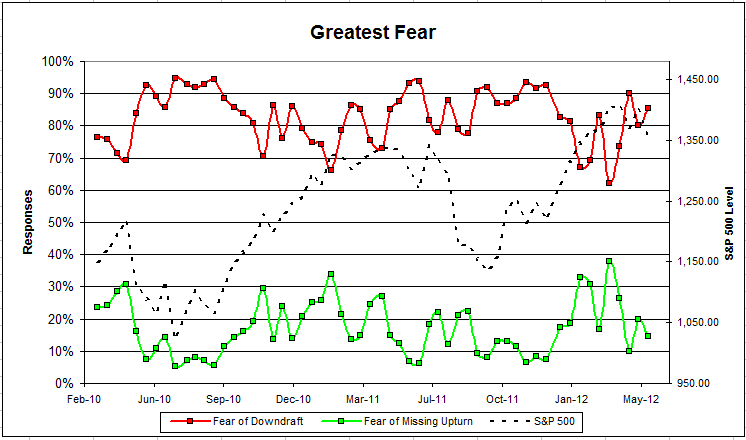
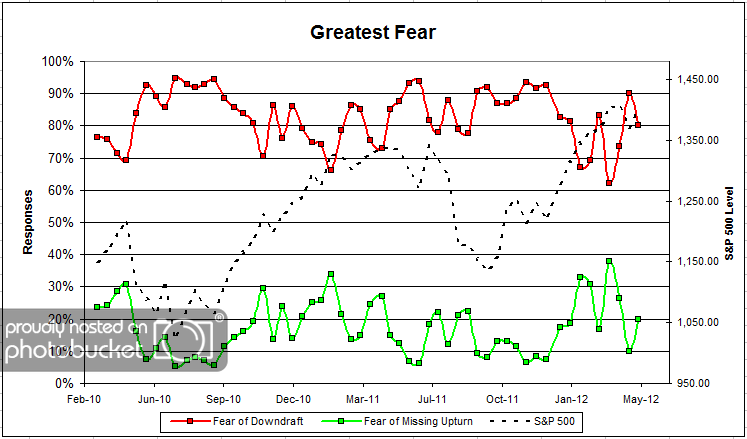
Question 1. Based on their behavior, are your clients currently more afraid of: a) getting caught in a stock market downdraft, or b) missing a stock market upturn?

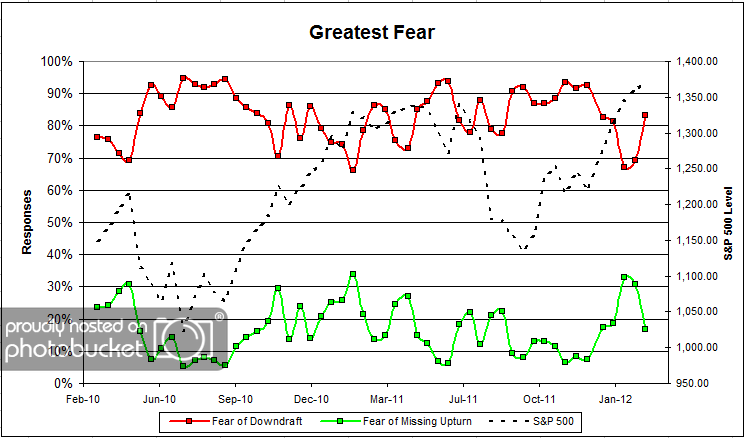
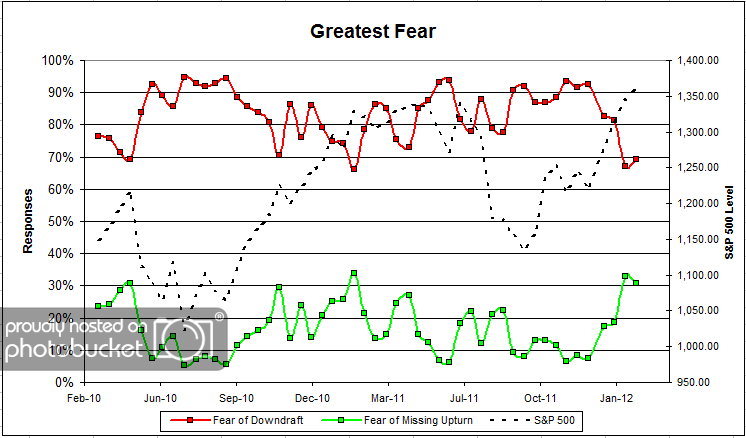
GreatestFear6812 Dorsey, Wright Client Sentiment Survey Results – 6/8/12

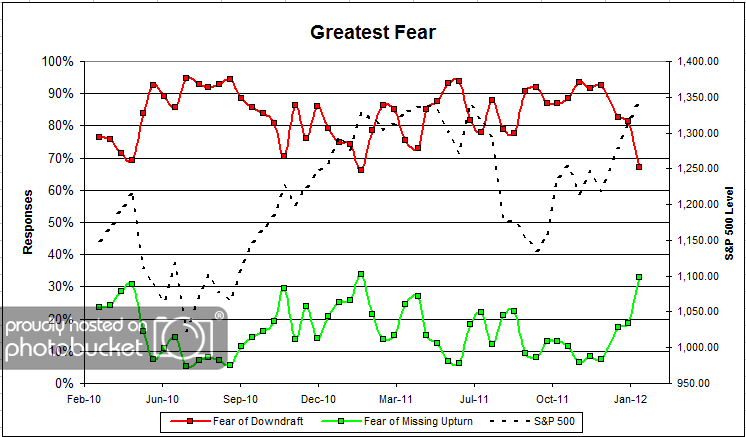
Chart 1: Greatest Fear. From survey to survey, the S&P 500 increased 0.59%, and the greatest fear numbers did not perform as expected. The fear of downturn group increased from 80% to 86%, while fear of a missed opportunity decreased from 20% to 14%. Client sentiment is still poor overall.

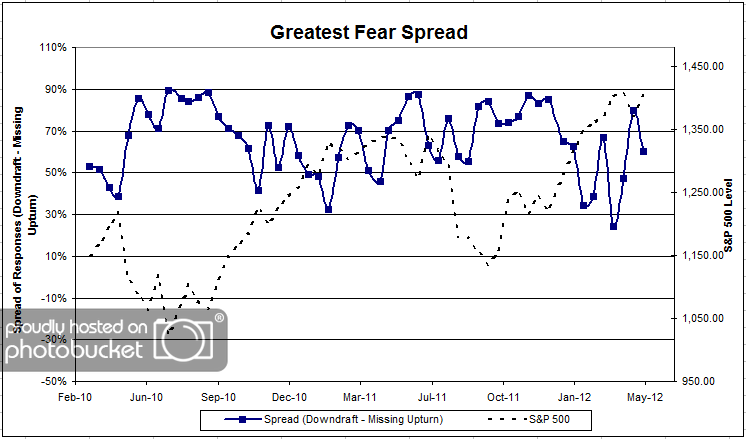
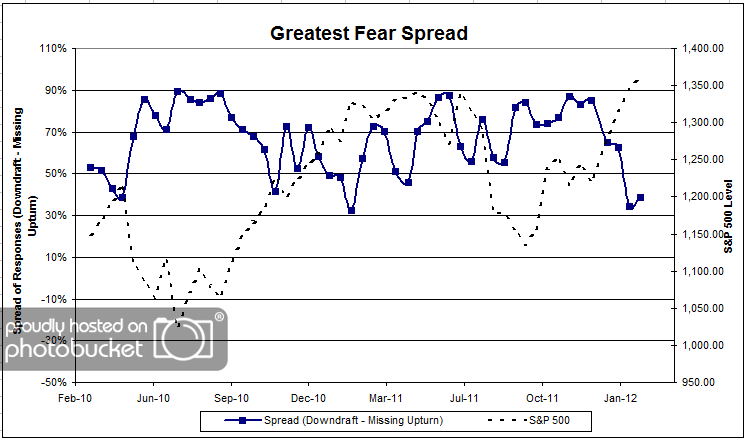
GreatestFearSpread6812 Dorsey, Wright Client Sentiment Survey Results – 6/8/12

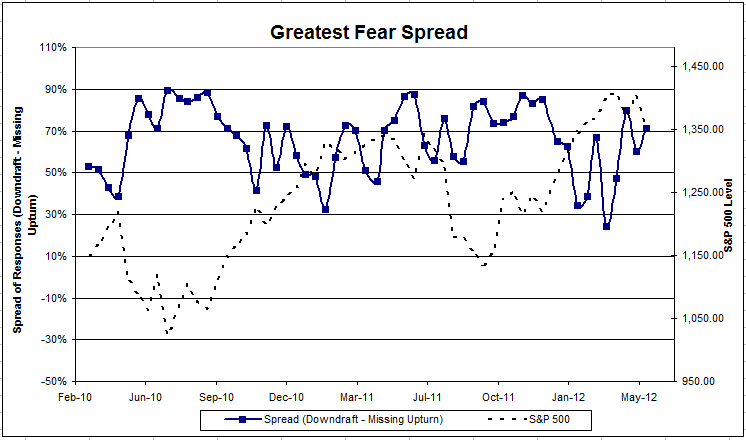
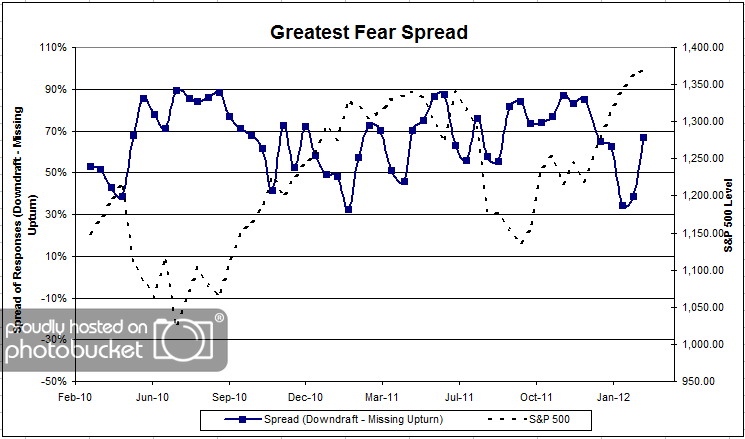
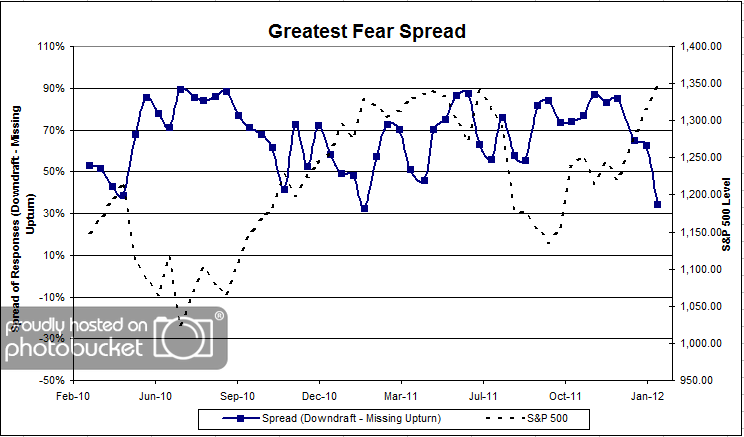
Chart 2: Greatest Fear Spread. Another way to look at this data is to examine the spread between the two groups. The spread decreased from 61% to 73%.

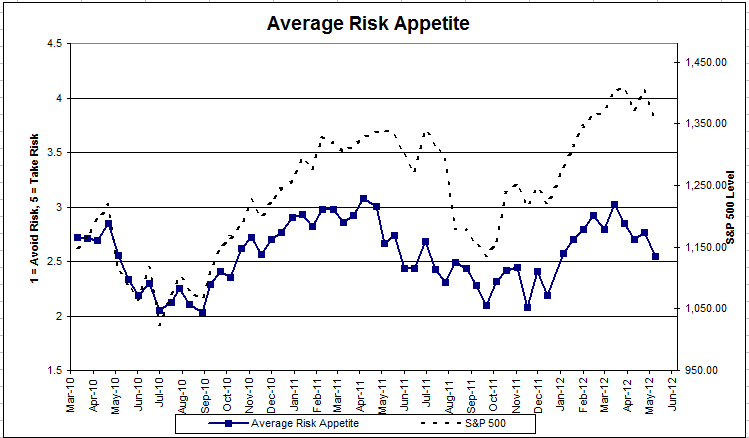
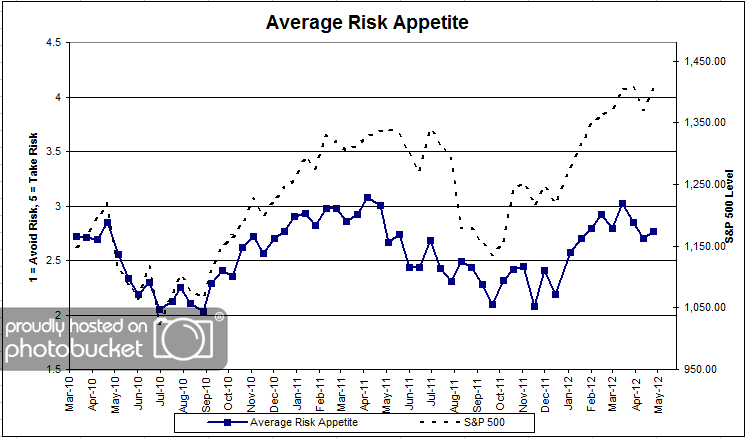
Question 2. Based on their behavior, how would you rate your clients’ current appetite for risk?

AverageRiskAppetite6812 Dorsey, Wright Client Sentiment Survey Results – 6/8/12

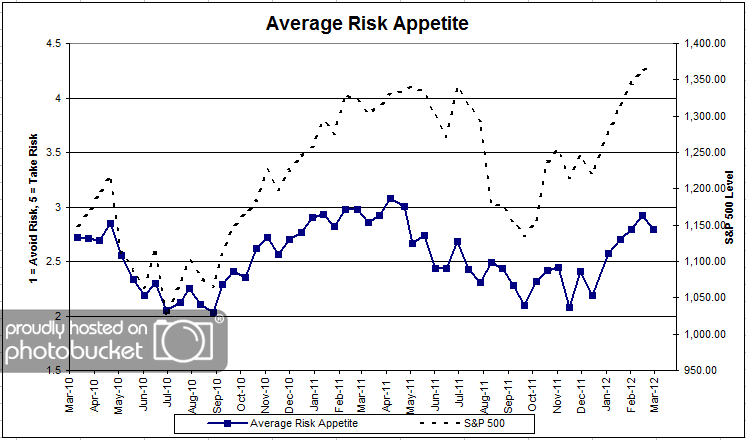
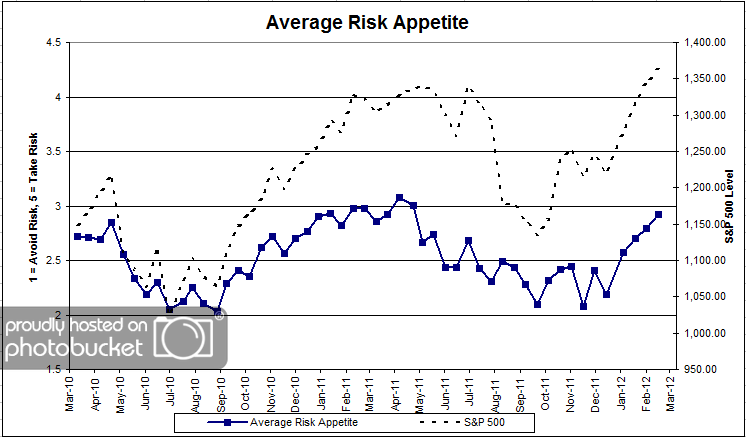
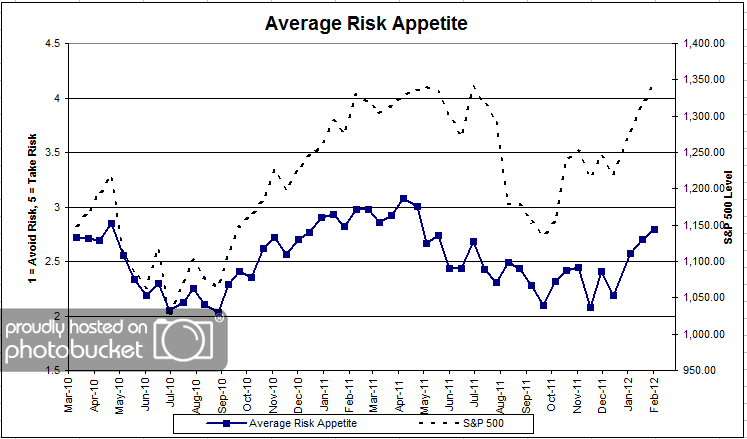
Chart 3: Average Risk Appetite. Once again, the average risk appetite performed as expected, rising from 2.48 to 2.62. As the market rose slightly, so did average risk appetite.

RiskAppetiteBellCurve6812 Dorsey, Wright Client Sentiment Survey Results – 6/8/12

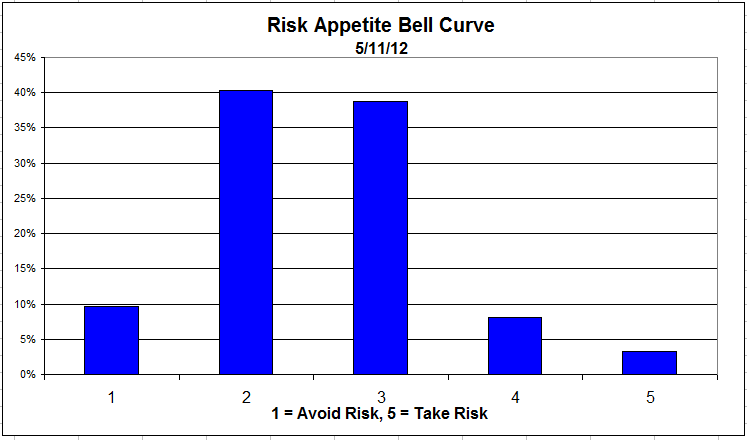
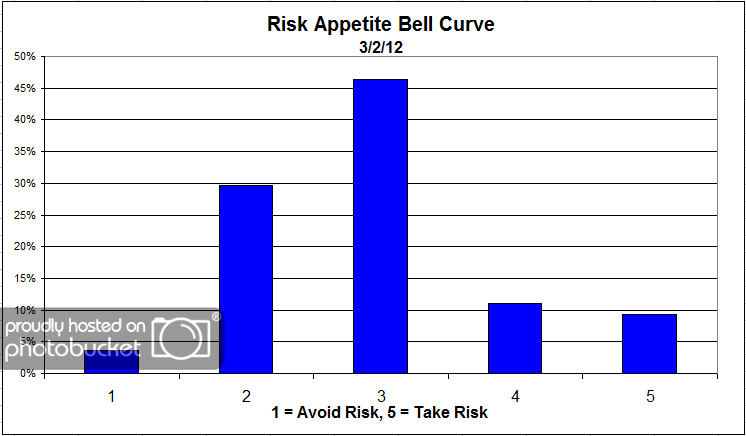
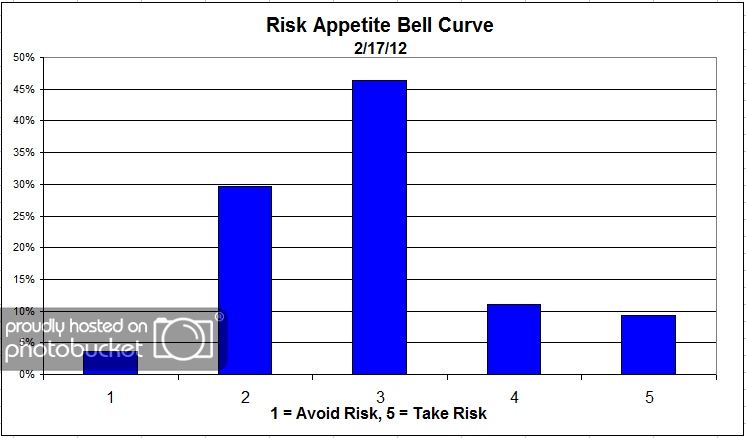
Chart 4: Risk Appetite Bell Curve. This chart uses a bell curve to break out the percentage of respondents at each risk appetite level. We are still seeing a low amount of risk, with most clients having a risk appetite of 2 or 3.

RiskAppetiteBellCurvebyGroup6812 Dorsey, Wright Client Sentiment Survey Results – 6/8/12

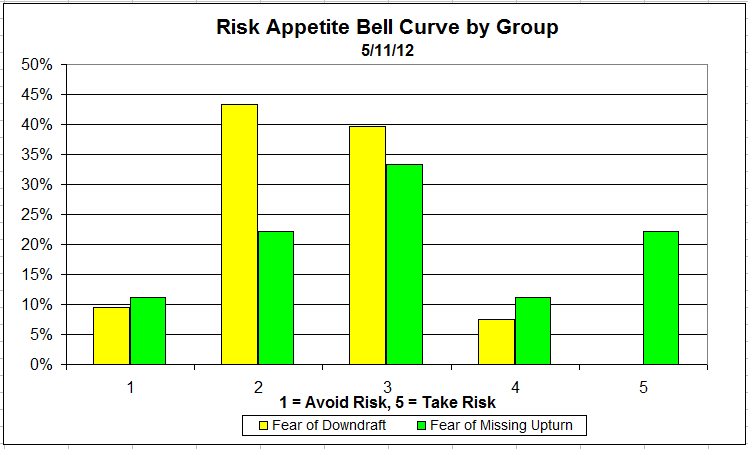
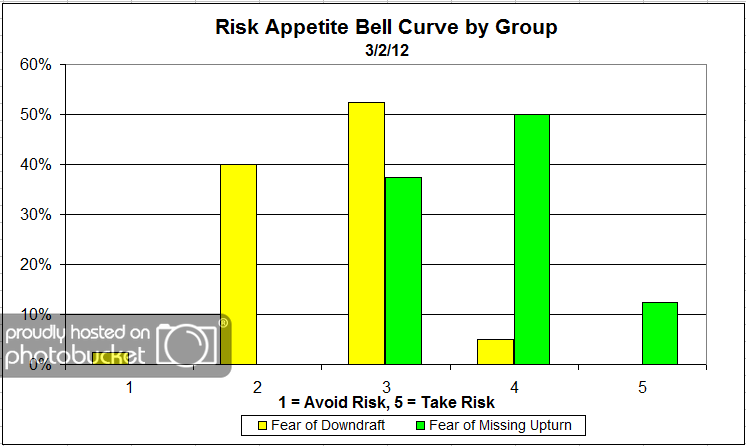
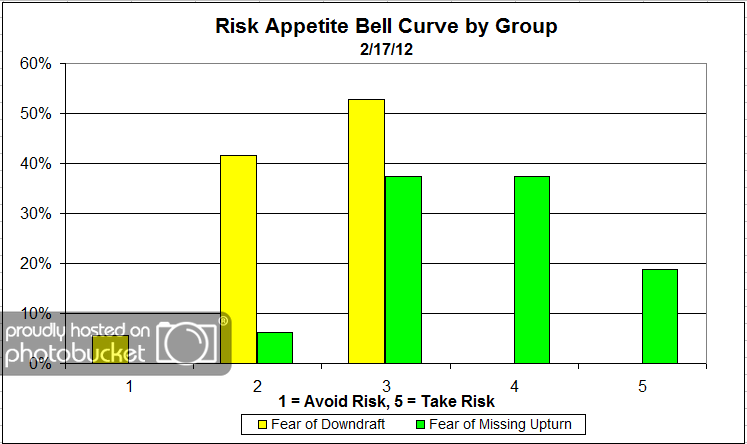
Chart 5: Risk appetite Bell Curve by Group. The next three charts use cross-sectional data. The chat plots the reported client risk appetite separately for the fear of downdraft and for the fear of missing upturn groups. This chart performs as expected, with the upturn group wanting more risk than the downturn group. However, even the fear of missing an upturn group doesn’t want a very high amount of risk.

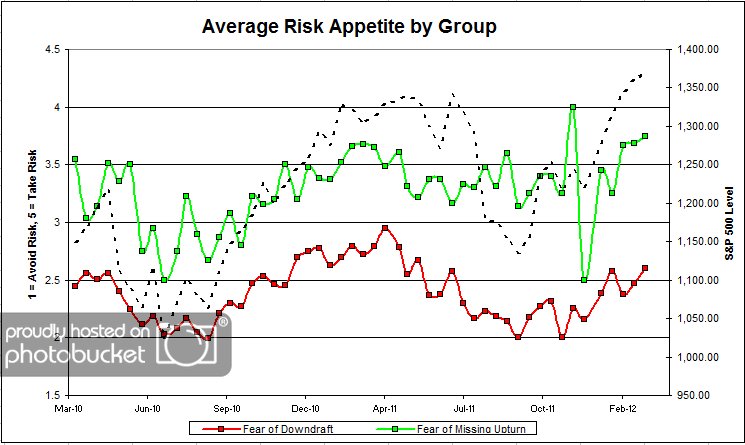
AverageRiskAppetitebyGroup6812 Dorsey, Wright Client Sentiment Survey Results – 6/8/12

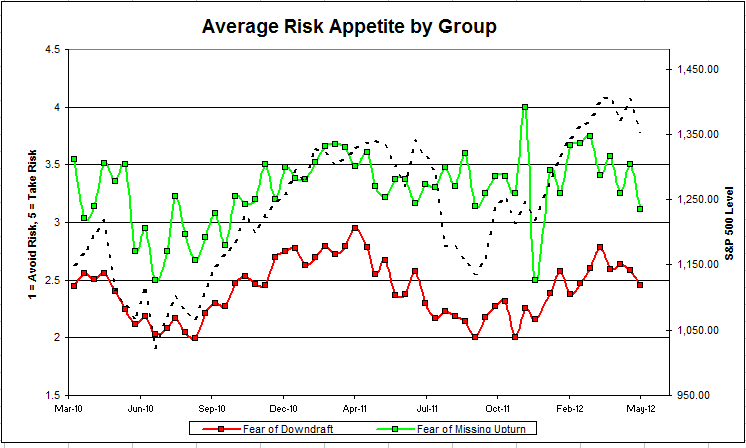
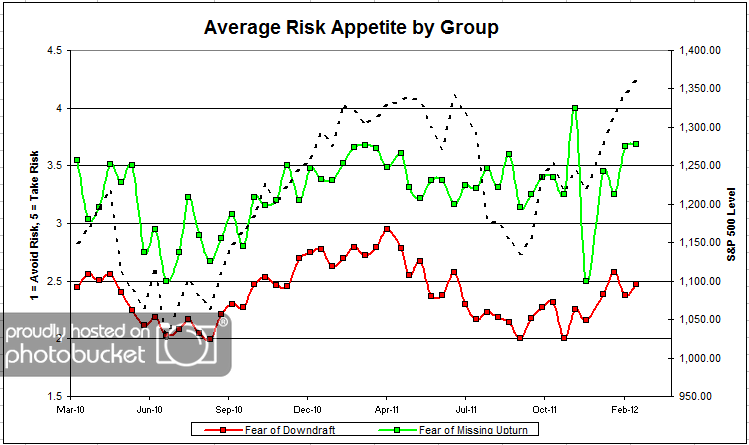
Chart 6: Average Risk Appetite by Group. The average risk appetite of those who fear a downturn slightly decreased, even as the market rose. The average risk appetite of those who fear missing an upturn increased.

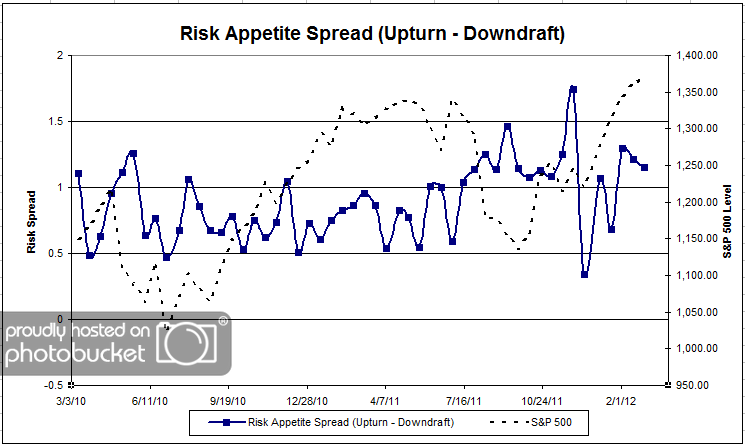
RiskAppetiteSpread6812 Dorsey, Wright Client Sentiment Survey Results – 6/8/12

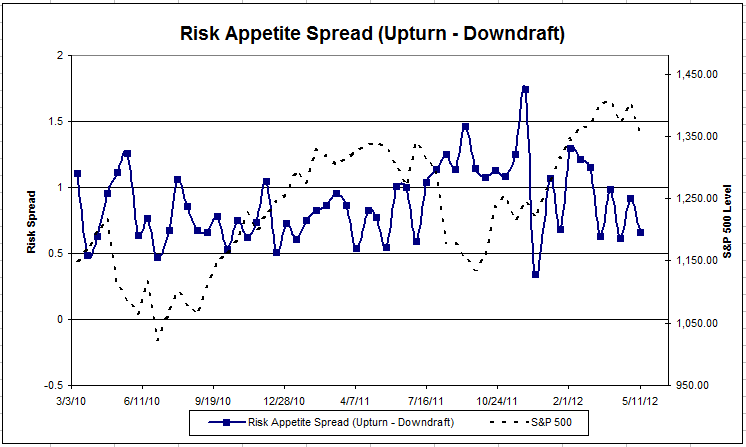
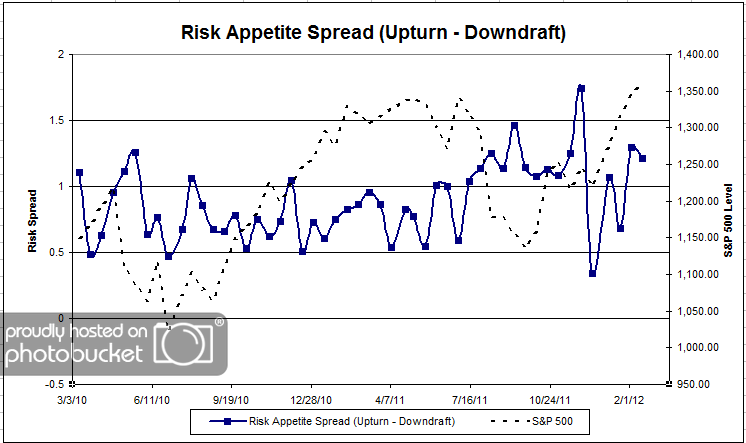
Chart 7: Risk Appetite Spread. This is a chart constructed from the data in Chart 6, where the average risk appetite of the downdraft group is subtracted from the average risk appetite of the missing upturn group. The spread increased this round, but is still within its normal range.

The S&P 500 rose by 0.59% from survey to survey, and some of our indicators responded accordingly. Average risk appetite increased, but the amount of risk desired is still low. As the market does well, we would expect more people to fear missing an upturn; instead, more people feared a downturn. Overall, client sentiment remains poor.

No one can predict the future, as we all know, so instead of prognosticating, we will sit back and enjoy the ride. A rigorously tested, systematic investment process provides a great deal of comfort for clients during these types of fearful, highly uncertain market environments. Until next time, good trading and thank you for participating.

Posted by:


Dorsey, Wright Client Sentiment Survey - 6/8/12

June 8, 2012

Here we have the next round of the Dorsey, Wright Sentiment Survey, the first third-party sentiment poll. Participate to learn more about our Dorsey, Wright Polo Shirt raffle! Just follow the instructions after taking the poll, and we’ll enter you in the contest. Thanks to all our participants from last round.

As you know, when individuals self-report, they are always taller and more beautiful than when outside observers report their perceptions! Instead of asking individual investors to self-report whether they are bullish or bearish, we’d like financial advisors to weigh in and report on the actual behavior of clients. It’s two simple questions and will take no more than 20 seconds of your time. We’ll construct indicators from the data and report the results regularly on our blog–but we need your help to get a large statistical sample!

Click here to take Dorsey, Wright’s Client Sentiment Survey.

Contribute to the greater good! It’s painless, we promise.

Posted by:


Dorsey, Wright Client Sentiment Survey Results – 5/25/12

June 1, 2012

Our latest sentiment survey was open from 5/25/12 to 6/1/12. The Dorsey, Wright Polo Shirt Raffle continues to drive advisor participation, and we greatly appreciate your support! We will announce the winner early next week. This round, we had 66 advisors participate in the survey. If you believe, as we do, that markets are driven by supply and demand, client behavior is important. We’re not asking what you think of the market—since most of our blog readers are financial advisors, we’re asking instead about the behavior of your clients. Then we’re aggregating responses exclusively for our readership. Your privacy will not be compromised in any way.

After the first 30 or so responses, the established pattern was simply magnified, so we are comfortable about the statistical validity of our sample. Most of the responses were from the U.S., but we also had multiple advisors respond from at least four other countries. Let’s get down to an analysis of the data! Note: You can click on any of the charts to enlarge them.

Question 1. Based on their behavior, are your clients currently more afraid of: a) getting caught in a stock market downdraft, or b) missing a stock market upturn?

GreatestFear52512 Dorsey, Wright Client Sentiment Survey Results – 5/25/12

Chart 1: Greatest Fear. From survey to survey, the S&P 500 fell -2.6%, and the greatest fear numbers did not perform as expected. The fear of downturn group decreased from 85% to 80%, while fear of a missed opportunity rose from 15% to 20%. Client sentiment remains poor overall.

GreatestFearSpread52512 Dorsey, Wright Client Sentiment Survey Results – 5/25/12

Chart 2: Greatest Fear Spread. Another way to look at this data is to examine the spread between the two groups. The spread decreased from 71% to 61%.

Question 2. Based on their behavior, how would you rate your clients’ current appetite for risk?

AverageRiskAppetite52512 Dorsey, Wright Client Sentiment Survey Results – 5/25/12

Chart 3: Average Risk Appetite. Once again, the average risk appetite performed as expected, falling from 2.55 to 2.48. This indicator continues to fall in line with the market.

RiskAppetiteBellCurve52512 Dorsey, Wright Client Sentiment Survey Results – 5/25/12

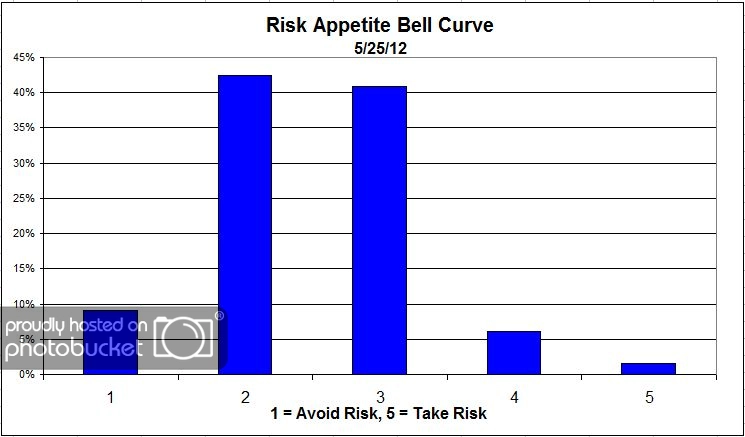
Chart 4: Risk Appetite Bell Curve. This chart uses a bell curve to break out the percentage of respondents at each risk appetite level. We are still seeing a low amount of risk, with most clients wanting a risk appetite of 2 or 3.

RiskAppetiteBellCurveByGroup52512 Dorsey, Wright Client Sentiment Survey Results – 5/25/12

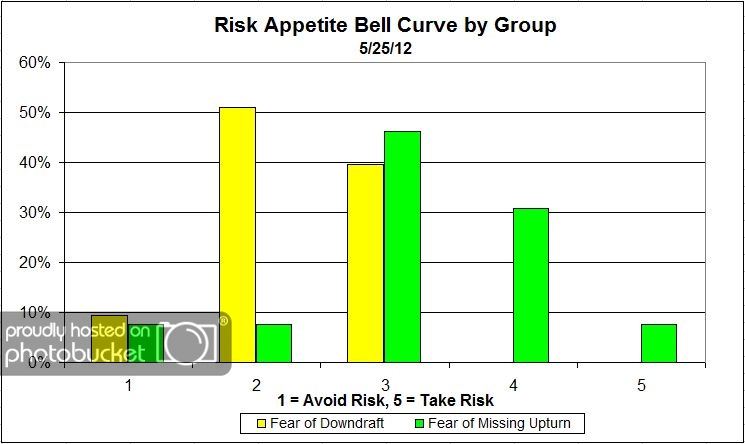
Chart 5: Risk appetite Bell Curve by Group. The next three charts use cross-sectional data. The chat plots the reported client risk appetite separately for the fear of downdraft and for the fear of missing upturn groups. This chart performs as expected, with the upturn group wanting more risk than the downturn group.

AverageRiskAppetiteByGroup52512 Dorsey, Wright Client Sentiment Survey Results – 5/25/12

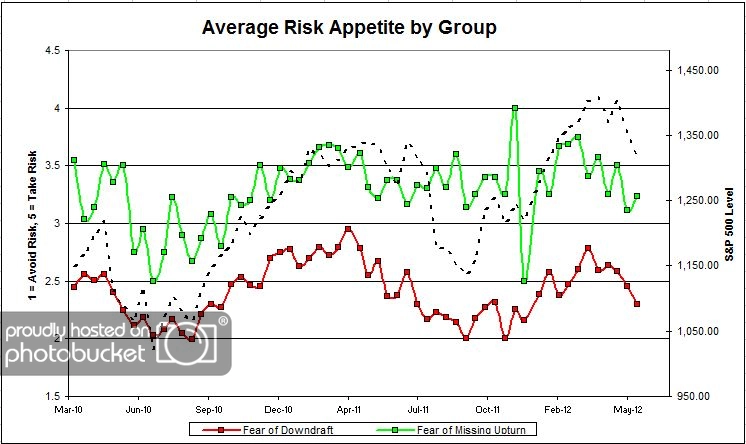
Chart 6: Average Risk Appetite by Group. The average risk appetite of those who fear a downturn decreased with a market. However, the average risk appetite of those who fear missing an upturn increased.

RiskAppetiteSpread52512 Dorsey, Wright Client Sentiment Survey Results – 5/25/12

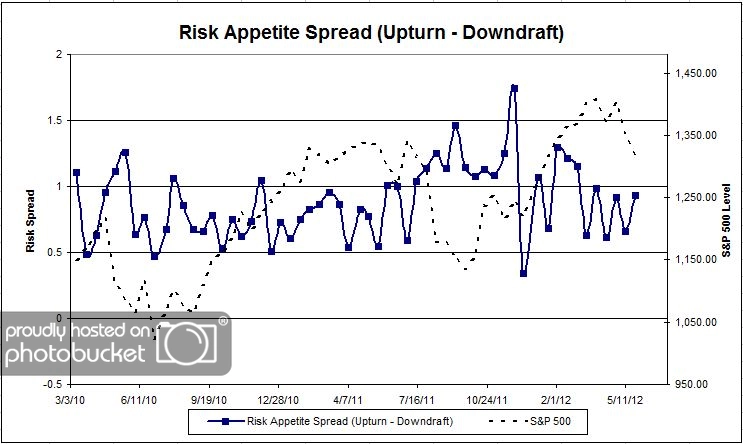
Chart 7: Risk Appetite Spread. This is a chart constructed from the data in Chart 6, where the average risk appetite of the downdraft group is subtracted from the average risk appetite of the missing upturn group. The spread increased this round, but is still within its normal range.

The S&P 500 fell by -2.6% from survey to survey, and most of our indicators responded accordingly. Average risk appetite fell, but the fear of downturn group decreased. However, we’d expect the fear of downturn group to increase as the market does poorly, which didn’t happen this round.

No one can predict the future, as we all know, so instead of prognosticating, we will sit back and enjoy the ride. A rigorously tested, systematic investment process provides a great deal of comfort for clients during these types of fearful, highly uncertain market environments. Until next time, good trading and thank you for participating.

Posted by:


Are Equities Dead or Just Resting?

May 29, 2012

CNBC carried an article today, via Financial Times, that talked about how much investors hate stocks. Some excerpts from the article:

…institutional investors, from pension funds to mutual funds sold directly to the public, have slashed holdings in the past decade. Stocks have not been so far out of favor for half a century. Many declare the “cult of the equity” dead.

Compared with bonds, stocks have not looked so cheap for half a century. During this period, the dividend yield — the amount paid out in dividends per share divided by the share price, a key measure of value — has been lower than the yield paid by bonds (which moves in the opposite direction to prices). In other words, investors were happy to take a lower interest rate from stocks than from bonds, despite their greater volatility, reflecting their confidence that returns from stocks would be higher in the long run.

But now investors want a higher yield from equities. According to Robert Shiller of Yale University, the dividend yield on U.S. stocks is today 1.97 percent — above the 1.72 percent yield on 10-year U.S. Treasury bonds.

Some hope that the cycle is about to turn and that the preconditions for a new cult of the equity will emerge even if it takes time. Few people doubt, however, that the old cult of the equity — which steered long-term savers into loading their portfolios with shares — has died.

Indeed, equities have not been so cheap relative to bonds since 1956, which turned out to be one of the best moments in history to have bought stocks.

In the U.S., inflows to bond funds have exceeded equity inflows every year since 2007, with outright net redemptions from equity funds in each of the past five years.

I swear I’m not making this up. Side-by-side, the article discusses the death of the equity cult while it mentions that stocks are at the best buying point in 50 years, apparently without irony. Wow.

Somewhere down the road there will be a catalyst—I have no idea what it will be, but it could be much sooner than most think. Contrary opinion would suggest that we look closely at the presumption that equities are really dead. It’s quite possible that stocks, like Monty Python’s Norwegian Blue, are just resting. When sentiment gets so highly tilted to one side it is worth examining to see if, in fact, the opposite is true.

deadparrot Are Equities Dead or Just Resting?

Are Equities Dead or Just Resting?


Posted by:


Dorsey, Wright Client Sentiment Survey Results - 5/11/12

May 22, 2012

Our latest sentiment survey was open from 5/11/12 to 5/18/12. The Dorsey, Wright Polo Shirt Raffle continues to drive advisor participation, and we greatly appreciate your support! This round, we had 53 advisors participate in the survey. If you believe, as we do, that markets are driven by supply and demand, client behavior is important. We’re not asking what you think of the market—since most of our blog readers are financial advisors, we’re asking instead about the behavior of your clients. Then we’re aggregating responses exclusively for our readership. Your privacy will not be compromised in any way.

After the first 30 or so responses, the established pattern was simply magnified, so we are comfortable about the statistical validity of our sample. Most of the responses were from the U.S., but we also had multiple advisors respond from at least four other countries. Let’s get down to an analysis of the data! Note: You can click on any of the charts to enlarge them.

Question 1. Based on their behavior, are your clients currently more afraid of: a) getting caught in a stock market downdraft, or b) missing a stock market upturn?


greatestfear 54 Dorsey, Wright Client Sentiment Survey Results   5/11/12

Chart 1: Greatest Fear. From survey to survey, the S&P 500 fell -3.5%, and client sentiment worsened as expected. The fear of downturn group rose from 80% to 85%, while the fear of a missed opportunity group fell from 20% to 15%. Client sentiment remains poor overall.

greatestfearspread 51 Dorsey, Wright Client Sentiment Survey Results   5/11/12

Chart 2. Greatest Fear Spread. Another way to look at this data is to examine the spread between the two groups. The spread ticked higher this round, from 60% to 71%.

Question 2. Based on their behavior, how would you rate your clients’ current appetite for risk?

avgriskapp 42 Dorsey, Wright Client Sentiment Survey Results   5/11/12

Chart 3: Average Risk Appetite. Once again, the average risk appetite performed as expected, falling from 2.77 to 2.55. Technically speaking, this indicator has broken through solid support on the downside.

bellcurve 7 Dorsey, Wright Client Sentiment Survey Results   5/11/12

Chart 4: Risk Appetite Bell Curve. This chart uses a bell curve to break out the percentage of respondents at each risk appetite level. We’ve seen a dramatic shift to less risk over the last few surveys. right now, the majority of clients want either a risk appetite of 2 or 3.

riskappbellcurve 31 Dorsey, Wright Client Sentiment Survey Results   5/11/12

Chart 5: Risk Appetite Bell Curve by Group. The next three charts use cross-sectional data. This chart plots the reported client risk appetite separately for the fear of downdraft and for the fear of missing upturn groups. This chart sorts out mostly as expected, with the upturn group wanting more risk than the downturn group.

riskappgroup 4 Dorsey, Wright Client Sentiment Survey Results   5/11/12

Chart 6: Average Risk Appetite by Group. This round, both groups’ risk appetite fell with the market.

riskappetitespread 3 Dorsey, Wright Client Sentiment Survey Results   5/11/12

Chart 7: Risk Appetite Spread. This is a spread chart constructed from the data in Chart 6, where the average risk appetite of the downdraft group is subtracted from the average risk appetite of the missing upturn group. The spread fellthis round and is sitting pretty in its normal range.

The S&P 500 fell by -3.5% from survey to survey, and all of our indicators responded in-kind. The fear of a downturn group rose, and overall risk appetite fell. We’d expect to see both of those occuring when client sentiment is worsening.

No one can predict the future, as we all know, so instead of prognosticating, we will sit back and enjoy the ride. A rigorously tested, systematic investment process provides a great deal of comfort for clients during these types of fearful, highly uncertain market environments. Until next time, good trading and thank you for participating.

Posted by:


Option Sentiment

May 21, 2012

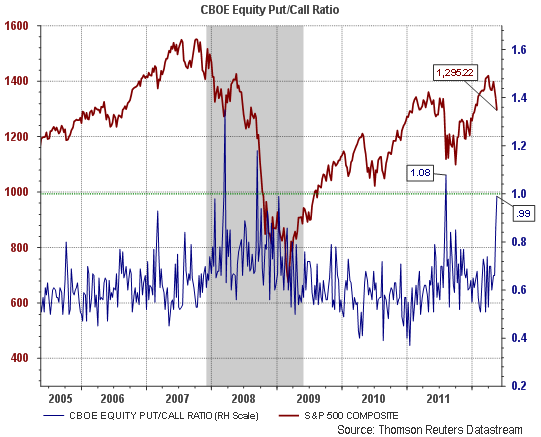
A nice chart from the blog of Horan Capital Advisors of the put-call ratio:

putcall5182012 Option Sentiment

Source: Horan Capital Advisors (click on image to enlarge)

Their observation is that ratios near one are often lows. There’s no way to know if the same thing will happen this time, but it fits in with the generally negative sentiment we see in our client behavior survey as well.

via Abnormal Returns

Posted by:


Dorsey, Wright Client Sentiment Survey - 5/11/12

May 11, 2012

Here we have the next round of the Dorsey, Wright Sentiment Survey, the first third-party sentiment poll. Participate to learn more about our Dorsey, Wright Polo Shirt raffle! Just follow the instructions after taking the poll, and we’ll enter you in the contest. Thanks to all our participants from last round.

As you know, when individuals self-report, they are always taller and more beautiful than when outside observers report their perceptions! Instead of asking individual investors to self-report whether they are bullish or bearish, we’d like financial advisors to weigh in and report on the actual behavior of clients. It’s two simple questions and will take no more than 20 seconds of your time. We’ll construct indicators from the data and report the results regularly on our blog–but we need your help to get a large statistical sample!

Click here to take Dorsey, Wright’s Client Sentiment Survey.

Contribute to the greater good! It’s painless, we promise.

Posted by:


Dorsey, Wright Client Sentiment Survey Results - 4/27/12

May 8, 2012

Our latest sentiment survey was open from 4/27/12 to 5/4/12. The Dorsey, Wright Polo Shirt Raffle continues to drive advisor participation, and we greatly appreciate your support! This round, we had 55 advisors participate in the survey. If you believe, as we do, that markets are driven by supply and demand, client behavior is important. We’re not asking what you think of the market—since most of our blog readers are financial advisors, we’re asking instead about the behavior of your clients. Then we’re aggregating responses exclusively for our readership. Your privacy will not be compromised in any way.

After the first 30 or so responses, the established pattern was simply magnified, so we are comfortable about the statistical validity of our sample. Most of the responses were from the U.S., but we also had multiple advisors respond from at least three other countries. Let’s get down to an analysis of the data! Note: You can click on any of the charts to enlarge them.

Question 1. Based on their behavior, are your clients currently more afraid of: a) getting caught in a stock market downdraft, or b) missing a stock market upturn?

greatestfear 53 Dorsey, Wright Client Sentiment Survey Results   4/27/12

Chart 1: Greatest Fear. From survey to survey, the S&P 500 rose +2.4%, and client sentiment improved as a result. The fear of downturn group fell from 90% to 80%, while the upturn group rose from 10% to 20%. Client sentiment is still poor overall, but it’s nice to see a rally have some effect.

spread 24 Dorsey, Wright Client Sentiment Survey Results   4/27/12

Chart 2. Greatest Fear Spread. Another way to look at this data is to examine the spread between the two groups. The spread dipped lower this round, from 80% to 60%.

Question 2. Based on their behavior, how would you rate your clients’ current appetite for risk?

avgrisk 2 Dorsey, Wright Client Sentiment Survey Results   4/27/12

Chart 3: Average Risk Appetite. After falling for two straight surveys, the overall risk appetite bounced back this round (barely), from 2.70 to 2.77.

bellcurve 6 Dorsey, Wright Client Sentiment Survey Results   4/27/12

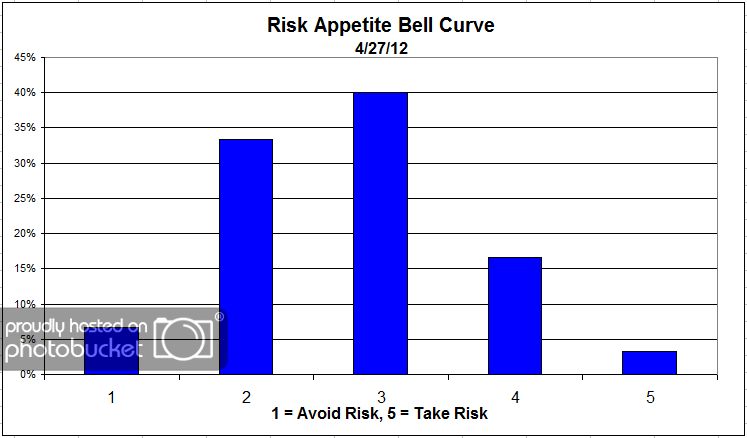
Chart 4: Risk Appetite Bell Curve. This chart uses a bell curve to break out the percentage of respondents at each risk appetite level. We saw a more even distribution this round, though tilted towards less risk.

bellcurvegroup 10 Dorsey, Wright Client Sentiment Survey Results   4/27/12

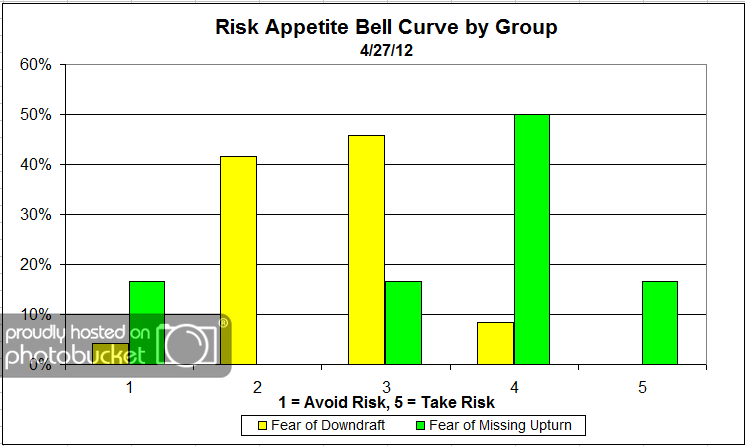
Chart 5: Risk Appetite Bell Curve by Group. The next three charts use cross-sectional data. This chart plots the reported client risk appetite separately for the fear of downdraft and for the fear of missing upturn groups. This chart sorts out mostly as expected, with the upturn group wanting more risk than the downturn group.

appgroup Dorsey, Wright Client Sentiment Survey Results   4/27/12

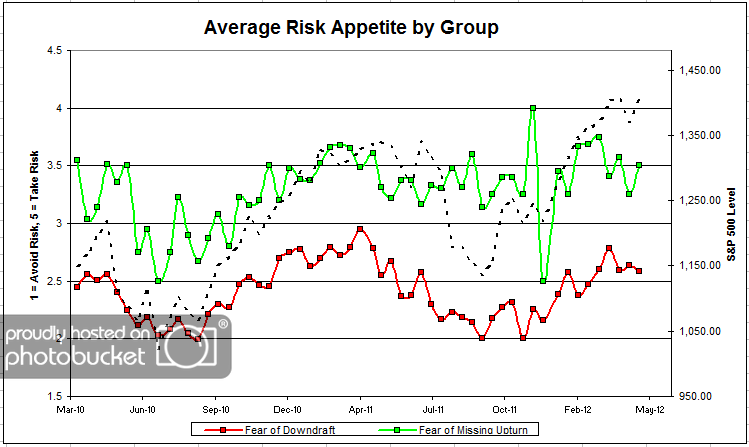
Chart 6: Average Risk Appetite by Group. This round, the upturn group’s average shot higher, while the downturn group’s average fell slightly. Keep in mind that overall risk ticked slightly higher with the market.

appspread 2 Dorsey, Wright Client Sentiment Survey Results   4/27/12

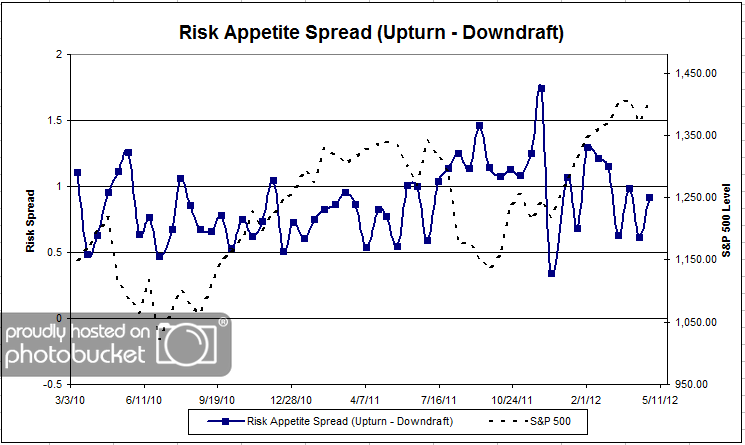
Chart 7: Risk Appetite Spread. This is a spread chart constructed from the data in Chart 6, where the average risk appetite of the downdraft group is subtracted from the average risk appetite of the missing upturn group. The spread moved higher this round and seems to be settled into a new range.

From survey to survey, the S&P rallied over +2%, and our client sentiment indicators responded as they should. The fear of a downturn group moved lower, while risk appetite moved higher. All in all, it was a pretty standard client sentiment reaction to market behavior.

No one can predict the future, as we all know, so instead of prognosticating, we will sit back and enjoy the ride. A rigorously tested, systematic investment process provides a great deal of comfort for clients during these types of fearful, highly uncertain market environments. Until next time, good trading and thank you for participating.

Posted by:


Dorsey, Wright Client Sentiment Survey - 4/27/12

April 27, 2012

Here we have the next round of the Dorsey, Wright Sentiment Survey, the first third-party sentiment poll. Participate to learn more about our Dorsey, Wright Polo Shirt raffle! Just follow the instructions after taking the poll, and we’ll enter you in the contest. Thanks to all our participants from last round.

As you know, when individuals self-report, they are always taller and more beautiful than when outside observers report their perceptions! Instead of asking individual investors to self-report whether they are bullish or bearish, we’d like financial advisors to weigh in and report on the actual behavior of clients. It’s two simple questions and will take no more than 20 seconds of your time. We’ll construct indicators from the data and report the results regularly on our blog–but we need your help to get a large statistical sample!

Click here to take Dorsey, Wright’s Client Sentiment Survey.

Contribute to the greater good! It’s painless, we promise.

Posted by:


Wrong Way Corrigans

April 27, 2012

Professionals are no good at forecasting the market, something that numerous studies have made clear. CXO Advisory shows that bloggers are no better. This isn’t really a surprise, but I like their graphic that shows when bloggers are most bullish, the market performs most poorly—and vice versa. (Unlike Douglas Corrigan, bloggers probably aren’t going the wrong way on purpose.)

blogger sentiment quintile Wrong Way Corrigans

Source: CXO Advisory (click on image to enlarge)

This is a good bit of what makes financial markets so frustrating for the retail investor. Just when they are feeling most bullish…wham! Then, they watch helplessly as the market rises, paralyzed by fear and unable to bring themselves to participate. (This has been going on for three years now, if you’re paying attention to the Funds Flow report.)

Advisors often complain about the amount of hand-holding they need to do during adverse market conditions, but this may be their most critical function. If investors want a chance at the returns, they have no alternative but to get in the game. For may investors, guidance from a trusted advisor could be the difference between success and failure.

Posted by:


Dorsey, Wright Client Sentiment Survey Results - 3/14/12

April 23, 2012

Our latest sentiment survey was open from 4/13/12 to 4/20/12. The Dorsey, Wright Polo Shirt Raffle continues to drive advisor participation, and we greatly appreciate your support! This round, we had 40 advisors participate in the survey. If you believe, as we do, that markets are driven by supply and demand, client behavior is important. We’re not asking what you think of the market—since most of our blog readers are financial advisors, we’re asking instead about the behavior of your clients. Then we’re aggregating responses exclusively for our readership. Your privacy will not be compromised in any way.

After the first 30 or so responses, the established pattern was simply magnified, so we are comfortable about the statistical validity of our sample. Most of the responses were from the U.S., but we also had multiple advisors respond from at least three other countries. Let’s get down to an analysis of the data! Note: You can click on any of the charts to enlarge them.

Question 1. Based on their behavior, are your clients currently more afraid of: a) getting caught in a stock market downdraft, or b) missing a stock market upturn?

greatestfear 52 Dorsey, Wright Client Sentiment Survey Results   3/14/12

Chart 1: Greatest Fear. From survey to survey the S&P 500 fell -2.7%, and the greatest fear levels snapped higher. The fear of a downdraft group rose from 74% to 90%, the highest levels we’ve seen all year. The missed opportunity group fell from 26% to 10%. Client sentiment is back in the doghouse.

spread 22 Dorsey, Wright Client Sentiment Survey Results   3/14/12

Chart 2. Greatest Fear Spread. Another way to look at this data is to examine the spread between the two groups. The spread shot higher this round from 47% to 80%. We’re a long way from par again!

Question 2. Based on their behavior, how would you rate your clients’ current appetite for risk?

avgrisk 1 Dorsey, Wright Client Sentiment Survey Results   3/14/12

Chart 3: Average Risk Appetite. The overall risk appetite number has fallen for two straight surveys in a row. This round the overall average fell from 2.85 to 2.7, dropping with the market.

bellcurve 5 Dorsey, Wright Client Sentiment Survey Results   3/14/12

Chart 4: Risk Appetite Bell Curve. This chart uses a bell curve to break out the percentage of respondents at each risk appetite level. This round, over half of all respodents wanted a risk appetite of 3. However, there has been a noticeable shift towards less risk, with both 1 and 2 gaining ground.

bellcurvegroup 9 Dorsey, Wright Client Sentiment Survey Results   3/14/12

Chart 5: Risk Appetite Bell Curve by Group. The next three charts use cross-sectional data. This chart plots the reported client risk appetite separately for the fear of downdraft and for the fear of missing upturn groups. This chart sorts out mostly as expected, with the upturn group wanting more risk than the downturn group. However, there were so few respondents in the opporunity camp, that the distribution is slightly skewed from normal.

riskavgroup Dorsey, Wright Client Sentiment Survey Results   3/14/12

Chart 6: Average Risk Appetite by Group. This round, the downturn group’s appetite rose slightly, and the upturn group’s appetite fell by a large degree. Keep in mind the overall average fell with the market.

riskappspread 43 Dorsey, Wright Client Sentiment Survey Results   3/14/12

Chart 7: Risk Appetite Spread. This is a spread chart constructed from the data in Chart 6, where the average risk appetite of the downdraft group is subtracted from the average risk appetite of the missing upturn group. The swung lower this round.

From survey to survey, the market took a sizeable hit, and our client sentiment indicators responded like they should. The greatest fear numbers rose to its highest level we’ve seen so far this year. The overall risk appetite fell for the second straight survey round in a row. When taking into account our client survey and the continued outflows from equities, it’s obvious that clients are not ready to jump back into the stock market. Keep in mind the market is still up more than 20% from its Fall 2011 lows.

No one can predict the future, as we all know, so instead of prognosticating, we will sit back and enjoy the ride. A rigorously tested, systematic investment process provides a great deal of comfort for clients during these types of fearful, highly uncertain market environments. Until next time, good trading and thank you for participating.

Posted by:


Dorsey, Wright Client Sentiment Survey - 4/13/12

April 13, 2012

Here we have the next round of the Dorsey, Wright Sentiment Survey, the first third-party sentiment poll. Participate to learn more about our Dorsey, Wright Polo Shirt raffle! Just follow the instructions after taking the poll, and we’ll enter you in the contest. Thanks to all our participants from last round.

As you know, when individuals self-report, they are always taller and more beautiful than when outside observers report their perceptions! Instead of asking individual investors to self-report whether they are bullish or bearish, we’d like financial advisors to weigh in and report on the actual behavior of clients. It’s two simple questions and will take no more than 20 seconds of your time. We’ll construct indicators from the data and report the results regularly on our blog–but we need your help to get a large statistical sample!

Click here to take Dorsey, Wright’s Client Sentiment Survey.

Contribute to the greater good! It’s painless, we promise.

Posted by:


Dorsey, Wright Client Sentiment Survey Results - 3/30/12

April 9, 2012

Our latest sentiment survey was open from 3/30/12 to 4/6/12. The Dorsey, Wright Polo Shirt Raffle continues to drive advisor participation, and we greatly appreciate your support! This round, we had 53 advisors participate in the survey. If you believe, as we do, that markets are driven by supply and demand, client behavior is important. We’re not asking what you think of the market—since most of our blog readers are financial advisors, we’re asking instead about the behavior of your clients. Then we’re aggregating responses exclusively for our readership. Your privacy will not be compromised in any way.

After the first 30 or so responses, the established pattern was simply magnified, so we are comfortable about the statistical validity of our sample. Most of the responses were from the U.S., but we also had multiple advisors respond from at least three other countries. Let’s get down to an analysis of the data! Note: You can click on any of the charts to enlarge them.

Question 1. Based on their behavior, are your clients currently more afraid of: a) getting caught in a stock market downdraft, or b) missing a stock market upturn?

greatestfear 51 Dorsey, Wright Client Sentiment Survey Results   3/30/12

Chart 1: Greatest Fear. From survey to survey, the S&P 500 was flat. After hitting all-time lows last round, the greatest fear number rose from 62% to 74%. On the flip side, the missed opportunity group fell from 38% to 26%.

greatestfearspread 50 Dorsey, Wright Client Sentiment Survey Results   3/30/12

Chart 2. Greatest Fear Spread. Another way to look at this data is to examine the spread between the two groups. The spread rose from 24% to 47%.

Question 2. Based on their behavior, how would you rate your clients’ current appetite for risk?

avgriskapp 41 Dorsey, Wright Client Sentiment Survey Results   3/30/12

Chart 3: Average Risk Appetite. In line with the greatest fear numbers, average risk appetite also ticked lower, from 3.02 to 2.85. It’s not too surprising, given the fact that the overall number has been rising steadily all year.

bellcurve 4 Dorsey, Wright Client Sentiment Survey Results   3/30/12

Chart 4: Risk Appetite Bell Curve. This chart uses a bell curve to break out the percentage of respondents at each risk appetite level. This round, over half of all respodents wanted a risk appetite of 3.

bellcurvegroup 8 Dorsey, Wright Client Sentiment Survey Results   3/30/12

Chart 5: Risk Appetite Bell Curve by Group. The next three charts use cross-sectional data. This chart plots the reported client risk appetite separately for the fear of downdraft and for the fear of missing upturn groups. This chart sorts out as expected, with the upturn group wanting more risk than the downturn group.

avgriskappgroup 29 Dorsey, Wright Client Sentiment Survey Results   3/30/12

Chart 6: Average Risk Appetite by Group. This round, the upturn group’s risk appetite rose, while the downturn group’s risk appetite fell. This is what we’d expect to see.

riskappspread 42 Dorsey, Wright Client Sentiment Survey Results   3/30/12

Chart 7: Risk Appetite Spread. This is a spread chart constructed from the data in Chart 6, where the average risk appetite of the downdraft group is subtracted from the average risk appetite of the missing upturn group. The spiked higher this round.

From survey to survey, the market was flat, and our indicators moved towards less risk. The overall fear number rose, and overall risk appetite fell. This is not too surprising, considering the greatest fear number hit all-time lows last round, and overall risk appetite was just off all-time highs. With any luck, client sentiment should continue to improve if the market continues to rally.

No one can predict the future, as we all know, so instead of prognosticating, we will sit back and enjoy the ride. A rigorously tested, systematic investment process provides a great deal of comfort for clients during these types of fearful, highly uncertain market environments. Until next time, good trading and thank you for participating.


Posted by:


Dorsey, Wright Client Sentiment Survey - 3/30/12

March 30, 2012

Here we have the next round of the Dorsey, Wright Sentiment Survey, the first third-party sentiment poll. Participate to learn more about our Dorsey, Wright Polo Shirt raffle! Just follow the instructions after taking the poll, and we’ll enter you in the contest. Thanks to all our participants from last round.

As you know, when individuals self-report, they are always taller and more beautiful than when outside observers report their perceptions! Instead of asking individual investors to self-report whether they are bullish or bearish, we’d like financial advisors to weigh in and report on the actual behavior of clients. It’s two simple questions and will take no more than 20 seconds of your time. We’ll construct indicators from the data and report the results regularly on our blog–but we need your help to get a large statistical sample!

Click here to take Dorsey, Wright’s Client Sentiment Survey.

Contribute to the greater good! It’s painless, we promise.

Posted by:


Dorsey, Wright Client Sentiment Survey Results - 3/16/12

March 27, 2012

Our latest sentiment survey was open from 3/16/12 to 3/23/12. The Dorsey, Wright Polo Shirt Raffle continues to drive advisor participation, and we greatly appreciate your support! This round, we had 45 advisors participate in the survey. If you believe, as we do, that markets are driven by supply and demand, client behavior is important. We’re not asking what you think of the market—since most of our blog readers are financial advisors, we’re asking instead about the behavior of your clients. Then we’re aggregating responses exclusively for our readership. Your privacy will not be compromised in any way.

After the first 30 or so responses, the established pattern was simply magnified, so we are comfortable about the statistical validity of our sample. Most of the responses were from the U.S., but we also had multiple advisors respond from at least four other countries. Let’s get down to an analysis of the data! Note: You can click on any of the charts to enlarge them.

Question 1. Based on their behavior, are your clients currently more afraid of: a) getting caught in a stock market downdraft, or b) missing a stock market upturn?


greatestfear 50 Dorsey, Wright Client Sentiment Survey Results   3/16/12

Chart 1: Greatest Fear. From survey to survey, the S&P 500 rallied +2.3%, and all of our client sentiment indicators responded positively. The greatest fear number fell to its all-time lows, from 83% to 62%. It’s hard to believe we’ve been running the survey for 2 whole years, and clients still have not even hit the high 50′s. On the flip side, the opportunity group rose from 17% to 38%.

greatestfearspread 49 Dorsey, Wright Client Sentiment Survey Results   3/16/12

Chart 2. Greatest Fear Spread. Another way to look at this data is to examine the spread between the two groups. The spread fell to its all-time lows this round at 24%.

Question 2. Based on their behavior, how would you rate your clients’ current appetite for risk?

avgriskapp 40 Dorsey, Wright Client Sentiment Survey Results   3/16/12

Chart 3: Average Risk Appetite. The overall risk appetite number rose to just under its all-time highs which were set in April of 2011. Close, but no cigar. This round, we saw an average risk appetite of 3.02. If the market continues to rally, so will the overall risk appetite number.

riskappbell 7 Dorsey, Wright Client Sentiment Survey Results   3/16/12

Chart 4: Risk Appetite Bell Curve. This chart uses a bell curve to break out the percentage of respondents at each risk appetite level. The bell curve continues its recend trend towards more risk. This round, over half of all respodents wanted a risk appetite of 3.

riskappbellcurvegroup 15 Dorsey, Wright Client Sentiment Survey Results   3/16/12

Chart 5: Risk Appetite Bell Curve by Group. The next three charts use cross-sectional data. This chart plots the reported client risk appetite separately for the fear of downdraft and for the fear of missing upturn groups. This chart sorts out as expected, with the upturn group wanting more risk than the downturn group.

avgriskappgroup 28 Dorsey, Wright Client Sentiment Survey Results   3/16/12

Chart 6: Average Risk Appetite by Group. Historically, this is one of the most volatile indicators in the survey. This round, the upturn group actually fell, while the dowturn group moved higher. We’d expect both groups to move higher in a risingmarket, but the upturn group has been known to buck the trend.

riskappspread 41 Dorsey, Wright Client Sentiment Survey Results   3/16/12

Chart 7: Risk Appetite Spread. This is a spread chart constructed from the data in Chart 6, where the average risk appetite of the downdraft group is subtracted from the average risk appetite of the missing upturn group. The spread fell this round.

From survey to survey, the market was up +2.3%, and all the indicators performed as expected. We’re now sitting at the lowest fear levels we’ve ever seen in the history of the survey. The market has rallied roughly +23% from recent lows in September, and our sentiment indicators are responding to that information. If the market continues to move higher, we will eventually hit par on the overall fear indicator (50-50 split), which might happen sooner than you expect.

No one can predict the future, as we all know, so instead of prognosticating, we will sit back and enjoy the ride. A rigorously tested, systematic investment process provides a great deal of comfort for clients during these types of fearful, highly uncertain market environments. Until next time, good trading and thank you for participating.

Posted by:


The Coming Mega-Bull Market

March 20, 2012

Fuel for a bull market in the future in continuing to build up. Scott Grannis, former chief economist at Western Asset Management, recently wrote about how much cash is piling up. (His blog, Calafia Beach Pundit, is highly recommended for insight into the global economy.)

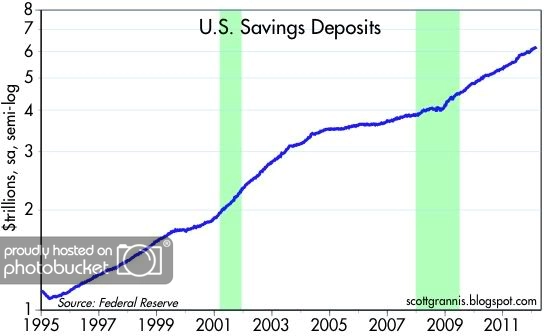
M2 is growing above its long-term average annual rate of 6%, even though the economy is 12-13% below its long-term trend. By far the biggest source of growth in M2 is savings deposits. These have increased by over $2 trillion since late 2008, and have grown at a blistering 15.7% annualized pace over the past three months. This is unusually strong growth that can only reflect great fear and caution on the part of investors everywhere, especially when one considers that savings deposits pay virtually no interest.

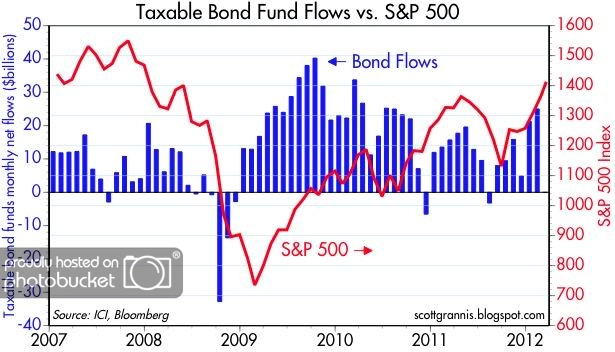
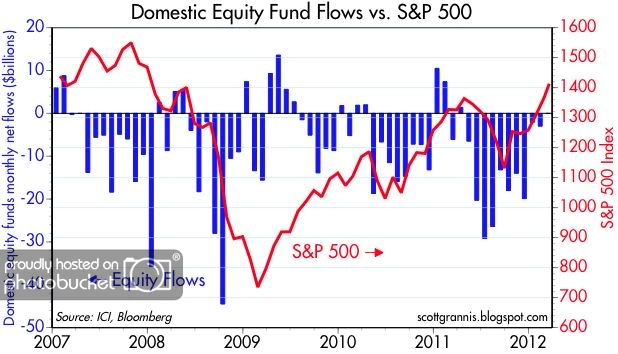
Mr. Grannis includes some charts that show both the rapid growth of savings deposits and the strong investor preference for bonds over stocks right now. We regularly detail the ICI numbers here as well, but his charts are a fantastic visual presentation.

Savingsdeposits The Coming Mega Bull Market

bondflows The Coming Mega Bull Market

equityflows The Coming Mega Bull Market

Source: Calafia Beach Pundit (click on images to enlarge)


We all know what happens when a match finds the fuel; what we don’t know is when or how the match will be struck. Investors have pretty clearly been traumatized by 2008-2009. I’m not sure what it will take for investor sentiment to become less negative. It could be a variety of things: better employment data, less consumer leverage, or maybe some time just needs to pass so the memory of 2008 isn’t so sharp. This process could take weeks, months, or years.

Fuel, on the other hand, is abundant. Although struggling consumers and corporations are in the process of rebuilding their balance sheets, many successful companies and consumers with positive cash flow are squirreling the money away. They are perhaps not comfortable investing it yet, but the cash is building up quickly and could create a tsunami when it breaks loose.

At some point, investors will realize that they need equity-like returns to meet their savings and investment goals. Or perhaps they will simply become disssatisfied with such low returns from money market funds and CDs. A trickle of money will start to flow from cash and low-yielding bonds into the stock market, which will nudge the market higher. As the market begins to move up, investors will become more confident and yet more money will flow into stocks. The next thing you know, we could have another mega-bull market on our hands, although most probably won’t be willing to believe it. Plentiful fuel and public disbelief is how bull markets start and then extend themselves.

We’ve already had a more than 100% move from the 2009 lows over the last three years. The retail investor has not participated much so far. I don’t know how much longer they will be willing to sit on their hands when it is costing them big money, but if I had to guess, “forever” is probably not the right answer. We may be closer to an inflection point than it seems.

Posted by:


Dorsey, Wright Client Sentiment Survey - 3/16/12

March 16, 2012

Here we have the next round of the Dorsey, Wright Sentiment Survey, the first third-party sentiment poll. Participate to learn more about our Dorsey, Wright Polo Shirt raffle! Just follow the instructions after taking the poll, and we’ll enter you in the contest. Thanks to all our participants from last round.

As you know, when individuals self-report, they are always taller and more beautiful than when outside observers report their perceptions! Instead of asking individual investors to self-report whether they are bullish or bearish, we’d like financial advisors to weigh in and report on the actual behavior of clients. It’s two simple questions and will take no more than 20 seconds of your time. We’ll construct indicators from the data and report the results regularly on our blog–but we need your help to get a large statistical sample!

Click here to take Dorsey, Wright’s Client Sentiment Survey.

Contribute to the greater good! It’s painless, we promise.

Posted by:


Dorsey, Wright Client Sentiment Survey Results - 3/2/12

March 12, 2012

Our latest sentiment survey was open from 3/2/12 to 3/9/12. The Dorsey, Wright Polo Shirt Raffle continues to drive advisor participation, and we greatly appreciate your support! This round, we had 48 advisors participate in the survey. If you believe, as we do, that markets are driven by supply and demand, client behavior is important. We’re not asking what you think of the market—since most of our blog readers are financial advisors, we’re asking instead about the behavior of your clients. Then we’re aggregating responses exclusively for our readership. Your privacy will not be compromised in any way.

After the first 30 or so responses, the established pattern was simply magnified, so we are comfortable about the statistical validity of our sample. Most of the responses were from the U.S., but we also had multiple advisors respond from at least four other countries. Let’s get down to an analysis of the data! Note: You can click on any of the charts to enlarge them.

Question 1. Based on their behavior, are your clients currently more afraid of: a) getting caught in a stock market downdraft, or b) missing a stock market upturn?


greatestfear 49 Dorsey, Wright Client Sentiment Survey Results   3/2/12

Chart 1: Greatest Fear. From survey to survey, the S&P 500 was up by a small margin (+0.5%). Despite the market basically treading water, client fear levels rose by a significant margin from 69% to 83%. On the flip side, the opportunity group fell from 61% to 17%. The S&P experienced a moderate pullback during the survey voting, which probably explains the sudden drop in client sentiment.

fearspread 1 Dorsey, Wright Client Sentiment Survey Results   3/2/12

Chart 2. Greatest Fear Spread. Another way to look at this data is to examine the spread between the two groups. The spread jumped this round from 38% to 67%.

Question 2. Based on their behavior, how would you rate your clients’ current appetite for risk?

avgriskapp 39 Dorsey, Wright Client Sentiment Survey Results   3/2/12

Chart 3: Average Risk Appetite. The overall risk appetite number fell from 2.93 to 2.79. Just as we saw with the overall fear numbers, client sentiment took a hit over the last 2 weeks.

riskappbell 6 Dorsey, Wright Client Sentiment Survey Results   3/2/12

Chart 4: Risk Appetite Bell Curve. This chart uses a bell curve to break out the percentage of respondents at each risk appetite level. The bell curve continues its recend trend towards more risk. The most common risk appetite requested was 3.

bellcurvegroup 7 Dorsey, Wright Client Sentiment Survey Results   3/2/12

Chart 5: Risk Appetite Bell Curve by Group. The next three charts use cross-sectional data. This chart plots the reported client risk appetite separately for the fear of downdraft and for the fear of missing upturn groups. This chart sorts out as expected, with the upturn group wanting more risk than the downturn group.

avgriskgroup 6 Dorsey, Wright Client Sentiment Survey Results   3/2/12

Chart 6: Average Risk Appetite by Group. Historically, this is one of the most volatile indicators in the survey. This round, both groups moved higher this round, which is not what we’d expect. Keep in mind that the overall risk appetite number did fall.

appspread 1 Dorsey, Wright Client Sentiment Survey Results   3/2/12

Chart 7: Risk Appetite Spread. This is a spread chart constructed from the data in Chart 6, where the average risk appetite of the downdraft group is subtracted from the average risk appetite of the missing upturn group. The spread fell slightly this survey round.

From survey to survey, the market was up just a bit. Client fear levels rose higher despite a “rising market.” What the data points fail to point out is that the market experienced a sharp pullback during the week of voting, which accounts for the rise in fear levels. Most of the other indicators followed the greatest fear’s lead, with clients wanting less exposure to risk in a shaky market. Keep in mind that the stock market has been rallying for a few months now, as has client sentiment. It might not hurt to take a little breather, as both client sentiment and the overall market continue to improve.

No one can predict the future, as we all know, so instead of prognosticating, we will sit back and enjoy the ride. A rigorously tested, systematic investment process provides a great deal of comfort for clients during these types of fearful, highly uncertain market environments. Until next time, good trading and thank you for participating.
Posted by:


Bull Market Needs a Psychotherapist

March 5, 2012

According to Bloomberg Businessweek, this bull market has serious self-esteem issues. We are almost exactly three years from the March 2009 low, but fear of the market still has not worn off.

Next week marks the third anniversary of the current bull market cycle in U.S. stocks. Back on March 9, 2009, a day not easily forgotten in the annals of wealth destruction, the S&P 500 sank to a 12-year low of 676, the bottom of the worst bear market since the Great Depression. Since then, the S&P has more than doubled.

Investors for the most part are still curled up in the fetal position, preferring to put their money in bonds and money market accounts rather than stocks. Investors have pulled more money out of U.S. domestic mutual funds than they’ve put in for five straight years.

Imagine how investors would be behaving if the market had a 100% run in three years without a bear market in front of it! Investors would probably be cashing in their bonds funds to buy stocks like there was no tomorrow. Investors are still carrying their bad feelings from 2008-2009 with them. One of the advantages of a systematic investment process is that feelings are not incorporated into it—the only thing factored into the investment decision is the relevant data.

Posted by:


Dorsey, Wright Client Sentiment Survey - 3/2/12

March 2, 2012

Here we have the next round of the Dorsey, Wright Sentiment Survey, the first third-party sentiment poll. Participate to learn more about our Dorsey, Wright Polo Shirt raffle! Just follow the instructions after taking the poll, and we’ll enter you in the contest. Thanks to all our participants from last round.

As you know, when individuals self-report, they are always taller and more beautiful than when outside observers report their perceptions! Instead of asking individual investors to self-report whether they are bullish or bearish, we’d like financial advisors to weigh in and report on the actual behavior of clients. It’s two simple questions and will take no more than 20 seconds of your time. We’ll construct indicators from the data and report the results regularly on our blog–but we need your help to get a large statistical sample!

Click here to take Dorsey, Wright’s Client Sentiment Survey.

Contribute to the greater good! It’s painless, we promise.

Posted by:


Dorsey, Wright Client Sentiment Survey - 2/17/12

February 27, 2012

Our latest sentiment survey was open from 2/17/12 – 2/24/12. The Dorsey, Wright Polo Shirt Raffle continues to drive advisor participation, and we greatly appreciate your support! This round, we had 52 advisors participate in the survey. If you believe, as we do, that markets are driven by supply and demand, client behavior is important. We’re not asking what you think of the market—since most of our blog readers are financial advisors, we’re asking instead about the behavior of your clients. Then we’re aggregating responses exclusively for our readership. Your privacy will not be compromised in any way.

After the first 30 or so responses, the established pattern was simply magnified, so we are comfortable about the statistical validity of our sample. Most of the responses were from the U.S., but we also had multiple advisors respond from at least four other countries. Let’s get down to an analysis of the data! Note: You can click on any of the charts to enlarge them.

Question 1. Based on their behavior, are your clients currently more afraid of: a) getting caught in a stock market downdraft, or b) missing a stock market upturn?

greatestfear 48 Dorsey, Wright Client Sentiment Survey   2/17/12

Chart 1: Greatest Fear. From survey to survey, the S&P 500 rose just over +1%. Despite the moderate rally, client sentiment got worse this survey round, but not by much. Overall client fear levels rose from 67% to 69%, while the missed opportunity group fell from 33% to 31%. Despite a moderate pullback this week, it’s clear that client sentiment has improved significantly in the last three months with the market rally.

spread 20 Dorsey, Wright Client Sentiment Survey   2/17/12

Chart 2. Greatest Fear Spread. Another way to look at this data is to examine the spread between the two groups. The spread jumped this round from 34% to 38%.

Question 2. Based on their behavior, how would you rate your clients’ current appetite for risk?

avgrisk Dorsey, Wright Client Sentiment Survey   2/17/12

Chart 3: Average Risk Appetite. The overall risk appetite number rose from 2.80 to 2.93. Once again, I’d argue that the overall risk appetite number provides us with the best snapshot of client sentiment within this survey.

riskappbell 5 Dorsey, Wright Client Sentiment Survey   2/17/12

Chart 4: Risk Appetite Bell Curve. This chart uses a bell curve to break out the percentage of respondents at each risk appetite level. The bell curve continues its recend trend towards more risk. The most common risk appetite requested was 3.

bellcurvegroup 6 Dorsey, Wright Client Sentiment Survey   2/17/12

Chart 5: Risk Appetite Bell Curve by Group. The next three charts use cross-sectional data. This chart plots the reported client risk appetite separately for the fear of downdraft and for the fear of missing upturn groups. This chart sorts out as expected, with the upturn group wanting more risk than the downturn group.

avgriskgrouppp Dorsey, Wright Client Sentiment Survey   2/17/12

Chart 6: Average Risk Appetite by Group. Historically, this is one of the most volatile indicators in the survey. This round, both groups moved higher with the market, which is what we’d expect to see in a rising market.

riskspread Dorsey, Wright Client Sentiment Survey   2/17/12

Chart 7: Risk Appetite Spread. This is a spread chart constructed from the data in Chart 6, where the average risk appetite of the downdraft group is subtracted from the average risk appetite of the missing upturn group. The spread fell slightly this survey round.

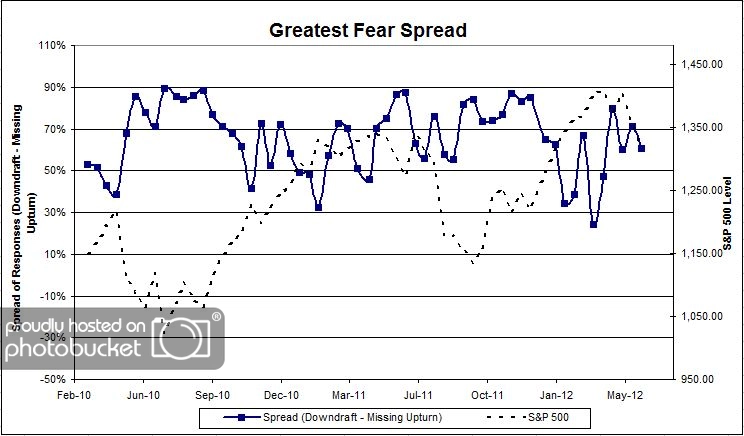
For this survey, the market rose just over +1% over two weeks, and the indicator responses were a mixed bag. The overall fear numbers actually grew in the face of a rising market, which is not what we’d expect to see. However, considering how much client sentiment has improved over the last few months, it’s not a stretch to see a slight pullback. The overall risk appetite indicator continues to move higher with the market. If the market rally can continue to gather steam, we should continue to see client sentiment improving into the future.

No one can predict the future, as we all know, so instead of prognosticating, we will sit back and enjoy the ride. A rigorously tested, systematic investment process provides a great deal of comfort for clients during these types of fearful, highly uncertain market environments. Until next time, good trading and thank you for participating.
Posted by:


Dorsey, Wright Client Sentiment Survey - 2/17/12

February 17, 2012

Here we have the next round of the Dorsey, Wright Sentiment Survey, the first third-party sentiment poll. Participate to learn more about our Dorsey, Wright Polo Shirt raffle! Just follow the instructions after taking the poll, and we’ll enter you in the contest. Thanks to all our participants from last round.

As you know, when individuals self-report, they are always taller and more beautiful than when outside observers report their perceptions! Instead of asking individual investors to self-report whether they are bullish or bearish, we’d like financial advisors to weigh in and report on the actual behavior of clients. It’s two simple questions and will take no more than 20 seconds of your time. We’ll construct indicators from the data and report the results regularly on our blog–but we need your help to get a large statistical sample!

Click here to take Dorsey, Wright’s Client Sentiment Survey.

Contribute to the greater good! It’s painless, we promise.

Posted by:


Dorsey, Wright Client Sentiment Survey Results - 2/3/12

February 13, 2012

Our latest sentiment survey was open from 2/3/12 - 2/10/12. The Dorsey, Wright Polo Shirt Raffle continues to drive advisor participation, and we greatly appreciate your support! This round, we had 64 advisors participate in the survey. If you believe, as we do, that markets are driven by supply and demand, client behavior is important. We’re not asking what you think of the market—since most of our blog readers are financial advisors, we’re asking instead about the behavior of your clients. Then we’re aggregating responses exclusively for our readership. Your privacy will not be compromised in any way.

After the first 30 or so responses, the established pattern was simply magnified, so we are comfortable about the statistical validity of our sample. Most of the responses were from the U.S., but we also had multiple advisors respond from at least four other countries. Let’s get down to an analysis of the data! Note: You can click on any of the charts to enlarge them.

Question 1. Based on their behavior, are your clients currently more afraid of: a) getting caught in a stock market downdraft, or b) missing a stock market upturn?

greatestfear 47 Dorsey, Wright Client Sentiment Survey Results   2/3/12

Chart 1: Greatest Fear. From survey to survey, the S&P 500 rose around +2.2%. Overall client fear numbers continue to improve, with the fear of a downfall group falling from 81% to 67%. On the other side, we saw the opportunity group rise from 19% to 33%. The overall fear numbers are now sitting at their best levels we’ve seen since in just under one year. If the market can continue to rally, we’ll probably continue to see an improvement in client sentiment levels.

greatestfearspread 48 Dorsey, Wright Client Sentiment Survey Results   2/3/12

Chart 2. Greatest Fear Spread. Another way to look at this data is to examine the spread between the two groups. The spread continues to fall, from 63% to 34% this round.

Question 2. Based on their behavior, how would you rate your clients’ current appetite for risk?

avgriskapp 38 Dorsey, Wright Client Sentiment Survey Results   2/3/12

Chart 3: Average Risk Appetite. The overall risk appetite number moved higher with the market, from 2.70 to 2.80.

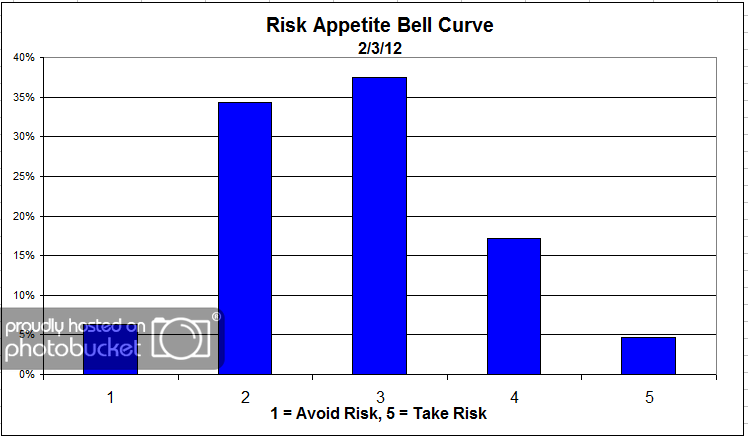
bellcurve 3 Dorsey, Wright Client Sentiment Survey Results   2/3/12

Chart 4: Risk Appetite Bell Curve. This chart uses a bell curve to break out the percentage of respondents at each risk appetite level. The bell curve continues its recend trend towards more risk. The heaviest concentration remains in 2 and 3, but the risk appetite of 4 is creeping higher.

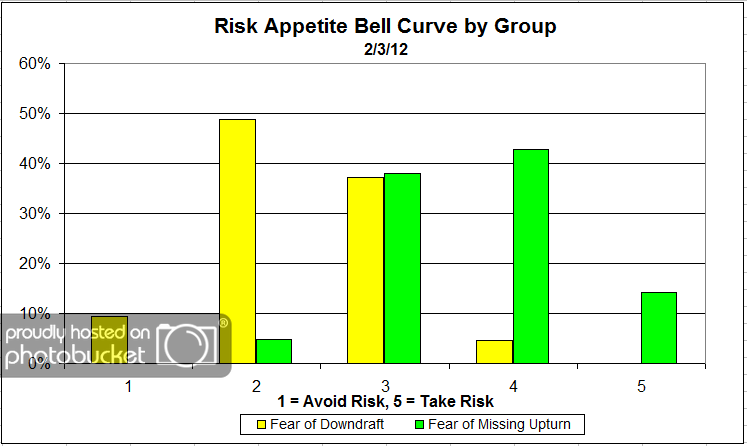
bellcurvegroup 5 Dorsey, Wright Client Sentiment Survey Results   2/3/12

Chart 5: Risk Appetite Bell Curve by Group. The next three charts use cross-sectional data. This chart plots the reported client risk appetite separately for the fear of downdraft and for the fear of missing upturn groups. This chart sorts out as expected, with the upturn group wanting more risk than the downturn group.

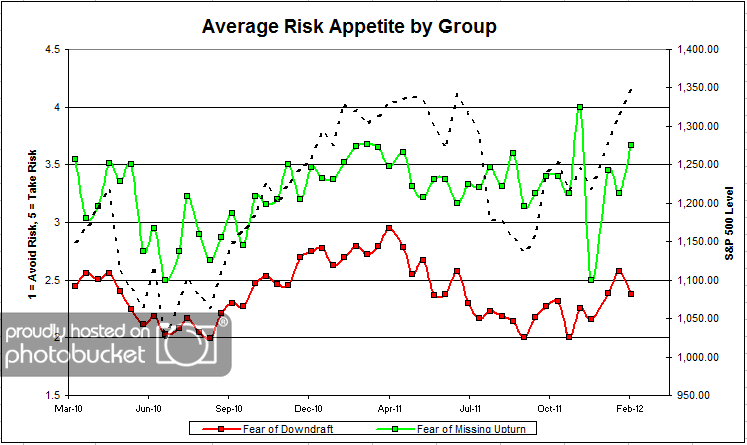
avgriskappgroup 27 Dorsey, Wright Client Sentiment Survey Results   2/3/12

Chart 6: Average Risk Appetite by Group. Here we have a bit of a mixed bag. The upturn group’s risk average shot higher with the rising market, while the downturn group’s average fell. Both groups went their “correct” way, with the upturn group wanting risk and the downturn group wanting safety.

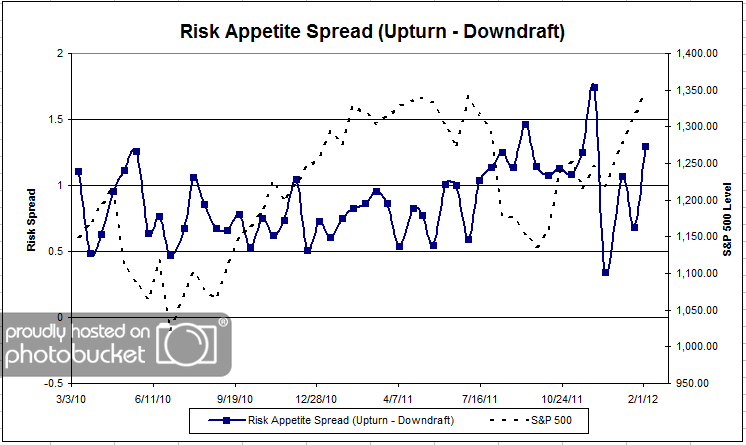
riskappspread 40 Dorsey, Wright Client Sentiment Survey Results   2/3/12

Chart 7: Risk Appetite Spread. This is a spread chart constructed from the data in Chart 6, where the average risk appetite of the downdraft group is subtracted from the average risk appetite of the missing upturn group. The spread continues its recent trend of whipsawing (again).

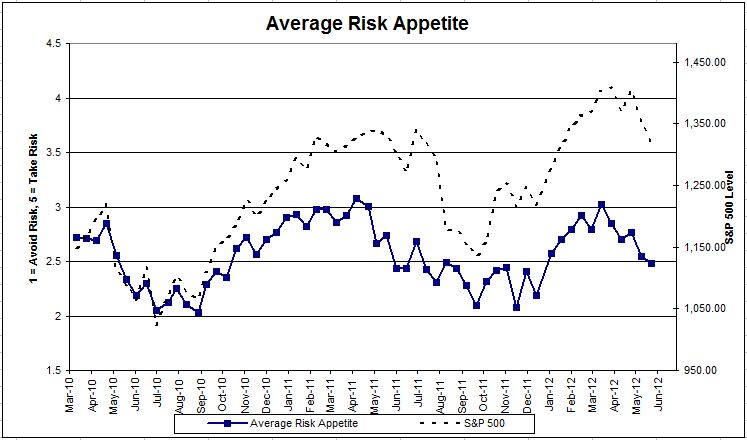
This survey round, we saw the market rise a respectable +2.2% over two weeks, and most of our indicators respond as they should. The greatest fear numbers hit the best levels we’ve seen in one year, with the downturn group at a respectable 67%. The overall risk appetite number continues to click higher, in-line with a rising market. Client sentiment levels have definitely been improving as the market rallies, and should continue to do so if the rally can hold on.

No one can predict the future, as we all know, so instead of prognosticating, we will sit back and enjoy the ride. A rigorously tested, systematic investment process provides a great deal of comfort for clients during these types of fearful, highly uncertain market environments. Until next time, good trading and thank you for participating.
Posted by:


Dorsey, Wright Client Sentiment Survey - 2/3/12

February 3, 2012

Here we have the next round of the Dorsey, Wright Sentiment Survey, the first third-party sentiment poll. Participate to learn more about our Dorsey, Wright Polo Shirt raffle! Just follow the instructions after taking the poll, and we’ll enter you in the contest. Thanks to all our participants from last round.

As you know, when individuals self-report, they are always taller and more beautiful than when outside observers report their perceptions! Instead of asking individual investors to self-report whether they are bullish or bearish, we’d like financial advisors to weigh in and report on the actual behavior of clients. It’s two simple questions and will take no more than 20 seconds of your time. We’ll construct indicators from the data and report the results regularly on our blog–but we need your help to get a large statistical sample!

Click here to take Dorsey, Wright’s Client Sentiment Survey.

Contribute to the greater good! It’s painless, we promise.

Posted by:


Hotel Occupancy

January 23, 2012

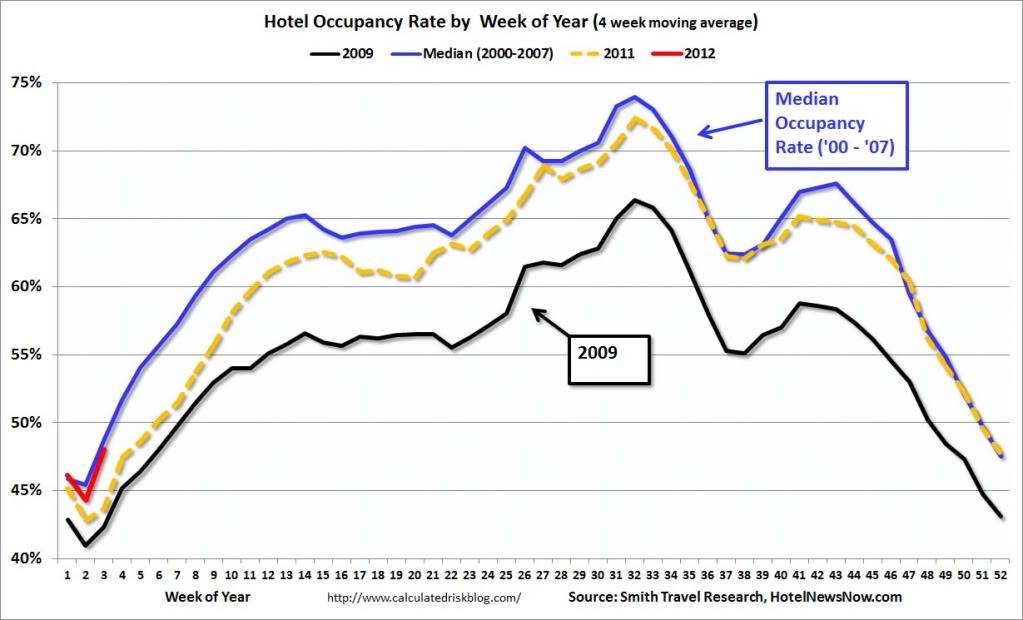
Recessions are usually death to hotels. Hotel occupancy falls, which often results in an orgy of price-cutting to fill the rooms. Prices can’t rise until occupancy picks up again. Since most travel is for business or vacation, it is really, really discretionary. Cutting out the family vacation or skipping that conference in Cleveland is often the first thing to go when budgets get tight. As a result, hotel occupancy is a very sensitive indicator of economic health-and there’s finally some good news on that front.

Calculated Risk points out that 2009 was the worst year for hotel occupancy since the Great Depression. But it has sinced picked up and is now back to its median level from the 2000-2007 good old days. As usual, Calculated Risk has a gorgeous graphic:

HotelOccupancy Hotel Occupancy

Source: Calculated Risk (click on image to expand)

Good economic news is no longer a rarity. Consumer sentiment seems to be slowly improving. Perhaps animal spirits in the market will not be too far behind.

Posted by: